

Air Freight vs. Land Freight: Which is Better for Me?
As a professional international order fulfillment service provider, we understand that choosing the right shipping method directly impacts your bottom line, customer satisfaction, and supply chain efficiency. This comprehensive guide breaks down everything B2B users and e-commerce sellers need to know about Air Cargo versus Land Freight Transport to make informed logistics decisions.
Table of Contents
Understanding Air Freight and Land Freight
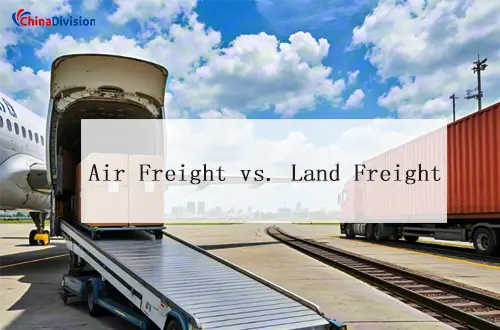
In global logistics and order fulfillment, choosing between Air Cargo and Ground Freight Shipping can significantly impact your costs, delivery timelines, and customer satisfaction.
Both are key pillars of modern logistics. Air Freight ensures global connectivity, while Land Freight (including Ground Freight Shipping, Road Haulage, and Rail Transport) forms the backbone of integrated supply chains.
Air Freight
Transportation of goods via aircraft, offering unmatched speed and global reach.
Air Freight—also called Air Cargo—uses aircraft to transport goods quickly across international routes. It’s ideal for time-sensitive, high-value, or temperature-controlled products.
Air Freight is ideal for electronics, pharmaceuticals, high-end fashion products, and perishable goods. However, it comes with higher costs calculated by "chargeable weight" (considering both actual weight and volume), and certain restrictions apply to volatile materials and flammable items.
Land Freight Transport
Includes Road Transport, Road Haulage, and Rail Freight, moving goods via trucks, vans, or trains across domestic and crossborder routes.
In contrast, Land Freight Transport involves moving goods by Road Transport or Rail Freight, offering a cost-effective and flexible option for both domestic and cross-border deliveries.
There’s no onesizefitsall winner. Air Freight is best for speed, reliability, and highvalue or urgent shipments, while Land Freight (including Road Freight and Rail Freight Transport) is more costeffective, flexible, and ideal for regional distribution or bulk cargo. The “better” choice depends on your shipment’s urgency, budget, size, and destination.
For international ecommerce sellers and B2B companies, these two modes often work together in a multimodal logistics strategy—for example, air shipping to a destination country followed by Road Freight for lastmile delivery.
Advantages and Disadvantages of Air Freight
Advantages of Air Freight
- Fastest Transit Time
Air Freight typically delivers within 1–7 days globally, making it ideal for urgent shipments, restocking fastselling SKUs, or meeting peak season demand.
- High Reliability
Airlines operate on fixed schedules, reducing delays and ensuring predictable delivery times—critical for timesensitive supply chains.
- Enhanced Security
Strict airport handling and customs procedures make Air Cargo one of the safest options, minimizing risks of theft or damage.
- Ideal for HighValue & Perishable Goods
Perfect for electronics, pharmaceuticals, luxury items, and perishables that require fast delivery and controlled handling.
Disadvantages of Air Freight
- Higher Cost
Air Freight is significantly more expensive than Land Freight, especially for bulky or heavy shipments.
- Limited Capacity
Aircraft have strict weight and size limits, making them less suitable for oversized or bulk cargo.
- Environmental Impact
Higher carbon emissions compared to Rail Freight Transport or other Ground Freight options.
- Restrictions on Certain Goods
Hazardous materials and some special cargo require strict compliance or may not be eligible for air transport.
Advantages and Disadvantages of Land Freight
Advantages of Land Freight (Road & Rail)
- CostEffective
Road Freight and Rail Freight are generally much cheaper than Air Freight, especially for large volumes and nonurgent shipments.
- DoortoDoor Delivery
Road Haulage enables direct pickup and delivery, making it essential for firstmile and lastmile logistics.
- High Flexibility & Accessibility
Ground Freight Shipping can reach remote areas and urban centers alike, adapting to various cargo types—from parcels to heavy machinery.
- Suitable for Bulk & Heavy Cargo
Rail Freight Transport is particularly efficient for moving large quantities of goods over long distances.
- Lower Carbon Footprint (Especially Rail)
Rail Freight is one of the most sustainable logistics options for longhaul transport.
Disadvantages of Land Freight
- Slower Transit Times
Compared to Air Cargo, Land Freight Transport takes longer, especially for international or crossborder shipments.
- Traffic & Infrastructure Limitations
Road Transport may be affected by traffic congestion, road conditions, or regulatory delays at borders.
- Limited for LongDistance Global Shipping
Land Freight alone cannot handle intercontinental shipments without combining with sea or air transport.
How to Choose Between Air Freight and Land Freight?
Choosing the right mode depends on your business priorities. Here’s a practical framework used by professional fulfillment providers like Chinadivision:
Choose Air Freight if:
You need urgent delivery (e.g., stockouts, peak season demand)
Your goods are highvalue or timesensitive
Shipment size is small to medium
You require reliable delivery schedules
E-commerce sellers launching time-sensitive products or managing flash sales inventory
Pharmaceutical companies shipping temperature-sensitive vaccines or medications
Electronics retailers restocking high-value gadgets before peak seasons
Fashion brands distributing seasonal collections with tight deadlines
Manufacturers requiring urgent spare parts to prevent production downtime
Choose Land Freight if:
You want to reduce logistics costs
Your shipment is large, heavy, or bulk
Delivery time is flexible
You need doortodoor Ground Freight Shipping
Regular inventory replenishment with predictable demand patterns
Bulk shipments of raw materials or finished goods
Cross-border e-commerce within continental markets (e.g., EU, North America, Asia)
Heavy machinery or oversized equipment transportation
Cost-conscious businesses optimizing logistics spend
Sustainability-focused companies reducing carbon footprints
Pro Tip: Use a Hybrid (Multimodal) Strategy
Most successful ecommerce brands don’t choose just one—they combine both:
Air Freight + Road Freight: Fast international shipping + efficient lastmile delivery
Rail Freight + Road Haulage: Costeffective crossborder transport (e.g., China–Europe routes)
Smart logistics often combines Air Cargo and Land Freight strategically:
Use Air Freight for urgent, high-value components
Use Rail Freight Transport for cost-effective continental movement
Use Road Transport for flexible first and last-mile delivery
This multimodal strategy balances speed, cost, and environmental impact while maximizing supply chain resilience.
A professional fulfillment partner like Chinadivision can design a customized logistics solution that balances speed, cost, and efficiency, ensuring optimal delivery performance.
Why B2B Sellers Choose Chinadivision for Order Fulfillment?
As an experienced international order fulfillment provider, Chinadivision offers:
Integrated Shipping Solutions
We analyze your specific requirements—budget, timeline, cargo type, and destination—to recommend the optimal mix of Air Freight, Road Freight, Rail Freight, and ocean transport.
Global Network Coverage
Whether you need Air Cargo from China to Europe in 3 days or Ground Freight Shipping across North America, our established carrier relationships ensure competitive rates and reliable service.
Specialized Cargo Expertise
From ADR-certified Road Haulage for dangerous goods to temperature-controlled Air Freight for pharmaceuticals, we handle complex logistics requirements that standard providers cannot manage.
End-to-End Fulfillment
Beyond transportation, we offer warehousing, inventory management, pick-and-pack services, and last-mile delivery—creating a seamless supply chain from manufacturer to end customer.
Cost Optimization
Our volume leverage and route optimization expertise help you reduce shipping costs by up to 30% compared to booking directly with carriers, whether you choose Land Freight Transport or Air Cargo.
Technology Integration
Real-time tracking, automated customs documentation, and inventory visibility across all transport modes keep you in control of your shipments.
By leveraging multimodal logistics and strategic warehouse locations, Chinadivision helps businesses reduce costs, shorten delivery times, and improve customer satisfaction.
Frequently Asked Questions (FAQs)
1. How do I decide between Air Freight and Land Freight for my business?
Evaluate your shipment urgency, cost budget, cargo size, and destination. Many businesses use a mix of both to optimize performance.
2. Can I combine Air Freight with Road Freight?
Yes. This is a common approach—Air Cargo for international transport and Road Haulage for lastmile delivery.
3. Is Rail Freight Transport cheaper than Road Freight?
Generally, yes for long distances and bulk shipments. Rail Freight is more costefficient and environmentally friendly.
4. How does a thirdparty fulfillment provider help optimize freight choices?
Providers like Chinadivision analyze your order volume, SKU type, and delivery regions to recommend the most efficient combination of Air Freight, Land Freight, and warehousing.
5. What types of goods are best suited for Air Cargo?
Highvalue, lightweight, perishable, or timesensitive goods such as electronics, medical supplies, and fashion items.
6. Does Chinadivision support international Ground Freight Shipping?
Yes. Chinadivision offers crossborder Land Freight Transport, including Rail Freight and Road Freight, integrated with customs clearance and delivery networks.
7. How do I calculate shipping costs for Air Freight vs. Land Freight?
Air Freight costs are calculated using "chargeable weight"—the greater of actual weight or volumetric weight (length × width × height ÷ dimensional factor). Land Freight costs depend on distance, cargo weight, vehicle type, and fuel surcharges. At Chinadivision, we provide transparent quotes comparing both options for your specific shipment.
8. Can you integrate with my e-commerce platform for automated fulfillment?
Yes. Our technology integrates with Shopify, WooCommerce, Amazon, eBay, and major ERP systems. When orders arrive, we automatically pick, pack, and ship via your preferred method—whether that's express Air Freight or economical Land Freight Transport.
Global supply chains rely heavily on both air cargo and land freight transport. Air freight offers unmatched speed and reliability, while land freight—through road transport, road haulage, and rail freight transport—provides scalability, cost efficiency, and accessibility. As a professional order fulfillment service provider, Chinadivision helps businesses balance these options to optimize delivery performance and costs.
If you're looking to scale your business globally while keeping logistics efficient and costeffective, choosing the right mix of Air Freight and Land Freight—with a trusted partner like Chinadivision—can make all the difference.


About the Author: Limi

Limi is a content marketing expert at ChinaDivision, helping businesses and e-commerce sellers navigate the complexities of international shipping by providing actionable tips and comprehensive guides on logistics, shipping, and cargo transportation.