

5H Inspection: Mastering US Customs Compliance for B2B Sellers
If you are managing cross-border shipments to the United States, you may have encountered—or heard—the growing concerns about "5H" inspections. This is not just another customs procedure. 5H (Entry Processing Hold) is one of the most stringent document review procedures of US Customs and Border Protection (CBP), fundamentally changing the way logistics operations are managed.
Table of Contents
- What Is a 5H Inspection by CBP?
- The five key inspection pillars include
- Inspections Follow a Rigorous Process
- What are the reasons for the surge in 5H inspections?
- What was the catalyst?
- Common Pitfalls: What Triggers a 5H Warning?
- Chinadivision Advantages: Proactive Risk Mitigation
- Frequently Asked Questions About CBP 5H Inspection
What Is a 5H Inspection by CBP?
A 5H inspection is a customs document review hold issued by U.S. Customs and Border Protection (CBP) through the ACE (Automated Commercial Environment) system. It means CBP has temporarily suspended entry processing because additional verification is required before the shipment can be released.
In simple terms:
- Your shipment is not physically inspected first, but documents are reviewed before anything moves forward
- Goods are locked in the system, meaning no delivery or release
- Clearance depends entirely on whether your paperwork passes strict validation
The core meaning of 5H is "Entry Processing Deferred" in the US AMS/ACE customs system, meaning that US Customs and Border Protection (CBP) has placed the goods in a document review deferred state. This review process aims to verify the authenticity and consistency of all documents, including invoices, manifests, and importer qualifications, before any physical inspection or release is carried out. Once this process is triggered, the goods will be locked until the review is completed.
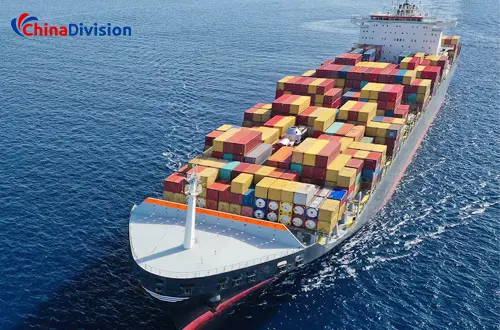
When your goods trigger a 5H detention, CBP will immediately lock your goods. No release, no negotiation, and no guarantee of delivery time. The inspection follows a rigorous three-stage process: comprehensive document review, physical inspection if discrepancies exist, and final disposition—including adjusting tariffs, complete destruction, or mandatory return of goods.
This is not a routine inspection, but a strengthened control mechanism based on "document review before goods inspection." For B2B sellers relying on predictable delivery cycles, this directly impacts inventory planning, Amazon fulfillment replenishment, and order fulfillment.
The five key inspection pillars include
- Hardware Integrity—Physical condition, packaging standards, and labeling accuracy, ensuring compliance with shipping standards to guarantee the safety of goods during transit.
- Dimensional Accuracy—Precise verification of weight, volume, and dimensions to ensure shipping accuracy and prevent calculation errors and costly delays.
- Dangerous Goods Compliance—U.S. Customs and Border Protection ensures all dangerous materials and components are correctly declared, packaged, and comply with international safety regulations.
- HS Code Classification—Correct tariff classification to determine tariffs and regulatory requirements to ensure correct tariff collection.
- Health and Safety Standards – Hygiene compliance of regulated products (food, cosmetics, medical supplies): Products such as food, cosmetics, or medical supplies must meet health documentation standards to qualify for release.
Expert Insight: Under Title 19 of the United States Code, Customs has the right to refuse entry if it does not make a determination within 30 days of detention. This is why 5H detention orders typically lead to high return rates.
Inspections Follow a Rigorous Process
Verification: Every document – commercial invoice, packing list, cargo manifest, and importer credentials – undergoes rigorous review to ensure consistency.
Key Step: If the documents are complete, the status changes to 5I (Release). If any discrepancies are found, the shipment will be marked as requiring immediate physical unsealing.
Final Judgment: If a violation is confirmed, the outcome is either a hefty fine/tax, the goods being destroyed, or a forced return. There is virtually no room for negotiation.
What are the reasons for the surge in 5H inspections?
The surge in 5H inspections following the 2025 Chinese New Year did not happen suddenly. U.S. Customs and Border Protection (CBP) laid the groundwork months earlier with three strategic system upgrades:
September 2025: Automation Transition
CBP transitioned from manual sampling to fully automated manifest review. The ACE system can now immediately and automatically reject incomplete data—even vague product descriptions or missing consignee information trigger alerts instantly.
Dedicated Rapid Document Review Department
CBP established a dedicated team responsible for verifying importer qualifications and confirming trade authenticity. This structural change directly contributed to the increased port inspection rate.
Comprehensive Detention Code Network
In addition to 5H, CBP also implemented supplementary codes (4H/4I, 8H/8I), creating a comprehensive detection matrix that uses automated alerts and manual verification to uncover violations.
What was the catalyst?
Bloomberg found a tariff discrepancy of up to $112 billion between declared Chinese export values and U.S. arrival data. Because approximately 25% of shipments are suspected of tax evasion through underreporting and shell companies, U.S. Customs and Border Protection (CBP) has permanently increased enforcement efforts.
Common Pitfalls: What Triggers a 5H Warning?
Based on industry data and customs inspection patterns, the following behaviors most frequently trigger 5H warnings:
- Valuation Manipulation
This is a major trigger for recent enforcement actions. Freight forwarders often intentionally underreport values to offer artificially low prices, directly triggering system alerts.
- Documentation Inconsistencies
Vague product descriptions (e.g., simply stating "accessories" or "electronic products" without specific specifications), contradictory data on invoices/packing lists/manifests, or discrepancies between the value and quantity of goods.
- Inconsistent Importer Qualifications
False importers, invalid customs guarantees, false consignee information, or shell company clearance will result in immediate cargo seizure upon discovery.
- Lack of Compliance Certifications: Batteries/magnetic products are not properly classified; children's products lack documentation from the U.S. Consumer Product Safety Commission (CPSC); textiles lack necessary certifications; or wooden packaging lacks the International Plant Protection Convention (IPPC) fumigation mark.
Chinadivision Advantages: Proactive Risk Mitigation
Chinadivision's cross-border logistics solutions are designed to help exporters maintain compliance, expedite customs clearance, and reduce operational risks. Sellers no longer need to worry about complex documentation or fragmented subcontracting; instead, they can rely on a streamlined, efficient, data-driven logistics network covering every step from China to the U.S.
In an era where compliance is more important than cost, Chinadivision offers a controllable and professional alternative that avoids the high-risk "low-price trap" of traditional freight forwarding.
- 100% Pre-Inspection and Review
Our team conducts a comprehensive review of documents before goods leave the warehouse. We ensure the accuracy of HS codes and the consistency between documents and goods, eliminating 5H risks at the source.
- Single-Batch Customs Clearance Model
We avoid the risk of "shared loss" in LCL (Less than Container Load) shipping. By providing independent customs documentation for your shipments, we ensure that issues with other sellers' goods won't delay your delivery.
- VIP Capacity and Speed: Chinadivision offers "same-day warehousing, next-day shipment" service through exclusive partnerships with major airlines.
- End-to-End Visibility: Our intelligent tracking system obtains real-time data directly from official channels. From domestic pickup to final delivery within the United States, the entire process is transparent, eliminating your worries about "lost" goods.
Choosing Chinadivision as your logistics partner allows you to focus on growing your business with confidence that your goods will be delivered safely, clear customs efficiently, and fully comply with U.S. import standards.
If you are shipping from China to the United States and want to minimize 5H risks while ensuring stable, compliant, and efficient transportation, contact Chinadivision's logistics experts today for a tailored cross-border solution.
Frequently Asked Questions About CBP 5H Inspection
Is a 5H hold the same as customs seizure?
No. A 5H hold is not automatically a seizure. It is a temporary customs review process. However, if CBP identifies violations, the shipment may face penalties, return, or seizure.
Can a customs broker remove a 5H hold?
A customs broker cannot directly remove a CBP hold, but they can submit corrected documents, communicate with CBP, and help resolve issues faster.
Why are China shipments more likely to receive 5H inspections?
Shipments from any country can receive CBP reviews. However, higher-risk factors such as undervaluation, incorrect declarations, incomplete documentation, or product compliance issues can increase inspection probability.
Does 5H inspection delay delivery?
Yes. A 5H hold can delay customs clearance from several days to several weeks depending on document accuracy and whether physical inspection is required.


About the Author: Limi

Limi is a content marketing expert at ChinaDivision, helping businesses and e-commerce sellers navigate the complexities of international shipping by providing actionable tips and comprehensive guides on logistics, shipping, and cargo transportation.