

Rising Air Freight Rates in 2026: How to Navigate Your Cargo Strategy for 2027
Table of Contents
- Why did air freight rates rise in 2026, and what should you budget for?
- Air Freight vs. Ocean Freight: Which Shipping Method Should Businesses Choose in 2027?
- Calculate the smallest air shipment that prevents a stockout
- How can your warehouse lower the freight bill before you negotiate?
- A practical 2027 logistics action plan
- How ChinaDivision Helps Businesses Manage Rising International Shipping Costs
- FAQ: What should you ask an international warehousing and logistics partner?
- Official Industry Sources and Further Reading
Air freight entered 2026 with expectations of a more affordable shipping environment. Instead, geopolitical disruptions, rising fuel prices, constrained airline capacity, and growing demand for high-value technology shipments pushed freight rates significantly higher.
For international e-commerce businesses, the challenge is no longer simply finding the cheapest air freight quote. It is determining which products justify air transportation, how much inventory should be positioned closer to customers, and when alternative transportation methods can protect profit margins.
Why did air freight rates rise in 2026, and what should you budget for?
The Freightos Air Index tracked by SONAR averaged $3.11 per kilogram in October 2026, up 36% year over year, and $3.44 per kilogram in November to date, up 39%, as reported on November 24. Those are global benchmarks, not quotes for your lane. On one relevant route, Hong Kong to North America, TAC Index data put the October average at $7.64/kg across spot and contract shipments, up 34% year over year.
FreightWaves linked the squeeze to Middle East disruption, higher jet fuel costs, and demand for AI and data center hardware; it also reported continued growth in U.S.-bound ocean volumes, rather than a broad shift from ocean freight to air. For 2027, budget for two problems separately: what air space costs and whether you can actually get it when you need it.
Air Freight vs. Ocean Freight: Which Shipping Method Should Businesses Choose in 2027?
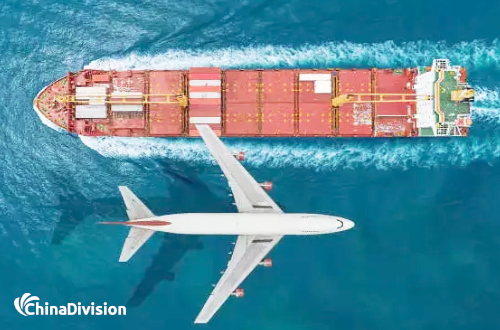
When air freight rates increase, switching to ocean freight may appear to be the most obvious solution. However, the cheapest transportation method is not necessarily the most economical option for every product or business.
The right decision depends on product value, shipment volume, inventory turnover, delivery commitments, and the financial consequences of delayed replenishment.
Key differences between air freight and ocean freight
| Comparison | Air freight | Ocean freight |
|---|---|---|
| Typical transit time from China | Approximately 3–7 days | Approximately 25–45 days |
| Transportation cost | Higher per kg | Generally lower per unit |
| Best suited for | Urgent, high-value, lightweight cargo | Bulk, heavy, non-urgent cargo |
| Capacity considerations | Aircraft space and flight schedules | Container availability and vessel schedules |
| Inventory requirements | Lower in-transit inventory | Higher inventory coverage |
| Delivery flexibility | Suitable for urgent replenishment | Requires advance inventory planning |
| Main cost risks | Fuel surcharges and chargeable weight | Port charges, delays, demurrage and storage |
| Common applications | Samples, electronics, seasonal replenishment | Apparel, home goods, bulk inventory |
Air freight
Speed, flexibility, and urgent inventory replenishment.
Ocean freight
Bulk transportation, lower unit shipping costs, and planned inventory movements.
When should businesses choose air freight?
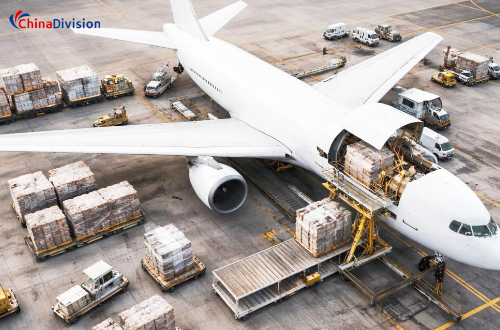
Air freight is generally the better choice when the financial cost of waiting is greater than the additional transportation expense.
Consider air freight when:
- Inventory is running low: Your overseas fulfillment warehouse is approaching a stockout, and waiting for ocean freight could interrupt sales.
- Products have high commercial value: Electronics, specialized components, and premium products can justify faster transportation.
- Demand is unpredictable: New product launches, crowdfunding campaigns, and promotional events may require rapid inventory replenishment.
- Products are lightweight: Lightweight products with high selling prices may absorb air freight costs more easily.
- Delivery commitments are strict: A delayed shipment could result in lost customers, contractual penalties, or missed sales opportunities.
When is ocean freight the better option?
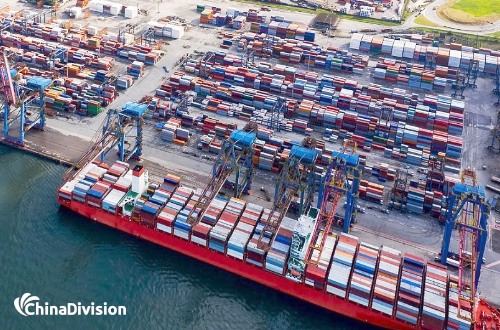
Ocean freight is often more suitable for businesses with predictable demand and sufficient inventory coverage.
Consider ocean freight when:
- You are shipping large quantities of standard merchandise.
- Products have relatively low selling prices and limited profit margins.
- Overseas warehouses already hold sufficient safety stock.
- Replenishment schedules can be planned several weeks ahead.
- The cost of transportation per unit is a major factor in profitability.
However, ocean freight should not be selected solely because its quoted transportation cost is lower. Importers must also account for customs clearance, port handling, destination transportation, inventory financing, and potential storage expenses.
Why a hybrid air-and-ocean strategy is more effective than choosing one method
For many international e-commerce businesses, the most effective strategy is to combine air freight and ocean freight rather than depend entirely on either transportation method.
This approach separates inventory into different replenishment priorities.
New launches, bestsellers, urgent stock, and unexpected demand.
These percentages are suggested starting points, not universal industry benchmarks. Adjust them according to product margins, demand volatility, and inventory turnover.
The advantage is that businesses can maintain sufficient inventory without paying premium air freight rates for every shipment.
A practical allocation strategy looks like this:
| Inventory category | Preferred transportation | Reason |
|---|---|---|
| Fast-moving bestsellers | Ocean + air | Ocean for planned replenishment; air for emergencies |
| Slow-moving products | Ocean | Lower transportation cost |
| New product launches | Air + ocean | Initial testing followed by bulk replenishment |
| Seasonal products | Primarily ocean | Advance inventory positioning |
| High-value urgent products | Air | Faster market availability |
| Promotional inventory | Based on campaign schedule | Avoid last-minute emergency shipping |
The key is to make transportation decisions before inventory becomes urgent.
Calculate the smallest air shipment that prevents a stockout
Forecast cumulative demand through the day before the ocean batch becomes sellable. Subtract sellable stock and other firm receipts available in time, then round the shortfall up to a full carton. Check the days before the air shipment becomes sellable, too: if you run out before it arrives, those lost sales can’t be credited to the air shipment.
How can your warehouse lower the freight bill before you negotiate?
Start with packed carton dimensions, not a rate request. For standard air cargo, IATA describes a general rule of dividing cubic centimeters by 6,000 and using the higher of volumetric and actual weight; confirm the divisor, rounding, and minimums in your own quote.
A practical 2027 logistics action plan
Businesses should start preparing before the new year rather than waiting for freight rates to change.
| Period | Priority | Recommended action |
|---|---|---|
| December 2026 | Cost assessment | Audit 2026 freight invoices and identify expensive routes |
| Q1 2027 | Procurement | Request updated air and ocean freight quotations |
| Q1–Q2 2027 | Inventory planning | Establish reorder points and safety stock |
| Q2 2027 | Transportation optimization | Evaluate ocean-to-air allocation and consolidation |
| Q3 2027 | Peak-season preparation | Secure capacity and position inventory in advance |
| Q4 2027 | Performance review | Compare freight expenditure, OTIF, and fulfillment costs |
Businesses should also monitor airline capacity changes, fuel surcharges, port congestion, and changes in customs requirements throughout the year.
The goal is to create a logistics strategy that can adapt to market conditions instead of depending on one transportation method or one freight provider.
How ChinaDivision Helps Businesses Manage Rising International Shipping Costs
For international e-commerce brands, managing rising air freight rates requires more than negotiating with airlines. It requires better coordination between suppliers, warehouse operations, packaging, transportation, and customer order fulfillment.
ChinaDivision provides integrated warehousing and international order fulfillment services, helping businesses coordinate their China-based supply chains and manage the movement of inventory to global customers.
With more than 14 years of industry experience, 8,000+ brands served, and 20,000㎡ of fulfillment center space, ChinaDivision supports DTC brands, crowdfunding creators, and businesses expanding internationally.
Whether you are a DTC brand, crowdfunding creator, or established cross-border seller, ChinaDivision can help you coordinate warehousing, packaging, inventory management, and international order fulfillment from China.
Work with an experienced logistics partner to improve shipping efficiency, optimize inventory movement, and prepare your business for the challenges of 2027.
Ready to optimize your international logistics costs?
FAQ: What should you ask an international warehousing and logistics partner?
Should I fulfill from China or hold stock in the destination market?
Consider a hybrid pilot if your bestsellers and long-tail SKUs have different needs. Hold predictable bestsellers near customers where the delivery promise or order volume justifies it, and keep less predictable items at origin if customers can accept the longer delivery window. Compare cost per delivered order, including storage, parcel delivery, returns, and the cost of holding duplicate stock.
Who is responsible for customs clearance, duties, and taxes?
Ask the provider to identify the importer of record, customs broker, duty payer, and party responsible for supplying classification and valuation data.
How can I verify inventory accuracy and integration before committing?
Ask the provider to run a small test with a bestseller, a near-identical variant, and a bundle. Then cancel one order before dispatch and return another after delivery. Check whether the warehouse and storefront agree on what is sellable, reserved, damaged, or awaiting inspection, and ask to see how a failed inventory update is detected and corrected.
Official Industry Sources and Further Reading


About the Author: Limi

Limi is a content marketing expert at ChinaDivision, helping businesses and e-commerce sellers navigate the complexities of international shipping by providing actionable tips and comprehensive guides on logistics, shipping, and cargo transportation.