

How to Calculate Shipping Costs From China to the USA Using the ChinaDivision Calculator?
Table of Contents
What Are the Key Components of Shipping Costs?
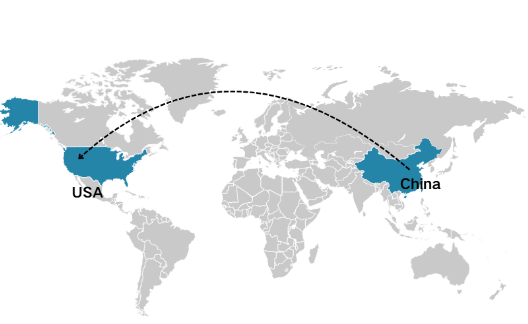
Logistics and supply chain companies recognize that freight costs are a substantial component of their operating expenses. Accurately calculating these costs is crucial for budgeting, pricing, and maintaining profitability. Freight costs refer to the fees associated with transporting goods from one location to another via various modes of transportation. These modes include shipping, rail, road, and air. Some costs are universal across all modes of transport, while others vary by mode. Freight costs are collected at the time of booking, en route, or upon delivery. Freight companies provide a detailed breakdown of freight charges. For example, air freight charges are detailed on the air waybill; ocean freight charges are detailed on the ocean waybill. Freight costs typically consist of several components, broadly categorized into two main types: basic freight and other charges. Specifically, these include basic freight, fuel surcharges, handling fees, customs duties, insurance, and expedited or special handling fees, among others. The final cost depends on the selected service level and the weight and distance of the goods, such as economy or express, and generally increases with distance and speed.
Key components of transportation costs:
- Basic Freight: The main cost of transporting goods from the point of origin to the destination.
- Fuel Surcharge: Also known as BAF, an additional charge based on fluctuations in fuel prices, usually calculated as a percentage of the basic freight. This applies particularly to air and sea freight.
- Handling and Documentation Costs: Includes the costs of necessary documentation, such as bills of lading, invoices, and other customs forms. This includes the costs of processing documents like bills of lading, as well as the actual preparation of the goods.
- Customs Duties and Taxes: Another key component of freight rates is port charges and customs duties. These are duties and taxes levied by the importing country. Port charges vary from port to port and typically include inspection fees, cargo handling fees, and storage fees. Furthermore, customs duties depend on the declared value and type of goods and are usually calculated based on the value of the goods.
- Insurance: Insurance costs are another component of freight rates. While not mandatory, it is strongly recommended to purchase insurance during transit as it protects goods from damage, theft, and other risks. Insurance premiums are generally calculated based on the declared value of the goods.
- Last-mile delivery fee: This refers to the cost of the final leg of the journey from the port or distribution center to the final destination. This delivery fee is another important component of shipping costs. It is collected upon arrival of the goods at the port and is used to transport the goods to their final destination. Shipping costs include merchant shipping fees and carrier shipping fees.
- Supplements: These are additional fees charged for situations such as peak seasons, port congestion, or dangerous goods.
- Error fees: Sometimes accidents happen, such as worker errors or machine malfunctions, but in the case of shipping, this can cost us money in the form of "address correction fees," "redelivery fees," or even "return fees."
- Destination surcharge: Sometimes called the "remote area surcharge" or "extra-remote area surcharge," this fee is charged if the delivery or pickup location is outside the courier company's regular service area. Additionally, some courier companies may charge extra for pickups in residential buildings.
What Information Is Needed to Calculate Base Freight?
Calculating shipping costs can be complex because many factors can influence the final cost. However, four pieces of information need to be absolutely accurate when estimating package shipping costs, as they directly determine the accuracy of your estimated shipping cost. If you have this information clearly defined, you can usually get an accurate quote. These four pieces of information are:
-
Origin and Destination
The shipping distance from the origin to the destination is a key factor in calculating shipping costs. Generally, the greater the distance, the higher the price. Courier companies use shipping zones to measure the distance a package travels from its origin to its final destination. Courier companies like USPS, UPS, FedEx, and DHL determine prices based on shipping zones, which can be found on their respective websites. While this may seem obvious, you need to accurately determine your origin and destination before calculating costs, as slight differences between the origin and destination can result in significantly different shipping costs. For example, shipping to East Coast ports like New York or Miami may cost more than shipping to West Coast ports like Los Angeles, primarily due to differences in port fees and shipping distance.
-
Package Weight
Heavier packages generally have higher shipping costs. Package weight refers to its net weight; its actual weight is the number you get when you weigh it on a scale. The heavier the package, the higher the shipping cost, so this number is very important, and its accuracy must be ensured. In addition, there is volumetric weight. Calculating volumetric weight is more complex and depends on the dimensions of the package you use to ship the goods.
-
Packaging Dimensions
It's especially important to note that courier companies also charge based on volumetric weight (or volumetric weight). Volumetric weight refers to the space a package occupies in the transport vehicle. To determine volumetric weight, the courier multiplies the package's length, width, and height, then divides that number by a divisor of their choice. Therefore, packaging dimensions are crucial; dimensions refer to the length, width, and height of the packaging used to transport the goods. Packaging dimensions vary widely, and the size of the package will significantly impact your shipping costs. Therefore, to obtain the most cost-effective and suitable packaging, e-commerce merchants must understand the specific information about shipping packaging. Only in this way can they choose appropriate packaging and minimize their shipping costs. Of course, if you are not a logistics expert, you will need to cooperate with a professional logistics fulfillment company , which will provide you with the most reasonable packaging. The reason why large parcels have high shipping costs is due to their volume and weight. The larger the space a parcel occupies in vehicles such as trucks and airplanes, the fewer parcels the carrier can transport at one time. Therefore, even if the package itself is lightweight, the shipping cost can still be high. Shipping costs increase with size; volumetric weight is a pricing mechanism. If a package is too large relative to its weight, such as a bicycle rim or a hula hoop, the shipping cost will increase accordingly. Understanding volumetric weight and how to optimize packaging to reduce shipping costs is crucial. These seemingly insignificant steps can significantly reduce shipping costs, provide more accurate estimates, and ultimately improve your e-commerce business profits.
-
Delivery Time
Delivery time refers to the time it takes for a package or shipment to travel from its origin to its destination. Depending on the distance the package travels, delivery time can range from overnight delivery to over a month, with prices falling somewhere in between. Express or expedited services are more expensive than standard or economy services because they require more resources to expedite processing and transport. If you want your package delivered overnight, the cost will be significantly higher than the standard 3-7 day ground shipping service. Before estimating shipping costs, be sure to determine how quickly you want your package to arrive.
-
Transportation Method
Transportation costs vary significantly depending on the mode of transport (sea, air, or land). International sea freight for bulk cargo is generally cheaper, but transit time can be longer. Air freight is fast and suitable for transporting perishable goods, but freight costs are relatively higher.
-
Commodity Type
Some commodities, due to their nature, may require special handling, packaging, or transportation methods. For example, electronics, dangerous goods, or fragile items typically incur higher freight costs due to the need for special packaging and careful handling during transport.
Shipping Cost Comparison
If you're shipping goods from China to customers in the United States, or if you purchase goods in China and need to ship them to the US, you might struggle with choosing the right shipping method, worrying about high costs and long delivery times. However, with the right tools, you can find cost-effective shipping solutions. To analyze the most economical and suitable shipping options, let's take shipping a 2kg package (35cm x 20cm x 15cm) from Shenzhen, China, to Los Angeles, USA as an example. Enter the following information into ChinaDivision's shipping cost calculator to compare pre-negotiated prices from top shipping service providers:
|
Courier |
Delivery Time |
Volume Factor |
Estimated Cost |
|
CNSZ-HKDHL-DRESS |
2-5 Business Days |
- |
$37.86 |
|
CNSZ-HKDHL |
2-5 Business Days |
5000 |
$46.80 |
|
CNSZ-DGFEDEX-PAK |
2-5 Business Days |
- |
$48.12 |
|
CNSZ-FEDEX-PAK |
2-5 Business Days |
- |
$48.12 |
|
CNSZ-FEDEX-BOX |
2-5 Business Days |
5000 |
$51.60 |
|
CNSZ-HKFEDEX-BOX |
2-5 Business Days |
5000 |
$72.66 |
|
CNSZ-HKUPS-BOX |
2-5 Business Days |
5000 |
$51.47 |
Use the ChinaDivision Calculator to Find the Cheapest Shipping Costs
For both merchants and customers, controlling shipping costs to the greatest extent possible is crucial for maximizing profits. So, how can you obtain accurate and the cheapest shipping rates? ChinaDivision's built-in shipping calculator perfectly solves this problem. We all know that international logistics companies like DHL, FedEx, and UPS have their own free shipping calculators to help you estimate shipping costs for different services. However, you need to navigate through multiple web pages to see the shipping costs of these three logistics companies, which is not conducive to comparison. But through ChinaDivision, you only need to enter basic information such as package weight, dimensions (length, width, height), origin, and destination to get all the shipping options. You can choose the option that suits your needs. Whether it's the shortest time or the lowest price, ChinaDivision can meet your needs.
In addition, you can compare pre-negotiated discounts from over 220 courier companies (including the USPS), with discounts up to 91%, getting the best shipping rates! Unlike carriers like FedEx, UPS, or DHL, which require you to commit to a certain volume of packages to enjoy specific price tiers, ChinaDivision offers the best and lowest shipping rates for businesses of all sizes, regardless of your annual shipping volume. Using a professional platform, you can get better prices, easier order management, and a smoother international shipping experience. This not only saves you time and money but also provides a better experience for your customers.
FAQs
1、What Are Volumetric Weight and Actual Weight?
Whichever is greater” (or “carrier’s choice”) is a phrase to remember when calculating the cost of moving goods by air, ocean, road, or rail. That’s because the carrier will always look at two different measurements – the actual weight and the volumetric(dimensional) weight of your shipment - and then base their chargeable weight calculation on the larger figure. The actual weight is the actual, gross, or total physical weight of your shipment, including any packaging and pallets. It is simply the entire shipment weight, typically expressed in kilograms (kgs) or pounds(lbs). The second type of weight is the volumetric or dimensional weight (the volume of your cargo). It is also expressed in kilograms or pounds, but based on your shipment’s dimensions (length, width, thickness, and height in centimetres), to which a density ratio is applied. Do not forget to include all the packages! The density ratio applied to your shipment depends on the transportation mode you have selected. e.g., If the density ratio of your shipping courier is 6000, the formula for volumetric shipping is ( L x W x H, in centimetres ) / 6,000.
2、How to calculate shipping costs?
Shipping charges are calculated based on the distance your package needs to travel and the dimensional weight. Use the Chinadivision Shipping Calculator to get a shipping quote for your package. Simply enter the weight, length, width, and height of your package into our shipping calculator to get a shipping quote.
3、How to save and calculate the shipping cost from China to the United States?
The shipping cost of a package is determined by multiple factors, such as the distance, size, weight, and space occupied by the package. Our freight calculator provides you with various transportation options from China to the United States. You can also use our freight calculator to select the most favorable freight prices.


About the Author: Limi

Limi is a content marketing expert at ChinaDivision, helping businesses and e-commerce sellers navigate the complexities of international shipping by providing actionable tips and comprehensive guides on logistics, shipping, and cargo transportation.