

DHL Express's New AI Tool Makes Customs Clearance Easier
Table of Contents
- DHL Express Introduces a New AI Tool to Simplify International Customs Clearance
- How Does DHL Express's New AI-Powered Tool Work?
- How DHL's New AI Tool Benefits Small and Medium-Sized E-Commerce Businesses
- What DHL's AI Tool Cannot Solve: 5 Customs and Fulfillment Challenges Sellers Should Not Overlook
- DHL Express vs. Other Logistics Providers: How AI Is Changing Customs Documentation
- How ChinaDivision Supports Cross-Border E-Commerce Fulfillment
- Frequently Asked Questions (FAQ)
International shipping involves more than selecting a carrier and printing a shipping label. For small and medium-sized e-commerce businesses, preparing accurate customs declarations can be one of the most time-consuming parts of fulfilling overseas orders.
DHL Express Introduces a New AI Tool to Simplify International Customs Clearance
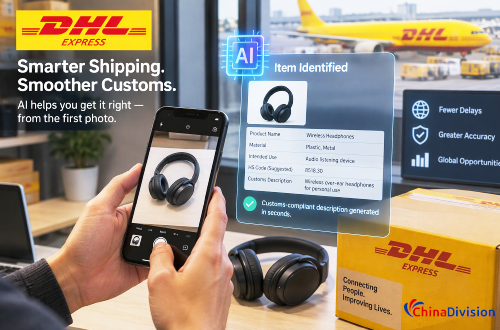
To address this challenge, DHL Express has introduced a new AI-powered item identification tool that analyzes product photos and automatically generates structured goods descriptions for customs documentation. Instead of manually writing descriptions for every shipment, customers can photograph their products and receive AI-generated suggestions within seconds.
The latest U.S. rollout was announced on November 17, 2026, ahead of the holiday shipping season. The United States joins nine other markets in the Americas where the capability is available: Brazil, Canada, Chile, Colombia, Costa Rica, Ecuador, Guatemala, Mexico, and Peru.
This development follows DHL Express's earlier international rollout, demonstrating the company's broader investment in AI-powered logistics and digital shipping solutions.
According to DHL, approximately 86% of its U.S. Express customers are small and medium-sized enterprises (SMEs). The number of U.S. SMEs using DHL Express for exports has also increased by 6% year over year, highlighting the growing demand for accessible international shipping solutions.
Why does this matter for e-commerce sellers?
Many small businesses lack dedicated customs compliance teams. They must manage product descriptions, customs forms, commercial invoices, shipping arrangements, and international delivery requirements with limited resources.
DHL's new AI-powered tool helps reduce this administrative burden by moving product identification closer to the beginning of the shipping process.
However, generating a customs-friendly description is only one part of international shipping compliance. Sellers must still ensure that product composition, declared value, country of origin, tariff classification, and other shipment information are accurate.
For businesses shipping hundreds or thousands of orders internationally, combining AI-powered shipping tools with professional third-party logistics (3PL) and warehouse management can provide a more comprehensive solution.
How Does DHL Express's New AI-Powered Tool Work?
DHL Express uses computer vision technology to identify products from customer-generated photographs and generate structured goods descriptions that support customs documentation.
Previously, shippers generally had to manually describe their products, often without knowing exactly which details customs authorities expected.
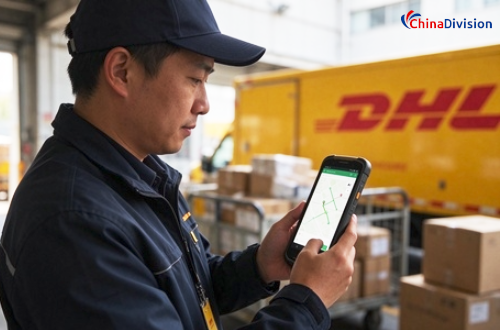
The new AI-powered tool simplifies this process into three steps.
Step 1: Photograph the Product
Customers take a photograph of the item they intend to ship using a smartphone or another connected device during the international shipping booking process.
The image provides the AI system with visual information about the product.
Step 2: Generate an AI-Powered Customs Description
The computer vision model analyzes the photograph, identifies the visible product category, and generates a structured description aligned with international customs documentation requirements. This helps customers provide clearer information about the nature of their shipment.
Step 3: Review and Confirm the Description
Customers can review, edit, or override the AI-generated description before submitting the shipment.
This human-review step is important because a photograph cannot always reveal the product's exact material composition, technical specifications, intended use, or other characteristics relevant to customs authorities.
The feature also does not require customers to have a DHL Express account, making it more accessible to occasional international shippers and smaller businesses.
DHL's AI Shipping Process at a Glance
| Process | Traditional Approach | DHL's AI-Powered Approach |
|---|---|---|
| Product identification | Manually identify the product | Analyze a product photograph |
| Goods description | Write descriptions manually | Generate suggested descriptions automatically |
| Documentation preparation | Research appropriate wording | Receive structured suggestions within seconds |
| Accuracy control | Depends heavily on shipper knowledge | AI assistance combined with human review |
| Final submission | Manually enter shipment information | Review and confirm the suggested description |
The key improvement is not simply faster data entry. It is the ability to improve the quality of product information at the beginning of the international shipping process.
How DHL's New AI Tool Benefits Small and Medium-Sized E-Commerce Businesses
The introduction of AI-powered item identification addresses several recurring challenges faced by small cross-border sellers.
Reduces Manual Customs Documentation Work
Small businesses often handle product listings, customer service, inventory, shipping, and customs paperwork with a relatively small team.
When a business sells dozens or hundreds of different SKUs, manually preparing product descriptions for every international shipment can become an operational burden.
AI-generated descriptions can reduce repetitive writing and help sellers establish more consistent documentation practices.
This is particularly useful for businesses with frequently changing product catalogs or seasonal merchandise.
Helps Reduce Avoidable Customs Delays
Incomplete descriptions can result in customs authorities requesting additional information.
These requests can interrupt the delivery process and create additional work for sellers, carriers, and customers.
By improving goods descriptions before shipment submission, DHL's new AI-powered tool aims to reduce one common source of documentation-related friction.
However, it should not be interpreted as a guarantee of faster customs clearance. Actual clearance times also depend on customs inspections, import restrictions, tariff classification, taxes, and other regulatory requirements.
Makes International Shipping More Accessible to New Exporters
For businesses entering international markets for the first time, customs documentation can appear complicated.
AI assistance lowers the technical barrier to preparing basic shipment information, allowing entrepreneurs to spend more time developing their products and expanding their customer base.
The ability to generate suggested descriptions without requiring a DHL Express account also makes the capability useful for smaller or occasional shippers.
Improves Consistency Across International Shipments
A business shipping the same product to multiple countries should maintain consistent product descriptions and supporting information.
Without standardized product data, different employees may describe the same SKU differently, increasing the likelihood of inconsistent commercial invoices and shipment records.
AI can help establish a more repeatable description process, particularly when combined with a centralized product information database.
What DHL's AI Tool Cannot Solve: 5 Customs and Fulfillment Challenges Sellers Should Not Overlook
Although DHL Express's new AI-powered tool is a meaningful development, e-commerce businesses should understand its limitations.
From a third-party fulfillment provider's perspective, customs compliance begins long before a shipment reaches the international carrier.
The following five challenges require additional attention.
AI Product Descriptions Do Not Automatically Determine the Correct HS Code
The Harmonized System (HS) is an internationally standardized framework used to classify traded products.
The correct classification can depend on a product's material, construction, technical specifications, functionality, and applicable classification rules.
A photograph-based identification tool can help describe what a product looks like, but visual recognition alone may not establish its legally correct tariff classification.
Our recommendation: Maintain an approved HS code database for every SKU. Use product specifications, supplier documentation, and professional customs classification support to verify codes before exporting.
Product Photographs Cannot Confirm Every Material or Component
A photograph may reveal its exterior design, but it may not show whether the product contains a lithium battery, which materials are used internally, or whether certain components require special handling.
Similarly, a photograph of a cosmetic product cannot establish its complete ingredients, alcohol concentration, or regulatory status.
For these products, sellers should maintain:
- Product specification sheets.
- Material composition records.
- Safety data sheets where applicable.
- Battery specifications and transport test documentation where required.
- Supplier declarations and supporting certificates.
This information should be available before the fulfillment warehouse prepares the shipment.
Incorrect Declared Values Can Still Cause Customs Problems
A product description may be perfectly accurate while its declared value is incorrect.
Customs authorities may examine declared values against commercial invoices, payment records, transaction information, and other supporting documents.
Undervaluation can result in reassessment, additional duties, penalties, or shipment delays, depending on applicable regulations.
AI-generated product descriptions do not replace accurate transaction records or customs valuation procedures.
Country of Origin Requires More Than a Shipping Address
The country from which a product is shipped is not necessarily its country of origin. Origin determination depends on applicable origin rules, including substantial transformation and relevant preferential trade agreement requirements.
Sellers should maintain reliable manufacturing and supplier records rather than assuming that warehouse location determines origin.
Poor Warehouse Data Can Undermine Otherwise Accurate Customs Documentation
Even if a seller generates an accurate customs description, fulfillment errors can introduce inconsistencies before the package leaves the warehouse. A customs declaration is only as reliable as the underlying order and inventory information.
This is why professional warehouse management systems (WMS), SKU-level product records, barcode scanning, and outbound verification remain important.
DHL Express vs. Other Logistics Providers: How AI Is Changing Customs Documentation
DHL Express is not the only logistics company investing in digital customs solutions.
Other freight and logistics providers have also introduced tools to simplify customs compliance and shipping documentation.
However, the specific capabilities differ.
| Logistics Provider | Digital Customs Capabilities | Main Focus |
|---|---|---|
| DHL Express | AI-powered computer vision generates goods descriptions from product photographs | Simplifying product identification and goods description |
| Flexport | AI-assisted tariff classification within its customs software | Supporting tariff classification workflows |
| FedEx | Digital international shipping and trade documentation solutions | Customs paperwork, shipping information, and trade support |
| UPS | Digital shipping and trade tools, including customs documentation support | International shipment preparation and duty management |
The important distinction is that DHL's new AI-powered item identification feature uses a photograph to generate a suggested product description directly within a customer-facing international express booking process.
This makes it particularly relevant to smaller businesses that do not have dedicated customs documentation teams.
For e-commerce sellers, however, choosing a logistics provider should involve more than comparing AI features.
Other important considerations include:
- International shipping coverage and available delivery channels.
- Customs brokerage and documentation support.
- Shipping costs and additional surcharges.
- Warehouse integration and order processing capabilities.
- Tracking visibility and exception management.
- Return handling and customer support.
AI can simplify one part of the shipping process, but the overall logistics experience depends on how well all these operations work together.
How ChinaDivision Supports Cross-Border E-Commerce Fulfillment
ChinaDivision provides China-based warehousing, order processing, customized packaging, and international shipping solutions for DTC brands, e-commerce sellers, and crowdfunding businesses.
Our services include:
- Professional Warehouse Receiving and Inspection
We help sellers receive products from Chinese suppliers, verify quantities, and perform product inspections according to agreed requirements.
- SKU-Based Inventory Management
Our warehouse operations use SKU identification and scanning to support accurate inventory handling and order fulfillment.
- Pick, Pack, and Customized Packaging
From individual e-commerce orders to customized gift sets and crowdfunding shipments, our team supports different packaging and assembly requirements.
- International Shipping Solutions
We work with multiple logistics channels to help sellers select suitable transportation options based on product characteristics, destination, budget, and delivery requirements.
- OMS and Store Integration
ChinaDivision supports integration with major e-commerce platforms, including Shopify and WooCommerce, helping automate order synchronization and tracking updates.
- Customs and Tax-Related Support
We provide shipping documentation assistance, DDP handling options, and VAT/IOSS configuration assistance to help sellers manage cross-border logistics requirements.
Frequently Asked Questions (FAQs)
1. What is DHL Express's new AI-powered item identification tool?
DHL Express's new AI-powered item identification tool uses computer vision to analyze photographs of products and automatically generate structured goods descriptions for customs documentation. Customers can review, edit, or override the suggestions before submitting their shipments.
2. Does DHL's AI tool automatically generate HS codes?
The core capability described in DHL's announcement focuses on generating customs-compliant goods descriptions from product photographs. It should not be treated as a substitute for verifying the correct HS code.
Sellers should independently confirm tariff classifications using product specifications and applicable customs classification rules.
3. Can AI-generated product descriptions guarantee faster customs clearance?
No. AI-generated descriptions can help improve documentation quality and reduce errors associated with vague or incomplete goods descriptions.
However, customs clearance also depends on tariff classification, declared value, country of origin, import regulations, duties, taxes, and potential inspections. No AI tool can guarantee that every shipment will clear customs immediately.
4. What information should I provide to a 3PL warehouse when sending products from China?
You should provide product names, SKU information, quantities, material specifications, product values, country of origin, applicable HS codes, and any special handling requirements.
For regulated or sensitive products, additional documentation such as safety data sheets, battery specifications, or relevant certificates may also be necessary.
Providing accurate product information before inventory arrives helps your fulfillment provider prepare appropriate warehouse and shipping processes.
5. Can ChinaDivision handle Shopify orders and international fulfillment?
Yes. ChinaDivision supports integration with Shopify and other major e-commerce platforms, including WooCommerce.
Once orders are synchronized with the fulfillment system, warehouse teams can process picking, packing, shipping, and tracking updates, helping sellers manage international orders more efficiently.
Official resources:
DHL Express in the U.S. Introduces AI-Powered Item Identification for International Shipping


About the Author: Limi

Limi is a content marketing expert at ChinaDivision, helping businesses and e-commerce sellers navigate the complexities of international shipping by providing actionable tips and comprehensive guides on logistics, shipping, and cargo transportation.