

Essential Documents for International Shipping of Luxury Goods
To successfully ship luxury goods internationally, businesses must prepare a complete intellectual property (IP) authorization chain, trademark ownership or brand authorization documents, customs filing records, commercial invoices, compliance certifications, and accurate customs declarations. As customs authorities worldwide continue strengthening anti-counterfeiting enforcement in 2026, incomplete documentation can lead to shipment delays, confiscation, fines, or blacklisting. Working with an experienced luxury goods logistics provider can significantly reduce compliance risks and improve customs clearance success rates.
Table of Contents
- Why Luxury Goods Shipping Requires Special Documentation
- Key Compliance Risks When Shipping Luxury Goods Internationally
- Comparison: Standard vs Luxury Logistics
- Required Documents: By Shipment Type
- Choosing the Right Shipping Method for High-Value Cargo
- How Chinadivision Delivers Safe Luxury Shipping
- Frequently Asked Questions (FAQ)
- Recommended resources
Why Luxury Goods Shipping Requires Special Documentation
Unlike ordinary consumer products, Luxury Goods, Branded Goods, and other forms of High-Value Cargo face stricter customs scrutiny because of intellectual property protection, counterfeiting concerns, and high tax exposure.
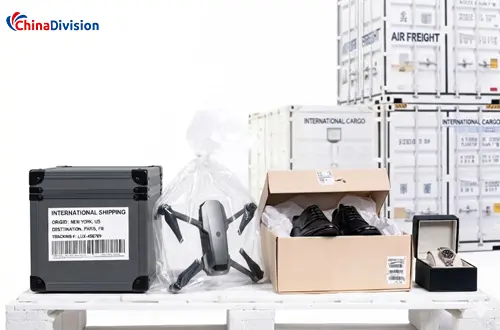
Today, customs authorities across Europe, North America, the Middle East, and Southeast Asia use advanced AI-powered inspection systems to identify potentially infringing shipments. As a result, businesses involved in Luxury Goods shipping, Branded Goods shipping, or High-Value Cargo shipping must provide clear proof of authenticity and legal distribution rights.
Key Compliance Risks When Shipping Luxury Goods Internationally
| Risk | Potential Consequence |
|---|---|
| Missing brand authorization | Customs detention |
| Incomplete documentation | Clearance delays |
| Incorrect product declaration | Fines and penalties |
| Suspected trademark infringement | Goods confiscation |
| Use of unauthorized shipping channels | Shipment seizure |
| Inconsistent invoices and declarations | Customs investigation |
For companies that regularly Ship Luxury Goods, prevention is far less expensive than resolving customs disputes after arrival.
Comparison: Standard vs Luxury Logistics
| Aspect | Standard Shipping | Luxury / High-Value Shipping |
|---|---|---|
| Documentation | Basic invoice + packing list | Full ownership/authorization + compliance + proof of origin |
| Customs Risk | Low | High — strict IP & authenticity checks |
| Storage | Open warehouse | Secure, monitored, climate-controlled vaults |
| Packaging | Standard cartons | Custom, shockproof, tamper-evident, discreet |
| Tracking | Basic updates | Real-time GPS + chain-of-custody monitoring |
| Insurance | Limited coverage | Full value, all-risk insurance |
| Preferred Mode | Any | High-Value Air Freight / Branded Goods Air Freight |
Required Documents: By Shipment Type
We break this down clearly — exactly what you need, who issues it, and why it matters.
📌 Section 1: Own Brand — Direct Shipment from Brand Owner
When you own the trademark and export directly
1. Trademark Registration Certificate (® Mark)
Must be ® registered in the destination country/region — TM (pending) marks are not accepted
Details required: trademark name, registration number, class, validity period, issuing office
Example: EUIPO registration for EU shipments; USPTO for USA
2. Trademark Customs Filing
Registered with Chinese Customs and customs of destination country (EUIPO, US CBP, etc.)
Materials: application form, registration certificate, owner ID, brand logo, product list
Why? Prevents customs from seizing your own goods as “counterfeit”
3. Brand Ownership Declaration
Official stamped document confirming: full ownership, scope of use, no disputes, right to export
Must match all other documents exactly
4. Compliance & Quality Certificates
CE (Europe), FDA (USA), CCC, quality inspection reports, safety certifications
Proves goods meet local laws and standards
5. Core Shipping Documents
Commercial Invoice: Full brand name, model, quantity, value, HS code — never vague terms like “clothing”
Packing List: Detailed contents, weights, dimensions
Certificate of Origin: Proves manufacturing location; required for tariffs and FTA benefits
Insurance Certificate: Full value coverage for High-Value Cargo
📌 Section 2: Authorized Brand — Agent / Distributor / Reseller
When you do not own the brand — you have legal rights to sell/export
✅ Most Important: Brand Authorization Letter
Issued directly by trademark owner
Must state clearly: licensor name, authorized party, product range, models, quantity, validity, authorized countries/regions
Must carry original official seal
Recommendation: Notarized or embassy-authenticated for EU/USA — without this, goods will be detained
✅ Multi-Level Sub-Authorization Documents
If the chain is: Brand Owner → General Agent → Distributor → Exporter
→ You must provide authorization for EVERY level
→ No missing links = no customs clearance
✅ Proof of Legal Origin
Purchase contracts, official invoices, payment records
Supplier qualification certificates
All must match product, brand, and quantity exactly
✅ Additional Required Papers
Certificate of Origin
Compliance certificates (same as above)
Declaration of Authenticity: signed, stamped, confirming no infringement
📌 Section 3: Universal Rules — Declaration & Channel Compliance
Even with all documents, wrong declaration or bad channel = failure.
✅ Accurate & Truthful Declaration
Waybill + Invoice + Customs Declaration = 100% identical
Must write: “Brand Name + Exact Product” → e.g., “Louis Vuitton leather handbag”
FORBIDDEN: Hiding brand, writing “gift”, “sample”, or vague descriptions like “bag” or “shoes”
Value: Declare real market value — undervaluation = fines 20–100% of value
✅ Choose Only Legal, Specialized Channels
Official carriers: DHL, FedEx, UPS, TNT — only accept fully authorized branded shipments
Prioritize: Branded Goods Air Freight, High-Value Air Freight, dedicated luxury lines
AVOID: Grey-market forwarders, “sensitive channels”, or unregistered agents — they cannot handle IP checks
✅ Advanced: Special Logistics Needs
Secure Warehousing: Monitored, alarmed, access-controlled storage — standard for Luxury Goods transport
Discreet Packaging: No external branding; shockproof, anti-tamper seals
Real-Time Tracking: Full visibility from warehouse to delivery
Chain of Custody: Recorded handling at every step
📌 Section 4: Emergency — If You Lack Direct Authorization
If you cannot get brand owner letter, you may still ship if you provide:
Full procurement chain: upstream contracts, invoices, distribution agreements
Proof of trademark registration and legal use
Brand official website, product catalog, quality reports
Declaration of Authenticity: legal promise that goods are genuine and you accept all liability
Choosing the Right Shipping Method for High-Value Cargo
Not all logistics channels are suitable for Ship High-Value Goods operations.
Air Freight vs. Express Courier
| Factor | High-Value Cargo Air Freight | Express Courier |
|---|---|---|
| Security | Very High | High |
| Cost Efficiency | Better for bulk shipments | Better for small parcels |
| Customs Support | Strong | Moderate |
| Insurance Flexibility | Excellent | Limited |
| Luxury Brand Shipments | Preferred | Common |
For most B2B businesses handling luxury inventory, High-Value Cargo Air Freight offers the best balance between security, compliance, and transit speed.
How Chinadivision Delivers Safe Luxury Shipping

We are not just a forwarder — we are your full Luxury Goods Logistics partner.
✅ Full Document Review & Preparation
We verify every paper before shipment to ensure compliance with 2026 rules; fix gaps before goods leave China.
✅ Secure International Warehousing
- 24/7 monitored, alarmed, climate-controlled facilities
- Separate zones for Branded Goods and High-Value Cargo
- Strict access control, inventory tracking, and insurance
✅ Specialized Transport Modes
- High-Value Cargo Air Freight: fastest, safest, priority handling
- Branded Goods Air Freight Lines: pre-cleared, dedicated customs
- Ship Luxury Goods with full insurance coverage
✅ Customs Mastery
We handle IP filing, compliance checks, and document submission — 99.8% clearance rate for branded/luxury goods.
✅ End-to-End Visibility
Track every movement; receive alerts; proof of delivery.
Successfully Shipping Luxury Goods internationally requires far more than transportation alone. Customs compliance, intellectual property protection, documentation accuracy, warehousing security, and shipment visibility all play critical roles.
Businesses involved in Luxury Goods Logistics, Branded Goods Transportation, and High-Value Cargo shipping should establish a complete compliance framework before export. Working with an experienced international warehousing and fulfillment provider can help reduce risks, improve customs clearance efficiency, and protect valuable inventory throughout the supply chain.
Frequently Asked Questions (B2B Focus)
Q1: What happens if customs find missing or wrong documents?
Goods are detained, often confiscated, and you face fines of 50–200% of value. You may be blacklisted, making future shipping impossible. Since 2026, penalties are stricter and automated.
Q2: Do I need different documents for EU vs USA vs Southeast Asia?
Yes. EU requires more strict authorization and notarization; USA needs CBP filing; SE Asia now has >45% inspection rates. We tailor documents per destination.
Q3: Can I use sea freight for luxury goods?
You can, but High-Value Air Freight is strongly recommended — faster, lower theft risk, less handling, easier customs. Sea is only for large bulk, low-risk items.
Q4: How do I protect goods from damage or theft?
Use specialized Luxury Goods transport services: secure packaging, discreet labeling, monitored transport, and full-value insurance. Our warehousing and packaging standards are designed exactly for this.
Q5: Is cargo insurance mandatory for high-value goods?
While not always mandatory, cargo insurance is strongly recommended for all High-Value Cargo shipments due to the financial risks associated with loss, theft, or damage.
Recommended resources
IATA - Cargo Security


About the Author: Limi

Limi is a content marketing expert at ChinaDivision, helping businesses and e-commerce sellers navigate the complexities of international shipping by providing actionable tips and comprehensive guides on logistics, shipping, and cargo transportation.