

How B2B Can Protect Shipping Costs and Avoid Fulfillment Delays in 2027
Table of Contents
- Why Lower Shipping Demand Doesn't Mean Cheaper or More Reliable Freight
- Why Are Ocean Freight Rates Still So High in November 2026?
- Shipping Space Is Becoming a Reliability Problem
- Rising Fuel Costs Are Increasing the Hidden Cost of International Shipping
- Build a More Resilient Fulfillment Strategy Instead of Chasing Lower Freight Rates
- Frequently Asked Questions (FAQ)
International shipping is becoming increasingly difficult to predict. Although the traditional peak season is gradually easing, global container freight rates remain significantly higher than last year, shipping space is constrained by port congestion, and rising fuel costs continue to put pressure on transportation budgets.
According to DHL Global Forwarding's November 2026 Ocean Freight Market Update, container market rates have increased by 138% year over year and 15% since August. More than 10% of the global container fleet, equivalent to approximately 3.6 million TEUs, remains tied up in congested ports.
Why Lower Shipping Demand Doesn't Mean Cheaper or More Reliable Freight
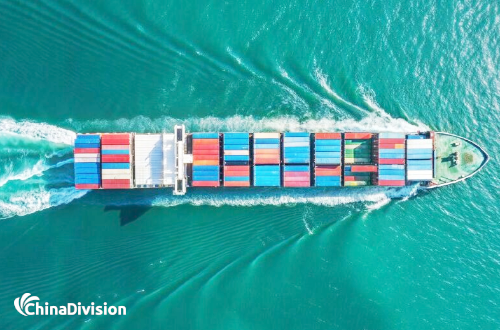
For importers, exporters, e-commerce brands, and B2B distributors, these developments create a difficult combination: higher transportation expenses, less predictable delivery schedules, and greater pressure to maintain sufficient inventory.
However, the biggest supply chain risk is not necessarily paying more for ocean freight. It is making purchasing, inventory, and customer delivery commitments based on shipping schedules that may change.
From an international order fulfillment and warehousing perspective, we believe businesses should move beyond traditional freight cost comparisons and focus on three interconnected priorities:
- Transportation flexibility: Maintaining alternative carriers, shipping routes, and booking options.
- Inventory resilience: Positioning sufficient inventory closer to customers to reduce dependence on individual vessel arrivals.
- Fulfillment continuity: Ensuring warehouse operations and last-mile delivery can continue even when international transportation is disrupted.
Why Are Ocean Freight Rates Still So High in November 2026?
The November 2026 shipping market presents an interesting contradiction: peak-season demand is gradually weakening, but ocean freight rates remain substantially above historical levels.
DHL reports that global container demand increased 5% year to date and 4% year over year, supported by an 8% increase in Asian exports. Meanwhile, demand on the Far East–Europe westbound trade increased 9% year to date, while backhaul demand remained flat.
This imbalance is important because shipping demand is not growing equally across all trade routes.
When exporters compete for shipping space on high-demand routes while return cargo volumes remain weaker, carriers must continuously adjust vessel deployment, equipment availability, and sailing schedules.
3 factors keeping freight rates elevated
Strong Asian export demand
Asia continues to play a significant role in global manufacturing and international trade. Growing export volumes increase competition for vessel capacity, particularly on major Asia–Europe and Asia–North America routes.
For businesses sourcing products from China, this means that waiting until inventory is nearly depleted before arranging transportation can create unnecessary exposure to booking delays and higher spot rates.
Port congestion is reducing effective shipping capacity
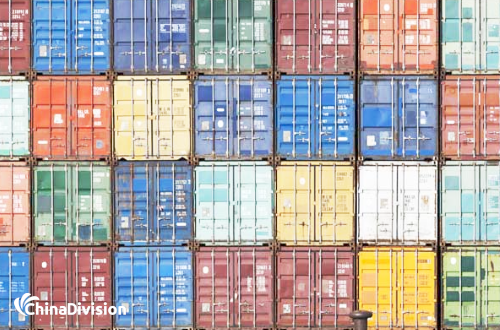
The number of available shipping containers and vessels does not necessarily represent the capacity that businesses can actually use.
DHL estimates that more than 10% of the global container fleet, approximately 3.6 million TEUs, is currently tied up in port congestion. The resulting reduction in effective capacity is estimated at approximately 15%.
In practical terms, a shipping line may have enough vessels on paper but still struggle to provide reliable departures because ships are waiting outside ports, containers are not returning to origin locations on time, and inland transportation networks cannot process cargo efficiently.
New vessel capacity takes time to improve the market
Global fleet capacity is forecast to grow by approximately 4% in 2026, below the historical annual average of around 6%.
Although net vessel capacity growth is expected to accelerate to 9% in 2027 and 15% in 2028, new ships alone cannot immediately solve congestion.
Terminals, container yards, inland trucking, and transshipment facilities must also have sufficient capacity to handle additional cargo.
This is why businesses should not assume that new vessel deliveries will automatically translate into lower ocean freight rates.
Ocean freight market indicators: November 2026
| Market indicator | Latest development | Implication for businesses |
|---|---|---|
| Container freight rates | Up 138% year over year | Higher transportation budgets |
| Rate movement since August | Up 15% | Limited short-term cost relief |
| Global container demand | Up 5% year to date | Continued pressure on major routes |
| Asian export demand | Up 8% year to date | Stronger competition for outbound space |
| Global fleet congestion | Over 10%, or 3.6 million TEUs | Reduced effective vessel availability |
| Effective capacity reduction | Approximately 15% | More booking and schedule uncertainty |
| Fleet capacity growth in 2026 | Forecast at 4% | Supply expansion remains limited |
Chinadivision logistics perspective: Businesses should evaluate freight costs based on the entire transportation cycle rather than the quoted ocean freight rate alone. A cheaper booking that results in a missed sailing, delayed inventory replenishment, or emergency air shipment can ultimately cost much more than a higher-priced but more dependable alternative.
Shipping Space Is Becoming a Reliability Problem
One of the most overlooked developments in international shipping is the difference between nominal vessel capacity and genuinely usable shipping space.
A freight forwarder may provide a competitive quotation, but that does not automatically mean the cargo will be loaded on the intended vessel or arrive according to the original schedule.
DHL's November update highlights continued congestion in major Asian ports, with fewer than one in three vessels arriving on time at key locations.
This creates several challenges for B2B businesses.
Why confirmed shipping space doesn't always guarantee shipment stability
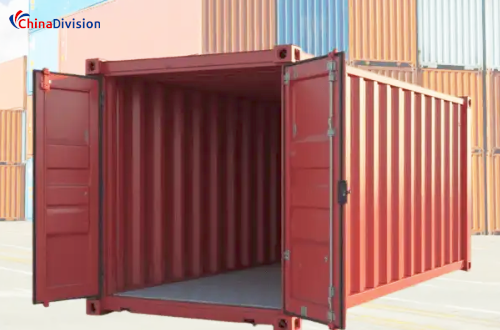
Shipping space availability depends on several operational factors:
- Vessel arrival and departure schedules.
- Container availability at origin.
- Port congestion and terminal handling capacity.
- Carrier booking acceptance and equipment allocation.
- Blank sailings and schedule adjustments.
- Transshipment connections and alternative routing decisions.
What businesses should ask their freight forwarder before booking
| Evaluation factor | Important questions | Why it matters |
|---|---|---|
| Space confirmation | Is the booking confirmed with the carrier? | Reduces the risk of relying on unconfirmed allocations |
| Equipment availability | Are shipping containers available at origin? | Prevents delays caused by equipment shortages |
| Sailing reliability | What is the recent on-time performance of this service? | Helps establish realistic delivery expectations |
| Routing | Is the shipment direct or transshipment-based? | Identifies additional connection risks |
| Alternative carriers | Can another carrier accommodate the shipment? | Provides backup capacity |
| Schedule changes | How are delays and rerouting communicated? | Improves inventory and delivery planning |
| Additional charges | Which surcharges may change after booking? | Prevents unexpected transportation expenses |
Practical recommendation: Do not evaluate a freight forwarder exclusively on its ability to obtain low ocean freight rates. Evaluate its ability to secure usable shipping space, communicate schedule changes, provide alternative transportation options, and coordinate the entire delivery process.
Rising Fuel Costs Are Increasing the Hidden Cost of International Shipping
Ocean freight rates are only one component of international transportation expenses.
Fuel costs also influence carrier pricing, bunker adjustment factors, inland trucking charges, and other transportation-related surcharges.
DHL's November 2026 report highlights substantial fuel price increases:
- Very Low Sulfur Fuel Oil (VLSFO) bunker prices are approximately 69% above their February 2026 level.
- Diesel prices have increased by as much as 75% since December 2025.
- Inland transportation surcharges are expected to remain under pressure.
These increases make it more difficult for businesses to forecast their actual landed costs.
How B2B Businesses Can Build a More Flexible Shipping Strategy in 2026
With freight rates elevated and shipping schedules unreliable, relying on a single carrier or transportation agreement can create unnecessary operational exposure.
DHL recommends a combination of committed capacity, hybrid procurement models, and spot market access.
We believe this approach is particularly relevant for e-commerce businesses because different products have different inventory requirements and sales priorities.
Compare three international freight procurement strategies
| Shipping strategy | Main advantages | Potential disadvantages | Best suited for |
|---|---|---|---|
| Contracted freight | More predictable pricing and planned capacity | Less flexibility when demand changes | Stable, high-volume shipments |
| Spot freight | Flexible access to available shipping space | Higher price volatility and uncertain availability | Urgent or unexpected shipments |
| Hybrid freight | Combines contracted capacity with flexible booking options | Requires more active coordination | Growing international businesses |
When should businesses use each strategy?
Contracted freight for essential inventory
Businesses with predictable monthly demand should consider reserving shipping capacity for critical inventory replenishment.
This reduces dependence on last-minute bookings and makes transportation budgets easier to forecast.
Spot freight for unexpected demand
Spot bookings can help businesses respond to sudden sales increases, promotional campaigns, or unexpected stock shortages.
However, businesses should avoid depending entirely on spot freight during periods of market disruption.
Hybrid freight for operational flexibility
A hybrid model provides a practical balance.
For example, an e-commerce company might allocate most of its regular replenishment volume to contracted freight while retaining a smaller portion for spot bookings and alternative carriers.
The allocation should depend on demand predictability, inventory turnover, and the financial impact of stockouts.
A practical shipment allocation framework
| Cargo priority | Suggested transportation approach | Inventory strategy |
|---|---|---|
| Critical products | Prioritized contracted capacity | Maintain a higher safety stock |
| Regular replenishment | Contracted or consolidated ocean freight | Replenish according to sales forecasts |
| Seasonal products | Early booking with backup carrier options | Build inventory before peak demand |
| Unexpected demand | Spot freight or alternative services | Prioritize high-margin SKUs |
| Urgent stock shortages | Air freight or expedited transportation | Restore availability while ocean replenishment continues |
The key is to match the transportation method to the commercial importance of the cargo.
Not every product needs premium shipping, and not every shipment should be delayed simply to obtain a lower freight rate.
Build a More Resilient Fulfillment Strategy Instead of Chasing Lower Freight Rates
The November 2026 ocean freight market demonstrates that international shipping remains exposed to multiple overlapping challenges.
Container rates are still significantly higher than last year, port congestion continues to restrict effective capacity, fuel costs are increasing, and changing vessel routes are creating additional schedule uncertainty.
Although new vessel capacity and easing peak-season demand may eventually improve market conditions, businesses should not assume that lower rates or more reliable schedules will return immediately.
The more sustainable approach is to build flexibility across the entire supply chain.
This means choosing a capable freight forwarder, diversifying transportation options, maintaining appropriate inventory buffers, and establishing a dependable international warehousing and order fulfillment network.
For B2B businesses sourcing from China and selling globally, Chinadivision offers an integrated approach to warehousing, inventory management, and international e-commerce order fulfillment.
Rather than allowing unpredictable ocean freight conditions to determine customer delivery performance, businesses can position inventory strategically and maintain greater control over the fulfillment process.
Ready to make your international fulfillment operations more resilient?
Partner with Chinadivision to optimize warehousing, streamline e-commerce order fulfillment, and build a more flexible logistics strategy for your global business.
Visit Chinadivision to explore the right fulfillment solution for your business.
Frequently Asked Questions (FAQ)
1. Why are ocean freight rates still high in 2026?
Ocean freight rates remain elevated because of strong Asian export demand, port congestion, limited effective vessel capacity, changing shipping routes, and increased fuel costs. Although peak-season demand is gradually easing, these structural challenges continue to influence transportation pricing.
2. How can businesses secure shipping space during periods of congestion?
Businesses should arrange bookings earlier, work with experienced freight forwarders, consider alternative carriers and regional gateways, and maintain flexible shipping schedules. For critical cargo, securing planned capacity is generally preferable to relying entirely on last-minute spot bookings.
3. How can international warehousing reduce the impact of shipping delays?
International warehousing allows businesses to position inventory closer to their target customers before orders are placed.
When new shipments experience delays, businesses can continue fulfilling orders using existing warehouse inventory. This reduces the immediate impact of transportation disruptions on customer delivery commitments.
4. How do rising fuel costs affect international shipping expenses?
Rising fuel costs can increase bunker adjustment factors, emergency fuel surcharges, inland transportation expenses, and other transportation-related charges. Businesses should request transparent quotations and understand how fuel-related adjustments are calculated before agreeing to shipping contracts.
5. Should businesses choose ocean freight or air freight when shipping rates increase?
The decision depends on cargo urgency, product value, shipment volume, and inventory availability.
Ocean freight is generally more economical for large-volume, non-urgent replenishment. Air freight is more appropriate for urgent inventory, high-value products, or situations where the financial impact of a stockout exceeds the additional transportation cost.
A hybrid transportation strategy can provide a practical balance.
Official resources


About the Author: Limi

Limi is a content marketing expert at ChinaDivision, helping businesses and e-commerce sellers navigate the complexities of international shipping by providing actionable tips and comprehensive guides on logistics, shipping, and cargo transportation.