

How Cross-Border Brands Can Navigate the High-Season Freight Crunch in the U.S.
Table of Contents
- The Data Behind the Exceptionally Tight Freight Peak Season
- Why Southern California Has Become the Tightest Freight Market in the US
- What Makes This Freight Peak Season Different From Previous Years?
- How Rising Port Freight Volumes Impact E-Commerce Sellers
- Real-World Fulfillment Challenges We Are Seeing Across Our Warehousing Network
- How Smart Brands Bypass the US Freight Bottleneck
- Why Leading B2B & E-Commerce Brands Choose Chinadivision
- Frequently Asked Questions
- Authoritative references
The US freight peak season has arrived with unprecedented force, catching unprepared importers and e-commerce brands in a vise of shrinking capacity and escalating costs. As of November 16, industry freight benchmarks reveal that the US spot rate for Full Truckload (FTL) shipments has surged to $3.56 per mile—representing a dramatic increase of over 50% compared to the same period last year. Simultaneously, the outbound tender rejection index has climbed to 12.85%, roughly double the rate recorded twelve months ago, signaling that carriers are turning down contracted loads in favor of lucrative spot-market freight.
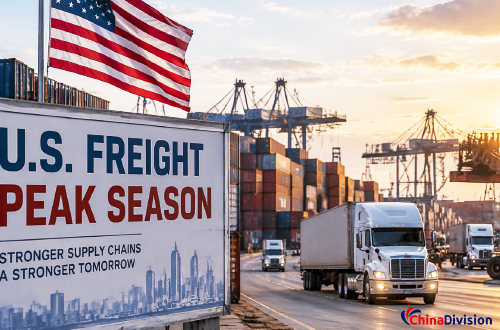
For cross-border sellers, this is not just a trucking-market headline. It affects how quickly inbound containers can move from port to warehouse, how reliably outbound orders reach customers, and how much margin survives after peak-season freight, accessorial charges, and delivery exceptions. The pressure is especially acute in Southern California, where Los Angeles tender rejections reached 10.9% and Ontario van rejections reached 10.82%.
The Data Behind the Exceptionally Tight Freight Peak Season
Recent market indicators reveal a significant shift in freight conditions.
| Metric | Current Level | Year-over-Year Change |
|---|---|---|
| FTL Spot Rate | $3.56 per mile | +50% |
| FTL Contract Rate | $2.86 per mile | +23% |
| Tender Rejection Index | 12.85% | Roughly 2x higher |
| Port of Los Angeles Import Booking Index | 406 | Highest since February |
These figures indicate more than temporary rate inflation.
They signal that transportation demand is increasingly outpacing available trucking capacity.
When carriers reject contracted freight at higher rates, shippers often have no choice but to enter the spot market where prices are substantially higher. This creates a ripple effect throughout the supply chain, impacting:
- Inventory replenishment schedules
- Warehouse operations
- Order fulfillment timelines
- Last-mile delivery performance
- Customer satisfaction metrics
For businesses operating with lean inventory models, even short transportation delays can result in stockouts and lost sales opportunities.
Why Southern California Has Become the Tightest Freight Market in the US
Southern California remains the gateway for a significant portion of US imports.
Major logistics hubs include:
- Port of Los Angeles
- Port of Long Beach
- Inland Empire distribution centers
- Regional cross-dock facilities
- National fulfillment networks
What many businesses fail to recognize is that congestion doesn't begin at the port.
The real pressure often emerges after containers are unloaded.
The Hidden Bottleneck: Inland Freight Capacity
Port operations may appear relatively stable, but inland transportation networks often become overwhelmed when import volumes surge.
The sequence typically looks like this:
- Import bookings increase.
- Containers arrive at ports.
- Drayage demand spikes.
- Warehouses experience receiving congestion.
- Trucking capacity tightens.
- Spot rates surge.
- Delivery lead times extend.
This chain reaction creates challenges even for companies that successfully moved goods across the ocean.
In other words:
Getting cargo into the US is no longer the biggest challenge. Moving inventory efficiently after it arrives has become the critical competitive advantage.
What Makes This Freight Peak Season Different From Previous Years?
Most freight peak seasons follow a familiar pattern:
- Retail inventory buildup
- Holiday sales spikes
- Temporary transportation shortages
However, the current market demonstrates several unusual characteristics.
Demand Is Concentrated Instead of Distributed
Historically, freight demand often spread across multiple regions.
Today, inventory continues to flow heavily through major gateway markets, especially Southern California.
This concentration creates localized capacity shortages that can rapidly spread throughout the national transportation network.
Carrier Discipline Has Improved
During recent freight downturns, many carriers operated at minimal margins.
In today's market:
- Carriers are more selective
- Contract compliance has weakened
- Spot opportunities are prioritized
- Capacity is less flexible
This means rate increases can occur more rapidly than in previous cycles.
Inventory Velocity Matters More Than Inventory Levels
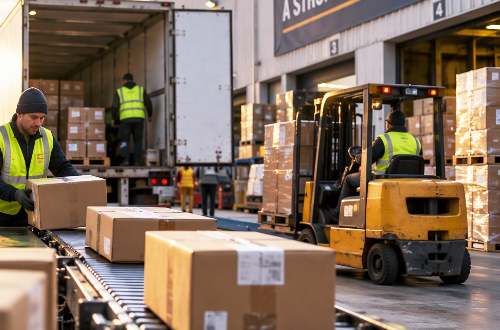
Many companies measure supply chain performance based on inventory volume.
But during a tight freight peak season, velocity becomes more important.
Businesses that can:
- Receive faster
- Process faster
- Pick faster
- Ship faster
can reduce transportation exposure and maintain service levels even when capacity tightens.
How Rising Port Freight Volumes Impact E-Commerce Sellers
The increase in port freight activity affects much more than transportation budgets.
For e-commerce businesses, the consequences often include:
| Challenge | Impact |
|---|---|
| Port congestion | Longer container dwell times |
| Drayage shortages | Higher transportation costs |
| Warehouse congestion | Slower inventory receiving |
| Trucking shortages | Missed replenishment windows |
| Delivery delays | Reduced customer satisfaction |
| Inventory imbalance | Higher storage expenses |
Many brands assume their challenges begin when orders increase.
In reality, disruptions often start weeks earlier when inbound inventory becomes trapped within logistics networks.
Real-World Fulfillment Challenges We Are Seeing Across Our Warehousing Network
As a global fulfillment provider supporting international sellers shipping into the United States, we have observed several recurring patterns.
Sellers Are Shipping Inventory Too Late
Many businesses continue to plan freight around historical transit times.
However, peak season transportation conditions require additional buffer time.
A shipment arriving just five to seven days later than planned can create:
- Amazon stockouts
- Marketplace ranking declines
- Lost Buy Box opportunities
- Increased expedited shipping costs
Single-Warehouse Strategies Are Creating Risk
Another issue is overreliance on a single fulfillment location.
When inventory is concentrated in one warehouse:
- Regional disruptions have a greater impact
- Delivery zones become longer
- Transportation costs increase
- Peak season delays are amplified
Freight Savings Are Being Prioritized Over Customer Experience
Some businesses focus solely on minimizing inbound transportation expenses.
The result often includes:
- Higher outbound shipping costs
- Longer delivery times
- Increased support inquiries
- Lower customer retention
The cheapest freight solution frequently becomes the most expensive business decision.
How Smart Brands Bypass the US Freight Bottleneck
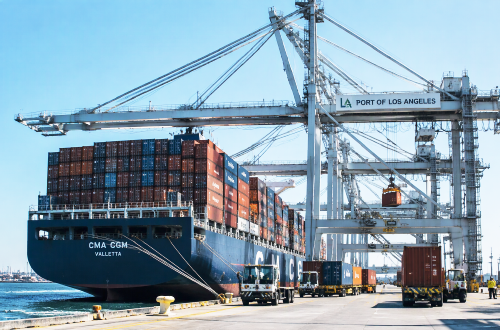
Rather than fighting for scarce $3.56/mile trucks out of Southern California, forward-thinking e-commerce and B2B brands are shifting upstream—leveraging origin-based fulfillment and hybrid distribution strategies.
Strategy 1: Direct-from-Origin Fulfillment for DTC Orders
Instead of importing bulk containers through congested West Coast ports only to pay high US domestic zone-shipping rates, brands can store inventory directly at the manufacturing source. By fulfilling direct-to-consumer (DTC) orders straight from an automated fulfillment center in China via dedicated air-express lines and local postal injections, parcels bypass traditional ocean port freight bottlenecks and FTL trucking markets altogether.
Strategy 2: Pre-Sorted Consolidation and Multi-Port Routing
For B2B replenishment and Amazon FBA shipments that require bulk transit, container consolidation and pre-labeling at origin eliminate downstream US warehouse delays. At Chinadivision, our facilities execute full FBA prep, carton labeling, and palletization before cargo ever leaves Asia—allowing freight to be routed to alternative East Coast or Gulf ports, or transferred directly via dedicated drayage without stopping at a congested domestic prep warehouse.
Strategy 3: Dynamic Inventory Buffering with Zero-Cost Storage Windows
Splitting inventory—holding safety stock in low-cost, high-efficiency Asian warehousing while sending lean, high-velocity batches to the US—protects your supply chain against both stockouts and over-exposure to US spot rates.
Why Leading B2B & E-Commerce Brands Choose Chinadivision
Navigating an exceptionally tight US freight peak season requires more than a standard freight forwarder; it demands an intelligent, tech-enabled fulfillment partner. Chinadivision bridges the gap between global manufacturing and seamless end-customer delivery.
- Automated Warehouse Precision: Upgraded with automated sorting machinery, our fulfillment centers boost sorting efficiency by 30% while maintaining a 99.96% order accuracy rate across 50,000+ daily orders.
- 30 Days of Free Warehousing: Reduce your overhead immediately with free 30-day inventory storage, real-time barcode tracking, and low-stock alerts via our cloud WMS.
- Omnichannel & B2B Flexibility: Whether you are shipping single DTC parcels to 200+ countries, preparing compliant B2B wholesale cartons, or managing Amazon FBA inbound shipments, our one-click integrations (Shopify, Amazon, WooCommerce, TikTok Shop, and REST API) keep your entire supply chain synchronized in real time.
Stop letting US spot-rate surges and port congestion dictate your Q4 profitability. Explore how Chinadivision can streamline your global logistics
Frequently Asked Questions
What is the US freight peak season?
The US freight peak season is the period when transportation demand significantly increases due to inventory replenishment, holiday retail demand, and heightened import activity. This typically leads to tighter trucking capacity, higher rates, and longer transit times.
Why are freight rates increasing so rapidly?
Freight rates rise when transportation demand exceeds available carrier capacity. Higher tender rejection rates indicate that carriers are declining contracted loads and moving freight through the spot market at elevated pricing.
How does port freight impact e-commerce businesses?
Increased port freight activity can create congestion, longer container dwell times, drayage delays, warehouse receiving bottlenecks, and slower inventory replenishment. These issues eventually affect order fulfillment and customer delivery times.
Should businesses increase inventory before peak season?
In many cases, yes. Building inventory buffers before peak season can reduce the risk of stockouts, transportation delays, and costly expedited shipments. The optimal strategy depends on demand forecasts and inventory turnover rates.
Why choose Chinadivision for international order fulfillment?
Chinadivision provides end-to-end e-commerce logistics services including warehousing, order fulfillment, inventory management, Amazon FBA preparation, and international shipping. Our integrated approach helps businesses reduce operational complexity, improve delivery performance, and scale efficiently during both normal operations and peak logistics seasons.
Authoritative references
50% Spike: Spot Rates SOAR Earlier Than Expected
SONAR Pricing Power Index Falls to 68 as Truckload Demand Weakens


About the Author: Limi

Limi is a content marketing expert at ChinaDivision, helping businesses and e-commerce sellers navigate the complexities of international shipping by providing actionable tips and comprehensive guides on logistics, shipping, and cargo transportation.