

How to Fulfill Kickstarter Crowdfunding Orders via Shopify
Table of Contents
- How Does the Kickstarter Shopify Integration Work?
- How Can a 3PL Provider Simplify Kickstarter Shopify Fulfillment?
- Kickstarter Fulfillment: Direct Shipping vs. China-Based 3PL Warehousing
- How to Choose the Right International Fulfillment Partner for Kickstarter Orders
- How ChinaDivision Helps Kickstarter Creators Fulfill International Orders
- FAQ: Kickstarter Crowdfunding Fulfillment and International Logistics
Successfully funding a Kickstarter campaign is a major milestone, but delivering rewards to backers around the world presents an entirely different operational challenge. Creators must turn campaign pledges into confirmed orders, prepare inventory, coordinate warehouse operations, manage international shipping, and keep backers informed throughout the delivery process.
To simplify this transition, Kickstarter introduced its official Shopify integration on November 11, 2026. The integration connects Kickstarter's Pledge Manager with Shopify, allowing creators to transfer finalized backer orders directly into their Shopify stores instead of manually exporting and uploading spreadsheets. It also supports SKU-based reward mapping, bulk order synchronization, segmented fulfillment, and automatic tracking updates from Shopify back to Kickstarter.
For creators, the integration is not just a convenience feature. It creates a practical bridge from crowdfunding validation to ongoing Shopify-based e-commerce fulfillment.
How Does the Kickstarter Shopify Integration Work?
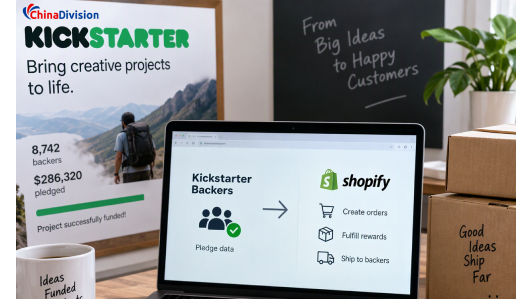
The official Kickstarter Shopify app connects Pledge Manager with an existing Shopify store, allowing creators to manage crowdfunding orders through familiar e-commerce fulfillment workflows.
Instead of manually transferring backer information between platforms, creators can synchronize finalized orders with Shopify, process them through their existing fulfillment systems, and automatically return tracking information to Kickstarter.
Key Features of the Kickstarter Shopify Integration
| Feature | How It Works | Operational Benefit |
|---|---|---|
| Direct order synchronization | Transfers finalized Pledge Manager orders into Shopify | Eliminates repetitive spreadsheet exports and uploads |
| 48-hour address confirmation | Gives backers time to confirm their shipping addresses before orders are transferred | Reduces address-related fulfillment errors |
| SKU-based reward mapping | Matches Kickstarter reward tiers and variants to Shopify products | Improves picking accuracy and inventory allocation |
| Bulk order transfers | Allows creators to synchronize multiple backer orders together | Simplifies high-volume order processing |
| Segmented fulfillment | Allows orders to be transferred in separate groups or waves | Supports phased production and inventory availability |
| Synchronization controls | Creators can control when orders are transferred | Prevents premature fulfillment |
| Automatic tracking synchronization | Sends Shopify tracking information back to Kickstarter | Keeps backers informed through the original crowdfunding platform |
Important: The integration is free to eligible Pledge Manager users and works with Shopify plans. Standard Kickstarter platform fees still apply. Creators should check the latest Kickstarter documentation for applicable account and feature requirements.
How to Transfer Kickstarter Orders to Shopify
The process generally involves four steps:
Step 1: Connect your Shopify store.
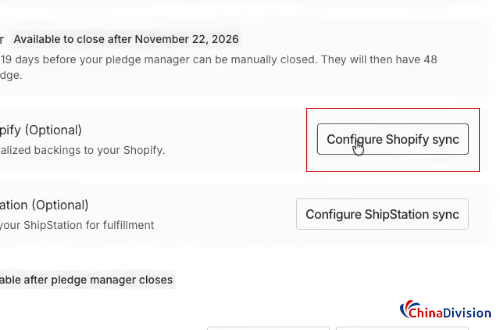
Access the Kickstarter Shopify app through Pledge Manager and authorize the Shopify store you intend to use for fulfillment.
Step 2: Map Kickstarter rewards to Shopify products.
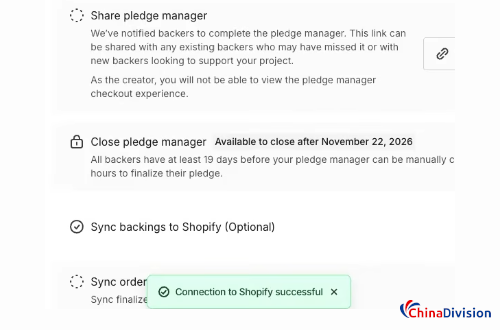
Match campaign rewards, product variants, and add-ons with the corresponding Shopify products and SKUs. Accurate mapping is essential because warehouse teams and inventory systems rely on product identifiers to distinguish items.
Step 3: Synchronize finalized backer orders.
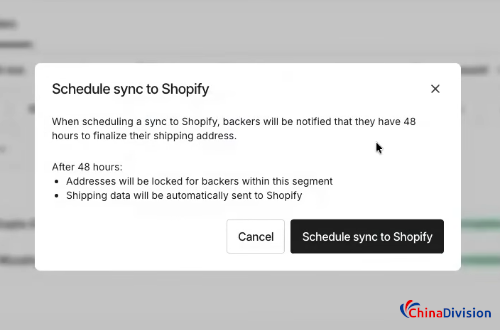
Transfer all eligible orders or select specific segments. Creators can organize fulfillment into multiple waves based on inventory availability, production completion, or geographic destination.
Step 4: Fulfill orders and synchronize tracking.
Once orders are processed through Shopify, tracking information added by the creator or fulfillment partner can automatically synchronize back to Kickstarter.
How Can a 3PL Provider Simplify Kickstarter Shopify Fulfillment?
A third-party logistics provider (3PL) manages physical fulfillment activities on behalf of an e-commerce business, including inventory receiving, warehousing, picking, packing, shipping, and order tracking.
For crowdfunding creators, a 3PL can bridge the gap between Shopify's digital order management and the physical delivery of rewards to backers.
Integrate Shopify Orders with Warehouse Operations
The Kickstarter Shopify app transfers orders into Shopify, but those orders still need to reach the warehouse responsible for processing and dispatch.
A connected fulfillment workflow helps ensure that:
- New orders are received by the fulfillment system.
- Product SKUs match warehouse inventory records.
- Available stock is allocated to eligible orders.
- Picking and packing instructions are generated.
- Shipment information is returned to Shopify.
- Tracking numbers are synchronized back to Kickstarter.
Before launching fulfillment, creators should test the entire process using sample orders. Check product variants, bundled items, shipping addresses, order tags, fulfillment statuses, and tracking updates.
Do not assume that every Shopify app or warehouse integration automatically supports every Kickstarter order configuration. Confirm compatibility with the chosen 3PL before transferring thousands of orders.
Reduce International Shipping Costs Through Warehouse Consolidation
Shipping individual products from multiple manufacturers can increase transportation expenses and make quality control difficult.
A China-based 3PL warehouse can receive products from different suppliers, consolidate inventory, inspect incoming goods, assemble reward bundles, and prepare individual international parcels.
This creates several potential cost advantages:
- Fewer fragmented inbound shipments.
- Better control over product packaging.
- More efficient bulk transportation arrangements.
- Reduced unnecessary packaging volume.
- Centralized inventory visibility.
- More consistent outbound fulfillment.
For creators working with multiple manufacturers, centralized inventory management also makes it easier to identify shortages before they affect backer delivery schedules.
Support Custom Packaging and Crowdfunding Reward Assembly
Crowdfunding products often require a more customized presentation than ordinary e-commerce orders.
Backers may expect branded packaging, thank-you cards, exclusive accessories, product manuals, promotional inserts, or different reward combinations.
A professional fulfillment warehouse can establish standardized packing instructions for each reward tier.
| Crowdfunding Requirement | 3PL Warehouse Solution |
|---|---|
| Multiple reward tiers | SKU-based picking and bundle assembly |
| Exclusive campaign packaging | Customized packaging and branded inserts |
| Multiple accessories | Kitting and product consolidation |
| Different backer groups | Order tagging and batch processing |
| Replacement products | Separate inventory allocation |
| International shipping | Destination-specific packing and carrier selection |
These procedures reduce the risk of incomplete rewards and help maintain a consistent unboxing experience.
Scale Fulfillment During Peak Seasons
Crowdfunding campaigns frequently create fulfillment deadlines that overlap with major shopping seasons, including Black Friday, Cyber Monday, Christmas, and other promotional periods.
During these periods, warehouse labor, international freight capacity, and last-mile delivery services may become constrained.
Kickstarter Fulfillment: Direct Shipping vs. China-Based 3PL Warehousing
Creators generally have two main options when fulfilling international Kickstarter rewards from China: shipping individual orders directly from suppliers or consolidating inventory through a professional fulfillment warehouse.
The right choice depends on order volume, product complexity, inventory availability, and delivery expectations.
| Comparison | Direct Shipping from China | China-Based 3PL Warehousing |
|---|---|---|
| Inventory location | Individual suppliers or manufacturer warehouses | Centralized fulfillment warehouse |
| Supplier coordination | May involve multiple suppliers and shipping arrangements | Inventory consolidated at one location |
| International transportation | Often arranged for individual customer orders | Can combine inbound freight and individual outbound delivery |
| Quality inspection | Depends on individual supplier procedures | Centralized receiving and inspection options |
| Reward assembly | Requires coordination with each supplier | Supports kitting and bundle assembly |
| Packaging customization | Depends on supplier capabilities | Can follow centralized packing instructions |
| Inventory visibility | May be fragmented | Centralized inventory records |
| Order processing | Depends on supplier dispatch capacity | Dedicated warehouse picking and packing workflows |
| Best suited for | Small campaigns, simple products, limited order volumes | Larger campaigns, multiple SKUs, customized rewards, and ongoing Shopify sales |
For creators who expect to continue selling products after their Kickstarter campaigns, a centralized 3PL model can also support the transition from crowdfunding to regular e-commerce operations.
Instead of establishing a separate logistics process for every campaign, creators can maintain inventory in one fulfillment network and use Shopify to manage both backer orders and subsequent retail orders.
How to Choose the Right International Fulfillment Partner for Kickstarter Orders
Choosing a fulfillment provider should involve more than comparing the lowest quoted shipping rate.
A provider may offer inexpensive transportation but lack the warehouse capabilities required to process complex reward bundles or large campaign volumes.
Before selecting a 3PL, evaluate the following factors.
Shopify Integration and Order Management
Ask whether the provider can receive Shopify orders automatically and whether its warehouse management system (WMS) supports:
- SKU and variant mapping.
- Bundled product configurations.
- Order tags and fulfillment rules.
- Partial shipments.
- Batch processing.
- Tracking synchronization.
- Inventory updates.
The integration should be tested with real-world order configurations before campaign fulfillment begins.
Warehouse Capacity and Processing Efficiency
A fulfillment partner should be able to explain its daily processing capacity and how it handles temporary increases in order volume.
Ask for information about:
- Warehouse space and storage arrangements.
- Daily receiving capacity.
- Picking and packing throughput.
- Peak-season labor planning.
- Quality inspection procedures.
- Inventory discrepancy handling.
A warehouse that handles 100 orders per day may not be suitable for a campaign that needs to dispatch 5,000 orders within a short period.
International Shipping Coverage
Evaluate the provider's shipping network and ability to handle multiple destination markets.
Check whether it can offer:
- International express and parcel services.
- Air and ocean freight arrangements.
- Customs documentation support.
- DDP and DAP shipping options, where available.
- Remote-area delivery solutions.
- Shipment tracking and exception management.
Request destination-specific quotations rather than relying on a single average international shipping rate.
Transparent Fulfillment Pricing
A complete 3PL quotation should explain the costs associated with the entire fulfillment process.
| Cost Category | What to Check |
|---|---|
| Inbound receiving | Receiving, unloading, counting, and inspection charges |
| Storage | Pallet, shelf, bin, or volume-based storage fees |
| Pick and pack | Charges per order and additional item |
| Packaging | Cartons, protective materials, inserts, and custom packaging |
| Kitting | Reward assembly and bundle preparation |
| International shipping | Carrier charges and billable weight |
| Customs-related charges | Duties, taxes, brokerage, and clearance fees |
| Additional services | Returns, relabeling, special inspections, and other handling |
A low pick-and-pack rate does not necessarily mean a low total fulfillment cost. Always compare the complete cost per successfully delivered order.
How ChinaDivision Helps Kickstarter Creators Fulfill International Orders
For Kickstarter creators transitioning from crowdfunding to Shopify e-commerce, ChinaDivision provides warehousing and international order fulfillment support designed to simplify cross-border logistics.
Rather than coordinating inventory, packaging, and shipping independently across multiple suppliers, creators can centralize these operations through a dedicated fulfillment partner.
ChinaDivision combines China-based warehousing, order processing, inventory management, and international shipping services to support businesses selling to customers worldwide.
Centralized Warehousing and Inventory Management
ChinaDivision provides warehouse receiving, inventory storage, and order fulfillment services, helping creators consolidate products from different manufacturers.
This is particularly useful for crowdfunding campaigns involving multiple reward tiers, accessories, and customized product combinations.
With centralized inventory management, creators can better coordinate:
- Supplier deliveries and inbound receiving.
- Product quantity verification.
- SKU-based inventory organization.
- Reward bundle preparation.
- Inventory allocation across fulfillment batches.
- Replenishment and stock monitoring.
Shopify Order Fulfillment and Automated Workflows
Once Kickstarter backer orders are synchronized into Shopify, creators can use an integrated fulfillment workflow to coordinate order processing.
ChinaDivision's fulfillment operations can support the physical stages of this process, including inventory allocation, picking, packing, dispatch, and shipment tracking.
Creators should confirm the required Shopify integration and order-field compatibility with the ChinaDivision team before transferring campaign orders.
Customized Packaging and Quality Inspection
Crowdfunding creators often invest significant resources in product development and presentation. A damaged product, missing accessory, or incorrectly assembled reward can negatively affect the backer experience.
ChinaDivision can support customized fulfillment requirements, including product inspection, packaging preparation, and reward assembly.
These services help creators maintain consistency between the rewards promised during the campaign and the products delivered to backers.
International Shipping and Logistics Coordination
Shipping internationally from China involves more than selecting a carrier. Creators must consider destination coverage, customs documentation, package dimensions, transportation costs, and delivery expectations.
ChinaDivision helps businesses coordinate international shipping options and warehouse dispatch operations according to their product and destination requirements.
For campaigns with multiple international markets, this centralized approach can make shipping coordination and fulfillment management more manageable.
Continue Selling Through Shopify After the Campaign
Kickstarter can help creators validate product demand and finance initial production, but many successful campaigns eventually develop into ongoing e-commerce businesses.
With inventory stored at a centralized fulfillment warehouse, creators can continue processing regular Shopify orders after their crowdfunding campaigns end.
This creates a more consistent operational model:
Kickstarter Campaign → Pledge Manager → Shopify → ChinaDivision Warehouse → International Shipping → Backer Delivery → Ongoing Shopify Sales
Instead of rebuilding the logistics process after every campaign, creators can establish a fulfillment infrastructure that supports both crowdfunding rewards and long-term e-commerce growth.
Planning your next Kickstarter fulfillment project? Contact ChinaDivision to discuss your inventory requirements, reward configurations, packaging specifications, and international shipping destinations. Our team can help you develop a fulfillment solution aligned with your campaign volume and delivery schedule.
FAQ: Kickstarter Crowdfunding Fulfillment and International Logistics
1. How do I fulfill Kickstarter crowdfunding orders through Shopify?
Connect your Shopify store using Kickstarter's official Shopify app through Pledge Manager. Map Kickstarter reward tiers to Shopify products and variants using SKUs, synchronize finalized backer orders, and process fulfillment through Shopify or a connected 3PL. Once orders are shipped and tracking information is recorded in Shopify, the tracking information can automatically synchronize back to Kickstarter.
2. Does Kickstarter charge extra for its Shopify integration?
The official Kickstarter Shopify integration is free for eligible Pledge Manager users and works with Shopify plans. However, standard Kickstarter platform fees still apply, and creators should account separately for Shopify subscription costs, fulfillment services, packaging, transportation, and applicable customs charges.
3. Can I use a 3PL to fulfill Kickstarter backer orders through Shopify?
Yes. Creators can use a third-party fulfillment provider to handle physical order processing after Kickstarter orders have been transferred into Shopify. The 3PL must have a compatible Shopify order integration or another agreed method for receiving fulfillment instructions and returning shipment information. Always test SKU mapping, bundled rewards, order statuses, and tracking synchronization before launching bulk fulfillment.
4. How do I manage Kickstarter rewards with multiple products or SKUs?
Create a structured SKU list for every individual product, variant, accessory, and bundle component. Map Kickstarter rewards to the corresponding Shopify products and establish warehouse picking instructions for each reward configuration. A 3PL can also support kitting and bundle assembly to reduce the risk of missing items.
5. Should I ship Kickstarter rewards individually or consolidate them through a warehouse?
For small campaigns with simple products, direct supplier shipping may be sufficient. However, campaigns with multiple manufacturers, large order volumes, customized packaging, or complex reward combinations can benefit from centralized warehousing. Consolidation allows products to be inspected, organized, assembled, and dispatched through one coordinated fulfillment operation.
Official sources


About the Author: Limi

Limi is a content marketing expert at ChinaDivision, helping businesses and e-commerce sellers navigate the complexities of international shipping by providing actionable tips and comprehensive guides on logistics, shipping, and cargo transportation.