

CBP issued the proposed rule "Low-Value Shipments" on October 8, 2026
Table of Contents
- What Is CBP's Proposed Type 13 Entry Rule?
- Type 11 vs. Proposed Type 13 Entry: What Is the Difference?
- What Changes Under the Proposed Rule?
- Who Could Be Affected by the Proposed Type 13 Rules?
- How E-Commerce Sellers Can Prepare for the Proposed Changes
- How Could the Proposal Affect Shipping Costs and Delivery Times?
- Frequently Asked Questions (FAQ)
Businesses shipping low-value goods to the United States should review their customs data, tracking-number management, filing responsibilities, and carrier coordination processes now. The proposed Type 13 requirements specifically concern eligible international mail shipments; they should not be treated as a universal rule for every parcel valued at $2,500 or less. This is a Notice of Proposed Rulemaking (NPRM), not a final rule currently in force. The proposal was published in the Federal Register on October 8, 2026, and comments are due December 7, 2026. CBP has not announced a final effective date.
U.S. Customs and Border Protection (CBP) has proposed changes to the informal entry procedures for low-value shipments, including a new electronic Type 13 entry category for eligible international mail shipments valued at $2,500 or less. The proposal would require earlier electronic filing, additional shipment information, and stricter handling of international mail articles that are not properly entered within 15 days of importation. These changes could affect cross-border e-commerce sellers, international mail operators, customs brokers, and third-party logistics (3PL) providers. However, the proposal must be distinguished from existing requirements until CBP finalizes and implements the relevant provisions.
What Is CBP's Proposed Type 13 Entry Rule?
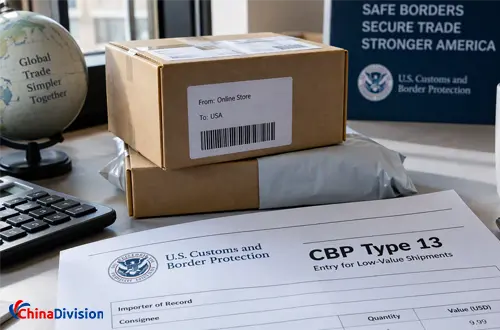
CBP's proposed rule would revise informal entry procedures for eligible low-value shipments and establish a new electronic Type 13 entry category for qualifying international mail articles valued at $2,500 or less.
The proposal aims to obtain more complete shipment information earlier in the import process, improve the connection between electronic entry records and carrier manifests, and strengthen compliance with U.S. import requirements.
The $2,500 threshold is generally associated with the distinction between informal and formal entry procedures. However, a shipment's value alone does not determine whether Type 13 applies. The transportation channel, eligibility requirements, and applicable customs procedures must also be considered.
Under the proposal, Type 13 would build on the data requirements for Type 11 entries while adding information about the sender and the parcel's tracking number. Carriers would also need to include the corresponding tracking number in the inward manifest.
For businesses shipping from China or other international origins to U.S. customers, the main operational change is that customs documentation would need to be more complete before or by the importation date rather than relying on a later filing window.
Type 11 vs. Proposed Type 13 Entry: What Is the Difference?
Type 11 and Type 13 are both associated with informal entry procedures, but their intended applications and data requirements differ.
| Comparison | Type 11 | Proposed Type 13 |
|---|---|---|
| Main application | Eligible low-value informal entries generally | Eligible informal entries through the international mail system |
| Value threshold | Generally $2,500 or less, subject to eligibility | Generally $2,500 or less, subject to eligibility |
| Entry method under the proposal | Electronic | Electronic |
| Proposed filing deadline | On or before the date of importation | On or before the date of importation |
| Additional data considerations | Proposed requirements include final deliver-to party information when different from the ultimate consignee | Sender or shipper information and package tracking number, in addition to applicable entry data |
| Carrier manifest | Applicable manifest requirements | Matching tracking number required under the proposal |
| Proposed 15-day mail abandonment provision | Not the same mail-specific provision | Applies to covered mail articles not properly entered within the specified period |
The key distinction is that Type 13 is designed for eligible international mail shipments, not every low-value parcel entering the United States. Shipments moving through other transportation channels may be subject to different entry and manifest procedures.
Businesses should confirm their shipment's eligibility and applicable entry type with their customs broker or relevant carrier before changing their filing procedures.
What Changes Under the Proposed Rule?
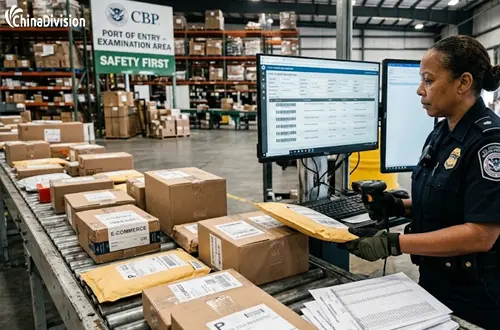
1. Electronic Entry Must Be Filed Earlier
Under the proposed rule, covered Type 11 and Type 13 entries would need to be filed electronically on or before the date of importation.
This would change the planning assumptions for businesses that currently rely on the existing Type 11 filing window, which generally permits filing within 15 days after arrival under the current framework.
The proposed deadline means that businesses would need to coordinate shipment data and customs filing earlier in the transportation process.
Potential operational implications include:
- Earlier data collection: Shipment and sender information must be available in time for the required filing.
- Closer coordination: Sellers, carriers, customs brokers, and fulfillment providers would need clear data handoff deadlines.
- Fewer opportunities for late corrections: Missing information could become a more immediate obstacle to compliant entry.
- Improved shipment visibility: Businesses may need better tracking of filing status and outstanding documentation.
Importantly, “on or before the date of importation” does not automatically mean that every shipment must be declared before leaving its origin country. The relevant importation date and applicable procedures should be confirmed under the final rule.
2. Type 13 Requires Additional Shipment Data
The proposed Type 13 process would require additional information beyond the general Type 11 data requirements.
The principal additional data elements include:
- Sender or shipper identity: Information identifying the party sending the shipment.
- Sender or shipper address: The corresponding address information.
- Package tracking number: The tracking identifier associated with the individual parcel.
- Matching carrier manifest data: The carrier would need to submit the same tracking number in the inward manifest.
The proposal also includes changes to Type 11 data requirements, including information about the final delivery recipient when that party differs from the ultimate consignee.
These requirements make data consistency particularly important. If a shipment label, customs entry, and carrier manifest contain inconsistent tracking information, the mismatch could complicate entry processing and shipment reconciliation.
E-commerce sellers should therefore review whether their order management systems, shipping platforms, and logistics partners can reliably capture and transmit the required information.
3. Certain International Mail Articles Could Be Deemed Abandoned After 15 Days
One of the most consequential elements of the proposal is the treatment of international mail articles that are not properly entered within 15 days of importation.
Under the proposed provision, covered mail articles that have not been properly entered within the specified period could be deemed voluntarily abandoned. Depending on the applicable procedures, the goods could be returned to the sender or destroyed. “Abandoned” does not simply mean delayed. It means the parcel may lose its normal path to release and delivery.
This creates a potential compliance risk for businesses that ship through the international mail system without reliable documentation and filing controls.
Businesses should not interpret this provision as an automatic 15-day destruction rule for every low-value international parcel. The proposed provision concerns covered international mail articles, and other entry channels may be subject to different rules.
To reduce the risk of shipment disruption, sellers and logistics partners should establish procedures to identify missing data, resolve filing issues promptly, and monitor the status of affected shipments.
4. Bond Requirements Could Increase Compliance Costs
The proposal also addresses importation and entry bond requirements for covered informal entries.
Depending on the final requirements and the circumstances of the entry, affected parties may need to account for an applicable basic importation and entry bond, potentially through a single transaction bond or continuous bond arrangement.
The proposal also discusses liquidated damages associated with certain bond violations, including a proposed minimum amount of $1,000 for specified violations.
These provisions could create additional administrative or financial considerations for importers and other responsible parties. However, actual obligations will depend on the final rule, the entry circumstances, and the applicable bond terms.
Businesses should consult their customs brokers and bond providers to determine whether their existing arrangements would meet any finalized requirements.
Who Could Be Affected by the Proposed Type 13 Rules?
The potential impact varies depending on how a business ships its goods, who handles customs entry, and how shipment data moves between systems.
| Business Type | Potential Impact | Recommended Preparation |
|---|---|---|
| Cross-border e-commerce sellers | More complete shipment data may be needed earlier | Standardize product, sender, and recipient information |
| International mail operators | Additional entry and tracking-data coordination | Review electronic filing and manifest workflows |
| Customs brokers | Earlier filing and more complete entry data | Confirm data handoff deadlines and filing capacity |
| 3PL and fulfillment providers | Greater coordination across sellers, carriers, and brokers | Introduce pre-shipment data validation and exception handling |
| U.S. importers | Potential changes to entry responsibilities, bond arrangements, and costs | Confirm importer-of-record and broker arrangements |
For e-commerce sellers shipping from China, the practical question is not simply whether a parcel is worth less than $2,500. It is whether the shipment uses a covered entry process and whether the parties responsible for filing can meet the applicable requirements.
Businesses should map their shipping methods, identify which parties prepare and transmit entry data, and establish clear responsibility for resolving incomplete or inconsistent records.
How E-Commerce Sellers Can Prepare for the Proposed Changes
Although the proposal is not the same as a finalized regulation, businesses can take several practical steps to improve their customs readiness.
1. Standardize Shipment Data
Create a consistent shipment-data checklist that includes, as applicable:
- Accurate product descriptions
- Harmonized System (HS) classification information
- Declared value and currency
- Country of origin
- Sender and recipient details
- Parcel tracking number
- Required customs entry information
The exact required fields will depend on the applicable entry type and finalized requirements. Standardizing data can nevertheless reduce avoidable errors and make information easier to exchange among sellers, carriers, and customs brokers.
2. Move Compliance Checks Earlier in the Fulfillment Process
Do not wait until a parcel encounters a clearance problem to verify its documentation.
Where operationally feasible, validate shipment information before dispatch or before the applicable filing deadline. Establish procedures for identifying missing fields, correcting inaccurate records, and escalating unresolved issues.
For businesses processing large order volumes, automated data validation can help identify incomplete records before they affect multiple shipments.
3. Reconcile Tracking Numbers Across Systems
The proposed Type 13 process makes the relationship between the electronic entry and carrier manifest especially important.
Businesses should confirm that the tracking number used in the customs entry matches the corresponding carrier data. They should also review how replacement labels, split shipments, consolidated consignments, and tracking-number changes are handled.
A reliable reconciliation process can help identify discrepancies early and reduce the risk of avoidable processing issues.
4. Confirm Broker and Bond Arrangements
Ask your customs broker or relevant logistics partner to review the proposed requirements against your current shipping processes.
Questions worth addressing include:
- Who is responsible for preparing and submitting the entry?
- When must complete shipment data be provided?
- Which party is responsible for correcting filing errors?
- Would the proposed bond requirements affect the existing arrangement?
- What additional service fees or administrative costs might apply?
Clear responsibility assignments are particularly important when sellers, fulfillment providers, carriers, and brokers operate separate systems.
5. Monitor the Rulemaking Process
A notice of proposed rulemaking is not the same as a final regulation. The proposal may be revised before finalization, and implementation details may depend on subsequent CBP guidance.
Businesses should monitor official CBP announcements and Federal Register publications, then update their standard operating procedures when the final requirements and effective dates are confirmed.
How Could the Proposal Affect Shipping Costs and Delivery Times?
The proposed changes could affect shipping operations through several cost and time factors, although the actual impact will depend on the final rule and each business's shipping model.
| Potential Impact | Why It Matters | Recommended Response |
|---|---|---|
| Customs brokerage costs | Additional filing or data-processing work may increase service charges | Confirm fees with the broker before implementation |
| Data preparation | More information may need to be collected and checked before filing | Standardize shipment-data collection |
| Clearance delays | Incomplete or inconsistent information can complicate entry processing | Introduce pre-shipment validation |
| Carrier coordination | Entry data and manifest information must be aligned | Reconcile tracking data across systems |
| Inventory planning | Delays may affect delivery estimates and replenishment schedules | Allow for operational contingencies and monitor shipment status |
| Bond-related costs | Applicable bond arrangements may create additional expenses | Review obligations with the broker or bond provider |
These are potential effects rather than guaranteed outcomes. The proposal should not be interpreted as evidence that every shipment will become more expensive or slower.
For businesses shipping large order volumes, even small increases in per-shipment administrative work can become material over time. Reviewing current workflows before implementation can help identify where automation, clearer responsibilities, or better data integration may reduce unnecessary costs.
Frequently Asked Questions
1. What Is CBP Type 13 Entry?
Type 13 is a proposed electronic informal entry category for eligible international mail shipments valued at $2,500 or less. It would require additional shipment data, including sender information and a package tracking number, alongside the applicable general entry information.
2. Does Type 13 Apply to Every Parcel Worth $2,500 or Less?
No. The proposed Type 13 category is specifically intended for eligible shipments entering through the international mail system. Other low-value shipments may use different entry procedures, depending on their transportation channel and eligibility.
3. What Is the Proposed 15-Day Abandonment Rule?
Under the proposal, covered international mail articles that are not properly entered within 15 days of importation could be deemed voluntarily abandoned and may be returned or destroyed. This provision should not be treated as a universal deadline for every low-value parcel entering the United States.
4. When Would Low-Value Entries Need to Be Filed?
The proposal would require covered Type 11 and Type 13 entries to be filed electronically on or before the date of importation. Businesses should confirm the applicable entry requirements and importation date with their customs broker or relevant carrier.
5. What Additional Information Would Type 13 Require?
The proposed Type 13 process would require sender or shipper information and the package tracking number in addition to the applicable entry data. The carrier would also need to submit the corresponding tracking number in the inward manifest.
6. Could the Proposed Rule Increase Shipping Costs?
Potentially. Additional data preparation, brokerage work, carrier coordination, and applicable bond requirements could affect operational costs. The actual impact will depend on the final rule, service-provider arrangements, and the shipment profile.
7. Is the Proposed Type 13 Rule Already in Effect?
A notice of proposed rulemaking is not a final rule. Businesses should check the latest Federal Register publication and CBP guidance to confirm whether the proposal has been finalized, revised, or assigned an effective date.
As U.S. customs procedures for low-value shipments evolve, e-commerce businesses need reliable shipment data, clear handoffs between logistics partners, and better visibility into inventory and delivery timelines.
ChinaDivision helps e-commerce businesses coordinate order fulfillment, warehousing, and international shipping from China. If you are reviewing your U.S.-bound fulfillment workflow, our team can help you discuss your shipping requirements and operational needs.
Plan your next shipment with ChinaDivision: ChinaDivision Shipping Cost Calculator


About the Author: Limi

Limi is a content marketing expert at ChinaDivision, helping businesses and e-commerce sellers navigate the complexities of international shipping by providing actionable tips and comprehensive guides on logistics, shipping, and cargo transportation.