

E-Commerce Sellers to Manage Backorders Without Losing Customers
While backorders signal strong product demand, improper handling can cripple your business. Unmanaged stockouts lead to expensive order cancellations, high chargeback rates, bad online reviews, and alienated buyers. However, when backed by a tech-driven international fulfillment partner, backordering can serve as an effective mechanism to capture sales, preserve revenue, and optimize cash flow without storing excessive inventory.
Table of Contents
- What Is a Back Order? Understanding the Core Mechanics
- Why Do Backorders Happen?
- Proven Strategies to Minimise Backorders
- Managing Backorders During Peak Seasons
- Backorders vs. Out of Stock vs. Backlog
- How Backorders Shape Customer Experience — and How to Protect It
- Why Partner With a Professional International Fulfilment Provider?
- Frequently Asked Questions (FAQ)
In this guide, we will analyze the mechanics of backorder management from the perspective of an international warehousing and logistics service provider, showing you how to turn potential operational bottlenecks into a scalable, high-converting supply chain strategy.
What Is a Back Order? Understanding the Core Mechanics
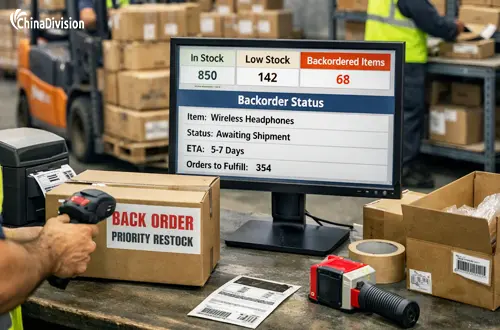
A back order refers to an item that is currently out of stock but can still be ordered by a customer with the explicit agreement that it will be fulfilled once stock is replenished.
Why Do Backorders Happen?
From our experience managing global inventory for hundreds of brands, backorders rarely stem from one mistake alone — they usually come from gaps between planning, suppliers, and real-world demand.
1. Inaccurate Demand Forecasting
Underestimating demand is the #1 trigger. When product launches, social media viral moments, or seasonal spikes hit faster than predicted, sales outpace available stock — and backorders follow fast. Without data-driven forecasting, even popular items can sell out before you can reorder.
2. Supplier Delays and Production Issues
Raw material shortages, factory maintenance, export bottlenecks, or logistics holdups can push restock dates back by days or weeks. Even a single missed shipment creates gaps that fulfilment centres can’t fill on short notice.
3. Insufficient Safety Stock
Many brands cut safety stock to save on storage costs — a risky trade-off. Without a buffer, even minor delays or unexpected demand will exhaust inventory immediately, creating backorders that could have been avoided.
4. Global Supply Chain Disruptions
Cross-border operations face unique risks: port strikes, customs delays, political changes, or extreme weather events. These often affect multiple suppliers and shipping lanes at once, causing widespread stock shortages.
5. Manual or Outdated Inventory Tracking
Spreadsheets and periodic stock counts can’t keep up with real-time sales across multiple sales channels. When system data doesn’t match actual warehouse stock, you end up selling what you don’t have — and creating backorders automatically.
6. Sudden Trend-Driven Demand
Viral videos, influencer campaigns, or sudden market shifts can make a product 10x more popular overnight. If your supply chain can’t scale fast enough, backorders become unavoidable until production catches up.
7. Over-Reliance on Unreliable or Single Vendors
Working with only one supplier leaves you zero backup options if they miss deadlines or underdeliver. Consistent late shipments from unvetted vendors create recurring backorders that damage your brand reputation.
Proven Strategies to Minimise Backorders
Backorders can’t always be eliminated — but their frequency and impact can be cut dramatically with the right systems and expertise.
Smarter Demand Forecasting & Inventory Planning
- Combine historical sales data, seasonal patterns, market trends, and upcoming promotions to predict needs accurately
- Use cross-channel analytics to see total demand across all your stores, marketplaces, and regions
- Plan replenishment timelines that account for international shipping and customs lead times
Automate Every Step of Stock Management
- Real-time inventory systems sync stock levels instantly across all sales channels
- Set automatic reorder triggers so purchase orders go out before stock runs low
- Barcode scanning and digital cycle counts eliminate human error entirely
Build Resilient Supplier Relationships
- Sign SLAs (Service Level Agreements) with clear delivery deadlines and penalty terms for delays
- Maintain relationships with at least one backup supplier for high-volume items
- Keep suppliers updated on upcoming sales events so they can prioritise your orders
Real-Time Visibility Across All Warehouses
- Centralised inventory dashboards show stock levels in every location — domestic and international
- Move stock between facilities proactively if one region is selling faster than expected
- Display accurate stock status directly on your product pages to avoid over-selling
Chinadivision’s Advantage: We combine AI-powered forecasting with global warehouse networks to keep your inventory positioned close to your customers — so you avoid backorders without overstocking or tying up too much capital.
Managing Backorders During Peak Seasons
Peak periods like Black Friday, Christmas, or regional sales events are when backorders are most likely — and most damaging — if not handled right.
Preparation Before the Rush
- Review data from previous years to flag top-selling items and order extra stock 6–8 weeks early
- Secure temporary storage and confirm staffing levels before demand spikes
- Notify suppliers of your expected volume increases well in advance
When Backorders Do Occur
- Prioritise restocks for your highest-selling and highest-margin products
- Group identical items together when picking and packing to speed up processing
- Automate status updates so your team isn’t tied up answering the same questions
Scale Operations Without Chaos
- Use flexible warehousing space for overflow stock
- Deploy cross-trained staff and extended shifts to keep orders moving 24/7
- Keep customers informed proactively — transparency builds trust far more than silence
Backorders vs. Out of Stock vs. Backlog
| Term | Definition | Can Customer Purchase? | Key Difference |
|---|---|---|---|
| Backorder | An order accepted but not yet shipped because stock is temporarily unavailable; fulfillment is scheduled once inventory arrives. | ✅ Yes — sold with a confirmed promise of later delivery. | Goods are on the way; the sale is completed. |
| Out-of-Stock | No inventory is currently available, and no confirmed restock date has been announced. | ❌ No — the item cannot be added to the cart or purchased. | The sale is blocked until inventory becomes available. |
| Backlog | All unfulfilled orders, regardless of the reason (such as packing delays, shipping queues, or inventory shortages). | N/A — describes the status of outstanding orders rather than purchasing availability. | Includes all pending orders, not just those delayed due to insufficient inventory. |
How Backorders Shape Customer Experience — and How to Protect It
Backorders are more than an operational headache — they directly determine whether a buyer will shop with you again. Customers don’t mind waiting occasionally — but they do mind being surprised, ignored, or given vague timelines.
Best Practices for Backorder Communication
| Action | Why It Works |
|---|---|
| Disclose Availability Upfront | Display messages such as "Ships in 3–4 weeks" directly on the product page so customers understand and accept the delivery timeline before placing an order. |
| Give Realistic Delivery Dates | Avoid vague promises like "coming soon". Instead, provide an accurate estimated delivery date and update customers promptly if timelines change. |
| Offer Clear Choices | Allow customers to switch to an in-stock alternative, split shipments, or cancel their order easily to improve the overall shopping experience. |
| Send Regular Brief Updates | A short status email every 10–14 days reassures customers, reduces uncertainty, and minimizes customer support inquiries. |
| Follow Up with Action | Send tracking information as soon as the order ships. Timely notifications increase transparency and build customer confidence. |
| Add a Small Gesture | Offer a discount on the next purchase or free shipping to help turn a delayed delivery into a positive customer experience and encourage repeat business. |
Why Partner With a Professional International Fulfilment Provider?
For brands expanding across borders, managing backorders on your own means juggling multiple suppliers, customs rules, time zones, and warehouse systems — all while trying to run your core business.
When you work with us, you stop chasing stock levels and start focusing on growing your brand — while we handle the logistics that keep your orders moving and your customers happy.
Frequently Asked Questions
How quickly can you ship backordered items once stock arrives?
With our priority processing, backordered items are picked, packed, and dispatched within 24 hours of stock arriving at our warehouse — and we update customers automatically.
Can I split shipments for orders with backordered items?
Yes — we can ship all in-stock goods immediately and send backordered items separately once available, or hold the full order until complete — you decide.
What is the typical lead time for replenishing stock from China to overseas warehouses?
A: Ocean freight typically takes 20–40 days depending on the destination port, plus 3–7 days for customs and inland transit. Air freight reduces this to 5–10 days but at higher cost. ChinaDivision helps clients plan reorder points that account for these real timelines, not optimistic estimates.
How do I know when to reorder to avoid a back order?
Your reorder point should factor in average daily sales, supplier production time, international transit time, customs clearance, and a safety buffer for demand spikes. ChinaDivision's WMS automates these calculations and alerts you when stock hits the reorder threshold.
How does real-time inventory tracking work across international warehouses?
ChinaDivision's WMS integrates with your e-commerce platforms, ERP, and marketplaces. When a unit is sold in any channel, stock levels update across all warehouses simultaneously. This prevents overselling—the most common cause of preventable backorders.
Recommended External Resources
Shopify – Inventory Management Guide


About the Author: Limi

Limi is a content marketing expert at ChinaDivision, helping businesses and e-commerce sellers navigate the complexities of international shipping by providing actionable tips and comprehensive guides on logistics, shipping, and cargo transportation.