

Shipping Packaging: The Complete Guide to Choosing Boxes, Materials & Dimensions
For international eCommerce businesses, shipping packaging is more than simply putting products into a box. The right packaging strategy directly affects shipping costs, product safety, customs compliance, customer satisfaction, and overall fulfillment efficiency. Get it right, and you protect your margins, meet carrier requirements, and build customer trust — even when goods travel thousands of kilometres. Get it wrong, and you face returned shipments, penalty fees, damaged goods claims, and lost sales.
Table of Contents
- What Is Shipping Packaging?
- What Makes Good Shipping Packaging?
- Packaging Box Types Comparison
- Packaging Materials: Pick the Right Protection for Your Goods
- How Packaging Dimensions Affect Shipping Costs
- UPS vs FedEx vs DHL: Packaging Considerations
- UPS vs FedEx vs DHL Packaging Comparison
- Compliance With EU Packaging and Packaging Waste Regulation (PPWR)
- Frequently Asked Questions (FAQ)
- ecommended Industry Resources
A poorly selected shipping packaging box can increase transportation costs due to dimensional weight, cause product damage during long-distance transit, create customs delays, or increase return rates. On the other hand, optimized packaging dimensions and materials can reduce logistics expenses while improving delivery reliability.
As a professional international order fulfillment and warehousing logistics provider, ChinaDivision helps global brands optimize packaging processes through warehouse-based packaging solutions, customized packing services, quality inspection, and international shipping optimization.
What Is Shipping Packaging?
Shipping packaging refers to the materials and methods used to protect, contain, label, and transport products from a warehouse to the final customer.

What Makes Good Shipping Packaging?
Before looking at specific carriers or regulations, every shipment should follow these core principles — designed to keep contents safe and avoid unnecessary costs:
- Choose a sturdy box: Use rigid shipping packaging boxes with intact flaps; never reuse damaged or weak cartons. Respect the weight limit printed on the bottom flap.
- Seal properly: Use only pressure-sensitive shipping tape — avoid masking tape, duct tape, string, or paper wraps. Seal all seams and edges completely.
- Clear old markings: Remove or cover all previous labels, barcodes, or hazard symbols to prevent misrouting.
- Double up on address details: Place one shipping label securely on the outside, and put a duplicate label or packing slip inside the box — including full sender and recipient details.
- Secure liquids: Pack bottles or containers in sealed plastic bags to prevent leaks.
Packaging Box Types Comparison
| Packaging Type | Protection Level | Cost | Best For |
|---|---|---|---|
| Corrugated Box | High | Medium | Most products |
| Poly Mailer | Low | Low | Clothing |
| Bubble Mailer | Medium | Low | Small fragile items |
| Mailer Box | Medium-High | Medium | DTC brands |
| Custom Box | High | Higher | Premium products |
Tip: Always match box strength to product weight. Overpacking increases cost; underpacking increases damage risk.
Packaging Materials: Pick the Right Protection for Your Goods
Different items need different cushioning — choosing the wrong material can lead to damage or extra weight costs.
| Material | Best For | Key Notes |
|---|---|---|
| Packing Peanuts (EPS Foam) | Lightweight items with irregular shapes | Use at least 2 inches (5 cm) of cushioning around contents. Not ideal for flat or thin items; creates static electricity and should not be used for electronics without anti-static protection. |
| Bubble Wrap | Fragile items, corners, and edges | Wrap products completely and place bubbles facing outward. Apply multiple layers for high-value or breakable goods to improve impact protection. |
| Inflatable Air Bags | Lightweight items without sharp edges | Effective for filling empty spaces inside packages. Avoid extreme temperature routes, as pressure changes may reduce cushioning performance. |
| Crumpled Kraft Paper | Non-fragile, medium-weight items | Must be tightly packed and leave around 2 inches of protection between products and box walls. It is recyclable, affordable, and suitable for sustainable packaging strategies. |
| Corrugated Liners & Inserts | Heavy or stacked items requiring extra strength | Reinforces box structures, separates multiple products, and helps prevent crushing or movement during international transportation. |
How Packaging Dimensions Affect Shipping Costs
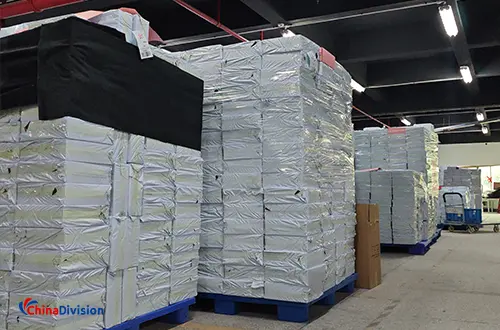
International carriers often calculate shipping charges based on:
- Actual weight
- Dimensional weight
The formula is commonly:
Dimensional Weight = Length × Width × Height ÷ Carrier Divisor
Standard international DIM divisors are typically 5000 for metric calculations (cm^3/kg) or 139 for imperial calculations (in^3/lb).
A lightweight but oversized package may cost more than a heavier compact package.
UPS vs FedEx vs DHL: Packaging Considerations
Different carriers have different strengths for international shipping.
UPS Shipping Boxes
UPS is widely used for:
- North America shipments
- B2B deliveries
- Heavy parcels
Recommended packaging:
- Strong corrugated boxes
- Proper sealing
- Accurate dimensions
FedEx Shipping Boxes
FedEx is commonly selected for:
- Express international delivery
- Business shipments
Recommended packaging:
- Durable cartons
- Correct labeling
- Secure internal cushioning
DHL Shipping Boxes
DHL is particularly strong for:
- International express shipping
- Cross-border eCommerce
Recommended packaging:
- Export-ready cartons
- Clear customs labels
- Moisture protection when required
UPS vs FedEx vs DHL Packaging Comparison
| Carrier | Best For | Packaging Focus |
|---|---|---|
| UPS | North America, B2B shipments | Strong cartons, accurate packaging dimensions, and durable protection for heavier parcels |
| FedEx | Express shipping and time-sensitive deliveries | Secure packaging, correct labeling, and reliable protection for fast transportation |
| DHL | International cross-border shipments | Export compliance, customs-ready packaging, and clear shipment documentation |
Compliance With EU Packaging and Packaging Waste Regulation (PPWR)
To meet EU PPWR standards, fulfillment centers must:
- Minimize excess packaging — avoid oversized boxes and unnecessary void fill.
- Check restricted substances — ensure materials meet EU safety thresholds.
- Include identification information — manufacturer/importer details on packaging.
Failing to comply with PPWR rules leads to severe cross-border customs holds, financial penalties, or forced destruction of non-compliant inventory at EU ports. Chinadivision works directly with merchants to supply eco-friendly, fully recyclable, and size-optimized packaging materials that meet global sustainability mandates.
Frequently Asked Questions (FAQ)
1. How do I choose the best shipping packaging box for heavy cross-border items?
For products weighing over 10 kg (22 lbs) or fragile items shipped across long international routes, always use double-wall corrugated boxes (BC-Flute or EB-Flute). Ensure at least 2 inches (5 cm) of high-density foam or cushioned inserts protect all corners, and seal all seams securely using an "H-tape" configuration.
2. How can I avoid paying high dimensional weight fees on lightweight, bulky products?
To minimize dimensional weight, eliminate oversized outer shipping cartons. Match your box size closely to the product's actual dimensions. For non-fragile items like apparel, soft toys, or textiles, switch from rigid boxes to lightweight poly mailers or padded bubble envelopes, which carry negligible dimensional volume.
3. Can Chinadivision handle custom unboxing experiences for crowdfunding and DTC brands?
Yes! Chinadivision provides comprehensive kitting, custom packaging assembly, promotional insert insertion, and specialized boxing services tailored to crowdfunding creators, subscription boxes, and premium Direct-to-Consumer (DTC) brands.
4. What is the difference between dimensional weight and actual weight?
Actual weight is how heavy your shipment is; dimensional weight is calculated from packaging dimensions. Carriers charge whichever is higher — using the right-sized shipping packaging boxes helps you avoid unexpected extra costs.
5. Can I use my own boxes for UPS, FedEx, and DHL?
Yes — provided they meet strength, weight, and packaging dimension rules. Branded carrier boxes are free for select services but may limit your ability to optimise size.
ecommended Industry Resources
For additional packaging and shipping guidance, businesses can refer to:
European Commission – Packaging and Packaging Waste Regulation (PPWR)


About the Author: Limi

Limi is a content marketing expert at ChinaDivision, helping businesses and e-commerce sellers navigate the complexities of international shipping by providing actionable tips and comprehensive guides on logistics, shipping, and cargo transportation.