

How to Manage Seasonal Inventory? Protect Margins and Avoid Stockouts
Table of Contents
- What Is Seasonal Inventory Management?
- The Hidden Costs of Poor Seasonal Inventory Management
- Forecast Seasonal Demand Using More Than Last Year's Sales
- Calculate How Much Seasonal Stock to Order
- Plan International Logistics Backward From the Sales Deadline
- Distribute Seasonal Stock According to Regional Demand
- Organize Warehouse Operations Before the Peak Arrives
- Choose an Inventory Model That Fits the Product
- Use Real-Time Inventory Visibility to Prevent Overselling
- Use Preorders, Backorders, and Flexible Replenishment Carefully
- Control the Cost of Seasonal Inventory
- Plan for Leftover Stock Before the Season Ends
- Measure Seasonal Inventory Performance With the Right KPIs
- How International Fulfillment Partners Help Manage Seasonal Stock
- Frequently Asked Questions About Seasonal Inventory and International Fulfillment
Seasonal demand creates a difficult balancing act for e-commerce businesses. Ordering too much seasonal stock ties up working capital and increases storage costs, while ordering too little can lead to stockouts, missed sales, and disappointed customers. For businesses selling internationally, the challenge becomes even more complicated because supplier lead times, cross-border transportation, customs clearance, and destination-market fulfillment must all work together.
Effective seasonal inventory management is not simply about predicting how many units customers will buy. It requires coordinating purchasing, inventory allocation, warehouse capacity, order fulfillment, and post-season recovery around a limited selling window.
What Is Seasonal Inventory Management?
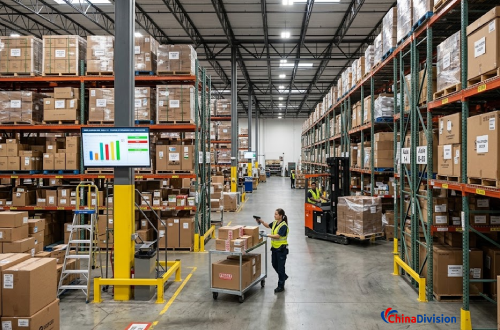
Seasonal inventory management is the process of forecasting, purchasing, storing, distributing, and selling products whose demand changes significantly during particular times of the year.
These fluctuations may be driven by holidays, weather, school calendars, cultural events, promotional campaigns, or changing consumer preferences.
Examples of seasonal stock include:
- Holiday products: Christmas decorations, Halloween costumes, and Valentine's Day gifts.
- Weather-dependent products: Winter coats, umbrellas, cooling equipment, and outdoor gear.
- Back-to-school products: School supplies, backpacks, and electronics accessories.
- Event-driven products: Gift sets, party supplies, and products promoted during Black Friday, Cyber Monday, or Singles' Day.
- Trend-sensitive products: Fashion collections, limited-edition merchandise, and products associated with short-lived online trends.
For international e-commerce sellers, seasonality is not always synchronized across markets. The objective of managing seasonal stock is therefore to make the right products available in the right quantities, at the right locations, before demand peaks—and to minimize the cost of inventory that remains afterward.
The Hidden Costs of Poor Seasonal Inventory Management
When e-commerce brands fail to optimize their seasonal inventory, the damages extend far beyond missed sales.
| Inventory Issue | Immediate Impact | Long-Term Impact |
|---|---|---|
| Stockouts | Lost sales | Lower customer loyalty |
| Overstock | Cash flow constraints | Storage fees and markdowns |
| Slow replenishment | Missed peak demand | Lower marketplace ranking |
| Late fulfillment | Customer complaints | Increased returns |
| Poor inventory visibility | Overselling | Operational inefficiencies |
Peak-Season Warehousing Surcharges: Many 3PLs and fulfillment centers impose severe holding fees or peak-season surcharges during Q4. Storing unsold seasonal goods after peak periods erodes your margins rapidly.- Capital Lockup: Unsold inventory isolates cash that should be reinvested into product development or marketing for the next sales cycle.
- Cross-Border Lead Time Cascades: Brands importing products globally face extended lead times, port congestion, and customs clearance delays. A two-week delay in supply chains during peak season can turn a hot product into immediate deadstock.
Forecast Seasonal Demand Using More Than Last Year's Sales
Historical sales data is a useful starting point, but it should not be treated as a complete prediction of future demand.
A product that sold 5,000 units last December may sell substantially more or less this year depending on pricing, advertising expenditure, competitor activity, customer reviews, and the availability of substitute products.
Build a demand forecast from multiple signals
Begin by collecting sales data from comparable seasonal periods. Review sales by SKU, sales channel, country, and week rather than relying exclusively on annual totals.
Then adjust the baseline using current business conditions.
| Forecasting input | What to analyze | How it improves the forecast |
|---|---|---|
| Historical sales | Units sold, sell-through rates, and stockout periods | Establishes a baseline for expected demand |
| Marketing plans | Promotion dates, advertising budgets, and planned discounts | Estimates demand generated by campaigns |
| Market trends | Search interest, competitor activity, and changing preferences | Identifies growth or decline not reflected in historical data |
| Regional demand | Sales by destination country or customer segment | Reveals differences between markets |
| Supplier capacity | Production schedules, minimum order quantities, and replenishment lead times | Determines whether forecast demand can be supplied in time |
| Current sales velocity | Orders per day and recent conversion trends | Helps update the forecast as the season approaches |
Correct for stockouts before calculating demand
A frequently overlooked forecasting problem occurs when historical sales are limited by inventory availability.
Suppose a seasonal product sells 60 units per day but remains out of stock for five days during a ten-day promotional period. Recorded sales alone will understate the demand that could have been fulfilled.
Rather than interpreting the recorded sales total as the full demand opportunity, identify the stockout period and estimate potential lost sales using available order, traffic, conversion, and comparable-period data.
This adjustment is particularly valuable for products that repeatedly sell out during major retail events.
Use three demand scenarios
Instead of committing to a single forecast, create three planning scenarios.
| Scenario | Planning assumption | Inventory response |
|---|---|---|
| Conservative | Demand grows more slowly than expected | Limit initial exposure and preserve cash |
| Base case | Demand follows the most likely forecast | Establish the main purchasing and storage plan |
| Upside | Demand exceeds the base forecast | Identify backup stock, supplier capacity, and expedited replenishment options |
The benefit is not that the forecast becomes perfectly accurate. It is that the business knows in advance what it will do if actual demand differs from expectations.
Calculate How Much Seasonal Stock to Order
Once the demand forecast is established, the next step is to determine how much inventory is required.
A useful starting point is:
Required replenishment = Forecast demand during the planning period + target ending inventory − usable inventory on hand − confirmed inbound inventory
This is a planning equation, not a substitute for SKU-level forecasting. Adjust it for existing customer commitments, expected returns, inventory already allocated to other channels, and inbound goods that may not arrive before the required date.
Calculate the reorder point
For a product with reasonably stable demand and lead time, a basic reorder-point formula is:
Reorder point = Average daily demand × Replenishment lead time + Safety stock
For seasonal products, the calculation must also account for the remaining selling window. Replenishing inventory after the peak may be technically possible but commercially unwise.
Calculate seasonal inventory using sell-through targets
Sell-through measures how much available inventory has been sold during a given period.
Sell-through rate = Units sold ÷ Units available for sale × 100%
A high sell-through rate can indicate strong demand, but it does not automatically mean inventory planning was optimal. If the product sold out early and customers could not purchase it for the rest of the campaign, the business may have missed profitable sales.
The best target depends on the product's margin, replenishment flexibility, remaining demand, and cost of carrying leftover stock.
Plan International Logistics Backward From the Sales Deadline
For cross-border e-commerce, the purchasing date should be determined by the date inventory must become sellable, not merely by the advertised launch date.
Work backward through the supply chain.
- Set the customer availability date. Determine when products must be ready to fulfill orders.
- Allow time for warehouse receiving. Include unloading, quantity verification, inspection, labeling, and inventory-system updates.
- Allow time for international transportation and customs. Use route-specific estimates and consider potential delays.
- Allow time for supplier preparation. Include manufacturing, quality checks, packing, and export preparation.
- Set a purchase deadline. Incorporate appropriate buffers for uncertainty at each stage.
For major sales events, maintain a milestone tracker showing the planned and actual dates for production completion, dispatch, customs clearance, warehouse receipt, and inventory availability.
If a milestone slips, the team can decide whether to expedite part of the shipment, adjust promotional activity, or prioritize the most profitable SKUs.
Distribute Seasonal Stock According to Regional Demand
Compare centralized and distributed inventory
| Factor | Centralized inventory | Distributed inventory |
|---|---|---|
| Inventory visibility | Generally simpler to consolidate | Requires visibility across multiple locations |
| Stock allocation | Easier to rebalance within one facility | May require transfers between locations |
| Delivery speed | May be slower for distant customers | Can improve when stock is positioned near demand |
| Storage commitments | Concentrated in one location | May require capacity across several facilities |
| Cross-border exposure | May involve international delivery for more orders | Can reduce cross-border delivery for eligible orders |
| Best suited for | Early-stage demand, uncertain forecasts, or concentrated sales | Established regional demand and sufficiently high order volume |
A practical approach is to begin with centralized inventory when demand is uncertain and introduce regional stock allocation as reliable sales patterns emerge.
The goal is not to distribute inventory as widely as possible. It is to position inventory where the improvement in delivery performance and total cost justifies the additional complexity.
Organize Warehouse Operations Before the Peak Arrives
Seasonal inventory increases both the volume of goods stored and the number of orders that must be processed in a limited period.
A warehouse that handles normal demand efficiently may experience congestion when large inbound shipments arrive while outbound orders are accelerating.
Prepare the warehouse for seasonal stock
Establish a clear receiving and fulfillment plan before inventory arrives.
- Reserve space for expected seasonal inbound shipments.
- Separate seasonal SKUs from regular inventory where operationally appropriate.
- Place fast-moving products in accessible picking locations.
- Use consistent SKU identifiers and scannable labels.
- Establish procedures for damaged goods, quantity discrepancies, and quality inspection.
- Review packing materials and packaging requirements before promotional activity begins.
- Plan staffing and order cut-off times around expected volume.
Inventory identification and traceability are also important. The GS1 barcode standards explain how barcodes can encode product and logistics identifiers, supporting more consistent identification and tracking across supply-chain operations.
For businesses working with multiple suppliers and logistics partners, standardized product identifiers and shipment records can reduce discrepancies between purchase orders, warehouse receipts, and inventory-system balances.
Prioritize products using ABC analysis
ABC analysis classifies inventory according to its value or business importance.
- A items: High-value or highly important products requiring close monitoring.
- B items: Products with moderate value or importance.
- C items: Lower-value products that may require simpler control procedures.
During a seasonal peak, ABC classification can help determine where to focus cycle counting, replenishment reviews, and warehouse access.
However, value alone is not enough. A low-cost product that generates a large proportion of seasonal orders may deserve priority because it can create substantial picking workload or customer-service risk if it runs out.
Consider combining ABC classification with demand velocity and stockout risk to create a more useful seasonal priority list.
Choose an Inventory Model That Fits the Product
Different inventory models serve different operational needs. No single method is ideal for every seasonal product.
| Inventory model | How it works | Potential seasonal application | Main limitation |
|---|---|---|---|
| First-in, first-out (FIFO) | Older inventory is issued before newer inventory | Perishable, date-sensitive, or trend-sensitive goods | Requires effective stock rotation and identification |
| Just-in-time (JIT) | Inventory arrives close to when it is needed | Products with predictable demand and dependable replenishment | Disruptions can quickly cause shortages |
| Economic Order Quantity (EOQ) | Estimates an order quantity that balances ordering and holding costs | Products with sufficiently stable demand and cost assumptions | Traditional assumptions may not fit short seasonal selling windows |
| ABC analysis | Prioritizes inventory by value or importance | High-volume seasonal assortment management | Requires complementary controls for demand variability |
| Safety stock planning | Holds a buffer against uncertainty | Products exposed to variable demand or replenishment delays | Excessive buffers can create post-season surplus |
One clarification is important: FIFO is a physical stock-rotation method, while ABC analysis is a prioritization method and EOQ is an ordering model. They solve different problems and can be used together.
The last-in, first-out (LIFO) approach may appear in certain accounting or specialized inventory contexts, but physical handling should follow the product's condition, shelf life, and operational requirements. Businesses should also follow the accounting rules applicable to their jurisdiction rather than treating LIFO as a universal warehouse recommendation.
Use Real-Time Inventory Visibility to Prevent Overselling
Seasonal promotions can generate orders faster than teams can manually update spreadsheets or reconcile multiple sales channels.
When stock records are inaccurate, businesses may continue selling products that are unavailable or reserve too much inventory for one channel while another experiences a stockout.
A stronger process connects sales orders, warehouse inventory, incoming stock, and fulfillment status.
Establish a shared inventory view
Your inventory process should distinguish between:
- Physical inventory: Units actually present in the warehouse.
- Available inventory: Units that can be allocated to new orders.
- Reserved inventory: Units committed to existing orders.
- Inbound inventory: Goods in transit or awaiting receipt.
- Damaged or quarantined inventory: Goods that cannot currently be sold.
- Safety stock: Inventory held to protect against uncertainty.
Do not treat inbound goods as immediately available inventory. They should enter the sellable balance only after the required receiving and inspection steps are completed.
Establish inventory alerts
Set alerts for:
- Stock falling below reorder points.
- Unexpected increases in daily sales.
- Inbound shipments missing planned milestones.
- Discrepancies between physical and recorded stock.
- Products approaching the end of their seasonal sales window.
- Slow-moving inventory accumulating after promotions.
The value of real-time visibility is not simply having more data. It is being able to take action before a small discrepancy becomes a lost-sales or excess-stock problem.
Use Preorders, Backorders, and Flexible Replenishment Carefully
Preorders and backorders can help businesses manage demand when stock is limited, but they should not be used to disguise uncertain supply.
Preorders
Preorders allow customers to purchase a product before it becomes available for immediate shipment.
They can provide an early demand signal and help businesses estimate how much stock is needed. However, preorder quantities should be compared against confirmed production capacity, expected delivery dates, and the risk of delays.
Communicate the expected shipping window clearly and avoid promising a delivery date that depends on unconfirmed international transportation arrangements.
Backorders
Backorders allow customers to place orders for products that are temporarily unavailable.
This approach is most appropriate when replenishment is confirmed and the expected fulfillment window is credible. If the next shipment is uncertain, a waitlist or stock notification may be safer than accepting paid orders.
Flexible replenishment
Where possible, negotiate with suppliers about partial shipments, production reservations, smaller replenishment batches, or agreed order-change deadlines.
These arrangements can reduce the need to commit all seasonal purchasing capital at once.
However, smaller shipments may have higher per-unit transportation costs, and suppliers may require minimum order quantities or additional fees. Compare the total cost and timing implications before choosing a replenishment strategy.
Control the Cost of Seasonal Inventory
A seasonal product can be profitable at the product level but unprofitable after storage, transportation, handling, and markdown costs are included.
To manage seasonal stock effectively, evaluate the total cost of holding and selling it rather than focusing only on the purchase price.
Compare the cost of holding stock with the cost of replenishing it
The decision should compare the expected cost of each strategy under multiple demand scenarios.
A useful rule is to commit early to products with strong historical demand and long replenishment lead times, while retaining more flexibility for products with uncertain demand and shorter replenishment lead times.
This approach is generally more useful than applying the same safety-stock percentage to every seasonal SKU.
Plan for Leftover Stock Before the Season Ends
A seasonal inventory strategy is incomplete without a plan for what happens when demand falls.
Once the peak passes, leftover stock can continue generating storage and handling costs while losing commercial value.
Create a disposition plan before the season begins.
| Post-season option | Best suited for | Key consideration |
|---|---|---|
| Markdown | Products that can still sell at a reduced price | Compare discount costs with the cost of holding stock |
| Bundling | Complementary products with different sales velocities | Ensure the bundle improves overall profitability |
| Carryover storage | Durable products likely to sell next season | Evaluate storage costs, product relevance, and future demand |
| Alternative sales channels | Products with demand outside the original channel | Account for marketplace fees and channel-specific requirements |
| Liquidation or donation | Products unlikely to sell profitably through normal channels | Consider recovery value, handling expenses, and applicable requirements |
| Recycling or disposal | Unsuitable, damaged, or commercially unrecoverable goods | Follow relevant environmental and product-handling rules |
The right choice depends on product shelf life, condition, expected future demand, storage costs, and the likely recovery value.
Process seasonal returns quickly
Returns often become a major operational consideration after holiday and promotional peaks.
Returned products should be inspected promptly and classified as sellable, requiring refurbishment, damaged, or unsuitable for resale.
The faster this process is completed, the sooner eligible inventory can be returned to the available stock balance.
However, returned inventory should not automatically be considered sellable. Product condition, packaging requirements, hygiene rules, and any applicable regulatory restrictions must be considered.
Measure Seasonal Inventory Performance With the Right KPIs
After the season, use operational data to understand whether inventory planning and fulfillment performed as expected.
| KPI | Calculation or measurement | What it reveals |
|---|---|---|
| Sell-through rate | Units sold ÷ Units available for sale × 100% | How effectively available inventory converted into sales |
| Inventory turnover | Cost of goods sold ÷ Average inventory value | How frequently inventory is sold and replenished |
| Days Sales of Inventory (DSI) | Average inventory ÷ Cost of goods sold × Days in period | How long inventory remains tied up, using consistent accounting definitions |
| Stockout rate | Define stockout events or unavailable SKU-time periods against a consistent denominator | How frequently products become unavailable |
| Order fulfillment accuracy | Correctly fulfilled orders ÷ Total fulfilled orders × 100% | Whether warehouse processes meet order requirements |
| On-time shipment rate | Orders shipped on or before the agreed dispatch deadline ÷ Eligible orders × 100% | Whether fulfillment operations meet dispatch commitments |
| Return rate | Returned units or orders ÷ Corresponding sold units or orders × 100% | The scale of returns and potential product or expectation issues |
| Forecast error | Difference between forecast and actual demand, measured consistently | Where forecasting assumptions need improvement |
Use consistent definitions across products, channels, and periods. For example, inventory turnover should generally use cost-based figures rather than mixing revenue with inventory cost.
A high turnover rate is not automatically desirable if the business repeatedly stocks out. Similarly, a low return rate does not necessarily indicate successful seasonal inventory management if orders were delayed or customers received products too late for the intended event.
Review operational metrics alongside contribution margin, customer satisfaction, and the value of leftover stock.
How International Fulfillment Partners Help Manage Seasonal Stock
A professional fulfillment provider can help businesses coordinate warehousing and order processing during seasonal demand spikes.
For B2B e-commerce companies sourcing products internationally, the most useful partner is not necessarily the one offering the lowest advertised storage rate. It is the provider whose operating model, communication, capacity, and service scope match the business's seasonal requirements.
When evaluating an international warehousing and fulfillment partner, consider the following capabilities.
Warehouse receiving and inventory control
Ask how inbound shipments are checked, discrepancies are reported, inventory is recorded, and damaged goods are handled. Confirm how long receiving and processing typically take under normal and peak conditions.
Flexible storage capacity
Determine whether storage arrangements can accommodate seasonal increases and subsequent reductions. Ask how overflow capacity, storage fees, and inventory removal are handled.
Order fulfillment and packing
Review picking accuracy, packing procedures, dispatch cut-off times, and the process for managing sudden increases in order volume.
Inventory visibility and integrations
Confirm whether the provider can share inventory and order-status information with your existing systems and sales channels. Ask how frequently stock records are updated and how discrepancies are resolved.
International shipping coordination
Understand which transportation options are available, how delivery estimates are established, and who coordinates export documentation, customs brokerage, duties, and taxes. Responsibility varies by service arrangement and applicable trade terms.
Returns and reverse logistics
Ask how returns are received, inspected, classified, and returned to sellable inventory. Establish clear fees and processing expectations before the seasonal peak.
Frequently Asked Questions About Seasonal Inventory and International Fulfillment
When should an e-commerce business start planning seasonal inventory?
Start planning early enough to accommodate demand forecasting, supplier production, international transportation, customs procedures, warehouse receiving, and contingency time.
The exact lead time depends on the product, supplier, origin, destination, shipping mode, and sales deadline. Work backward from the date products must be ready for customer orders, then establish milestones and review them as actual shipment information becomes available.
How can businesses avoid overstocking seasonal products?
Use historical sales data, current market signals, and multiple demand scenarios rather than relying on a single forecast.
Consider smaller initial commitments where replenishment is feasible, monitor sell-through during the campaign, and establish markdown or carryover-storage plans before the season ends. Balance the risk of excess inventory against the cost and feasibility of replenishment.
Can ChinaDivision help businesses prepare for seasonal order peaks?
ChinaDivision provides e-commerce fulfillment services that businesses can evaluate as part of their seasonal inventory and order-processing strategy.
Before engaging a provider, share your expected inventory volumes, inbound schedule, sales channels, target markets, peak order forecasts, and returns requirements. Ask ChinaDivision to confirm the service scope, available capacity, warehouse arrangements, pricing, integrations, and operational commitments that apply to your business.
Ready to improve your seasonal fulfillment operations? Contact ChinaDivision to discuss your warehousing and e-commerce order fulfillment requirements and prepare a more structured plan for your next peak season.
Industry resources
Shopify: Seasonal Inventory—What It Is and How to Manage It
Shopify: Demand Forecasting Software for Retail and Ecommerce


About the Author: Limi

Limi is a content marketing expert at ChinaDivision, helping businesses and e-commerce sellers navigate the complexities of international shipping by providing actionable tips and comprehensive guides on logistics, shipping, and cargo transportation.