

Shopify Packages & Shipping Guide: How to Cut Costs by 35% & Boost Delivery Speed
For cross-border Shopify merchants, logistics isn't just a backend necessity—it is a core driver of customer retention and profit margins. How to optimize your Shopify packages, reduce carrier surcharges?
Table of Contents
- What is Shopify Shipping vs. 3PL Fulfillment?
- The 2026 Shipping Landscape: Three Changes That Just Raised Your Costs
- Tackling the Top 3 Shopify Shipping Bottlenecks
- Fulfillment Strategy Matrix: Which Model Fits Your Shopify Store?
- How to Optimize the Logistics Experience of Shopify Packages
- Shopify Packages and Packaging Optimization: Reduce Costs from Details
- The ChinaDivision Advantage for Shopify Sellers
- How to Integrate Multi-Platform Orders and Logistics Information?
- FAQs: Shopify Packages & International Shipping
- Trusted Resources
Shopify Shipping works beautifully for domestic US orders. But for international sellers, it is a different story. In 2026, 70.22% of online carts are abandoned globally, and 48% of those abandonments are caused by surprise shipping costs revealed too late in checkout. Meanwhile, the USPS dimensional weight divisor dropped from 166 to 139 in July 2026, the US $800 de minimis exemption is gone, and the EU now charges a €3 customs duty per item on low-value imports.
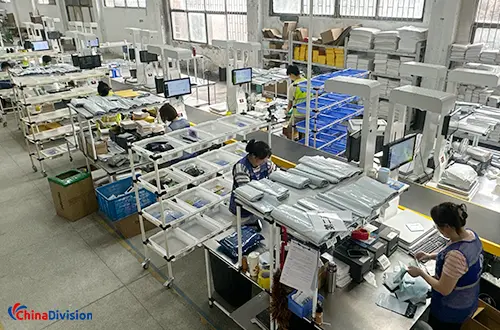
For cross-border Shopify merchants, logistics isn't just a backend necessity—it is a core driver of customer retention and profit margins. Cross-border shipping and order fulfillment can easily devour 30% to 50% of total order value, especially when dealing with small packages or un-optimized volumetric weight.
This guide explains why Shopify's native shipping tools break down at the border, how package optimization is your highest-ROI lever, and why international sellers are increasingly pairing Shopify with a 3PL that understands cross-border complexity.
What is Shopify Shipping vs. 3PL Fulfillment?
Shopify Shipping is Shopify's native logistics layer, offering discounted rates with carriers like USPS, UPS, DHL, and Evri. For US-based merchants shipping domestically, it is genuinely useful: pre-negotiated discounts, label printing inside the admin, and basic tracking.
Shopify Shipping is an in-platform tool allowing merchants to buy carrier labels (UPS, USPS, DHL Express, etc.) directly within the Shopify admin, using pre-negotiated carrier rates (offering discounts up to 88%).
However, as your order volume scales past 300–500 orders a month, relying solely on standard Shopify Shipping introduces operational bottlenecks:
- Manual pick-and-pack labor overhead.
- Lack of custom branding/kitting capabilities out of the box.
- Higher volumetric charges if packaging sizes are unmanaged.
The Solution: Integrating Shopify Shipping with a dedicated Third-Party Logistics (3PL) partner (such as Chinadivision). This hybrid approach lets you utilize native Shopify tracking and label generation while outsourcing physical warehousing, customized order assembly, and deep regional carrier routing.
The ChinaDivision perspective: We onboard Shopify sellers weekly who assumed Shopify Shipping would handle their global expansion. It does not. Shopify Shipping is a domestic tool with international bolt-ons. Cross-border fulfillment requires customs brokerage, HS code management, duty calculation, and multi-carrier routing that lives outside Shopify's native stack.
The 2026 Shipping Landscape: Three Changes That Just Raised Your Costs
Change 1: USPS Dimensional Weight Divisor Dropped (July 12, 2026)
USPS changed its DIM divisor from 166 to 139 and began rounding every fractional inch up. This affects Priority Mail, Priority Mail Express, and Ground Advantage packages over 1,728 cubic inches (1 cubic foot).
For apparel, bedding, and subscription boxes—where packaging is large relative to product weight—this change alone can increase shipping costs by 15–25% if packaging is not optimized.
Change 2: US $800 De Minimis Exemption Is Gone
As of 2026, the US suspended the $800 de minimis exemption for most commercial merchandise. Every commercial shipment now requires formal customs entry, 10-digit HTS classification, and full duty payment.
Impact on Shopify sellers: If you ship internationally to the US, your customers now face duties on orders that were previously duty-free. If you do not display this at checkout, you will see higher return-refusal rates and angry customer service tickets.
Change 3: EU €3 Duty on Low-Value Imports
From July 1, 2026, the EU ended its duty exemption for low-value imports. Consignments worth up to €150 now face a temporary €3 customs duty per tariff-classified item, separate from VAT. This applies until July 1, 2028.
Impact on Shopify sellers: A customer in Germany buying three items from your store now pays €9 in customs duties before VAT is even applied. If your checkout only shows product + shipping, that €9 is a surprise at the door—and a likely return refusal.
Tackling the Top 3 Shopify Shipping Bottlenecks
Bottleneck A: Hidden Carrier Surcharges & High Freight Costs
Beyond base rates, carriers frequently append hidden fees: fuel surcharges, peak-season fees, residential delivery fees, and address-correction penalties.
- Solution: Implement automated address verification apps on your Shopify checkout page (e.g., Loqate or Shopify native address validation) to eliminate $15–$20 carrier address correction fees.
- Combine native discounted rates with 3PL negotiated rates (like Chinadivision bulk pricing) to dynamically route orders to the cheapest carrier per zip/postal code.
Bottleneck B: Long Delivery Timelines & Friction at Customs
International transit delays kill repeat purchases. The two main causes are overseas warehouse staging delays and customs holds.
- Solution: DDP (Delivered Duty Paid) vs. DDU (Delivered Duty Unpaid). Always switch to DDP for key international markets by collecting duties/taxes transparently at Shopify checkout. Using automated customs tools to pre-file HS (Harmonized System) Codes ensures packages pass through clearing facilities in hours, not days.
Bottleneck C: Post-Purchase "Where Is My Order?" (WISMO) Inquiries
Inconsistent tracking updates lead to chargebacks, support ticket floods, and bad customer reviews.
- Solution: Don't rely solely on standard tracking emails. Build a branded tracking portal using Shopify-compatible tools (or your 3PL’s WMS API). Send automated SMS/email triggers at key milestones: Cleared Customs, Out for Delivery, and Delivered.
Fulfillment Strategy Matrix: Which Model Fits Your Shopify Store?
Choosing the right distribution model depends on your product type, margin, and average order value (AOV).
| Feature | Direct Cross-Border Shipping | Overseas Warehousing (3PL) | Hybrid Fulfillment Model |
|---|---|---|---|
| Best For | Low-value, long-tail SKUs, customized products | High-demand SKUs, heavy goods, high-AOV items | Fast-scaling brands with global customers |
| Delivery Speed | 7–12 Days | 2–4 Days (Local) | 2–5 Days Local / 6–9 Days Int'l |
| Inventory Risk | Zero (Keep stock centralized) | Moderate to High (Capital tied in multi-warehouses) | Balanced (Top 20% SKUs localized) |
| Upfront Cost | Low | High (Storage fees & bulk freight) | Optimized |
How to Optimize the Logistics Experience of Shopify Packages
1. Choose the Right Packaging
Packaging affects both product safety and shipping costs. Choosing the right packaging materials and sizes can reduce the risk of damage during transportation and lower logistics costs.
Best practices:
- Right-size boxes: Use packaging that fits the product snugly to avoid dimensional weight penalties.
- Use poly mailers for soft goods: Lighter and cheaper than boxes for apparel, accessories, and textiles.
- Reinforce fragile items: Use bubble wrap, air cushions, or corrugated inserts for electronics, glass, and ceramics.
- Eco-friendly materials: Shopify supports environmentally friendly packaging options, which enhance brand image and appeal to conscious consumers.
Data point: Brands that optimize packaging reduce shipping costs by 15–25% through lower dimensional weight charges.
2. Implement Logistics Insurance
During international logistics, there is a high risk of package loss or damage. To avoid losses, sellers can purchase insurance for the package.
Options:
- Shopify Shipping Insurance: Available for select carriers and countries. Covers loss, damage, or theft up to a specified value.
- Third-party insurance: Providers offer broader coverage and lower rates.
- Self-insurance: For low-value items, absorb the cost of occasional losses rather than paying for insurance on every order.
Recommendation: Use insurance for high-value orders (> $100) and self-insure for low-value items.
3. Automate Order Fulfillment
Manually processing orders is time-consuming and prone to errors. By automating the order fulfillment process, sellers can improve efficiency and reduce errors.
Automation tools:
- Automatic label printing: Use Shopify's built-in label printing or third-party apps .
- Automatic inventory updates: Sync inventory levels across sales channels to prevent overselling.
- Third-party logistics (3PL) integration: Connect Shopify to a 3PL like ChinaDivision for automated order routing, picking, packing, and shipping.
Impact: Automation reduces fulfillment time by 30–50% and error rates by 60–70%
4. Optimize the Logistics Distribution Network
International logistics distribution involves multiple links. Optimizing the logistics distribution network can significantly improve delivery efficiency.
Strategies:
- Use Shopify's global delivery network: Shopify supports shipping from multiple locations around the world. Sellers can choose the best shipping location based on customer needs.
- Partner with logistics providers: By cooperating with 3PL partners like ChinaDivision, sellers can improve delivery efficiency and reduce logistics costs.
- Distribute inventory strategically: Store bestsellers in regional warehouses (e.g., US, EU, Asia) to reduce shipping zones and transit times.
Data point: Brands with multi-node fulfillment see 40–60% faster delivery times and 15–25% lower shipping costs.
Shopify Packages and Packaging Optimization: Reduce Costs from Details
Package Type Adaptation and Cost Optimization
1. Accurate Measurement
Use external dimensions to calculate the volume weight of the package (some carriers charge by volume weight).
Formula:
Dimensional Weight=(Length×Width×Height)/Divisor
- Divisor: 139 (for inches/lbs) or 5,000 (for cm/kg).
Pro tip: Measure packaging with the product inside (not empty box dimensions).
2. Fixed-Rate Packaging
Give priority to fixed-rate packaging boxes (e.g., USPS Flat Rate) to avoid overweight charges.
When to use:
- Heavy, small items (e.g., books, electronics).
- International orders (flat-rate boxes often include customs documentation).
When to avoid:
- Light, bulky items (dimensional weight will exceed flat-rate pricing).
3. ChinaDivision Services
ChinaDivision provides professional packaging design and size optimization to reduce transportation costs.
Services:
- Custom box sizing based on product dimensions.
- Poly mailer recommendations for soft goods.
- Reinforced packaging for fragile items.
- Eco-friendly materials compliant with EU and North American standards.
Packaging Material Selection and Environmental Compliance
1. Lightweight Materials
Use bubble envelopes and degradable fillers instead of traditional cartons.
Benefits:
- Lower shipping costs (lighter weight).
- Reduced environmental impact.
- Enhanced brand image (eco-conscious consumers).
2. Compliant Labels
ChinaDivision provides packaging materials and labeling services that meet EU and North American environmental standards.
Requirements:
- EU: Recycling symbols, material composition labels.
- North America: FSC-certified materials, recyclability labels.
3. Reinforced Packaging
Ensure safe transportation of fragile goods.
Best practices:
- Double-wall corrugated boxes for electronics.
- Air cushions or foam inserts for glass and ceramics.
- "Fragile" labels and handling instructions for delicate items.
The ChinaDivision Advantage for Shopify Sellers
ChinaDivision is not a Shopify app. We are a fulfillment infrastructure layer that sits behind your Shopify store—handling the international complexity that Shopify Shipping cannot.
What We Provide
| Capability | Shopify Native | ChinaDivision |
|---|---|---|
| Multi-channel inventory sync | Manual or basic | Real-time Shopify + Amazon + WooCommerce + B2B |
| International DDP shipping | Not available | Duty/tax prepayment, customs docs attached |
| China-origin fulfillment | Not supported | Warehouse hours from Chinese factories |
| Automated packaging right-sizing | You manage | System selects optimal box/mailer per order |
| Custom branded packaging | Not supported | Eco-friendly materials, branded inserts, kitting |
| Returns to China | Expensive / impossible | Dedicated returns lane, inspection, restocking |
| Peak season scaling | You hire temps | On-demand labor and space, no minimums |
| HS code / compliance | You research | We validate and document every SKU |
ChinaDivision connects to Shopify via API. Orders flow automatically. Inventory decrements in real time. Tracking numbers sync back to Shopify and trigger customer notifications. You manage your store; we manage the physical movement.
How to Integrate Multi-Platform Orders and Logistics Information?
1. ChinaDivision WMS System
Supports one-click import of multi-platform orders, inventory synchronization, and logistics tracking.
Features:
- Order aggregation: Import orders from Shopify, Amazon, eBay, WooCommerce, etc.
- Inventory sync: Real-time stock updates across platforms.
- Tracking integration: Automatic tracking number sync and customer notifications.
2. API Connection
ChinaDivision provides Shopify plugins to realize automatic order push and logistics status feedback.
Benefits:
- Automated order routing: Orders flow directly from Shopify to ChinaDivision WMS.
- Real-time tracking: Tracking numbers sync back to Shopify automatically.
- Exception handling: Automated alerts for address corrections, customs holds, and delivery failures.
FAQs: Shopify Packages & International Shipping
How do I prevent cart abandonment from shipping costs?
Display the total landed cost (product + shipping + duties + taxes) as early as possible. Offer free shipping thresholds that lift average order value. Use SMS cart recovery (10–15% recovery rate vs. 3–5% for email). And optimize packaging so your base shipping rate is as low as possible.
Can ChinaDivision integrate with my Shopify store?
Yes. ChinaDivision offers direct API integration with Shopify. Orders sync automatically, inventory updates in real time, and tracking numbers flow back to your store. We also support Shopify's test order workflow so you can validate the entire pipeline before going live.
How can I reduce Shopify shipping costs?
Optimize packaging (right-size boxes, use poly mailers), negotiate carrier rates, use multi-node fulfillment, and leverage Shopify's discounted shipping rates. Brands that optimize packaging reduce shipping costs by 15–25%.
How do I integrate multi-platform orders with Shopify?
Use a 3PL like ChinaDivision with WMS integration. Import orders from Shopify, Amazon, eBay, WooCommerce, etc., and sync inventory and tracking numbers across platforms.
What is dimensional weight and why does it matter?
Dimensional weight is a pricing technique used by carriers to account for package size relative to weight. Oversized boxes trigger higher fees even if the actual weight is low. Right-sizing packaging reduces dimensional weight charges by 15–25%.
Trusted Resources


About the Author: Limi

Limi is a content marketing expert at ChinaDivision, helping businesses and e-commerce sellers navigate the complexities of international shipping by providing actionable tips and comprehensive guides on logistics, shipping, and cargo transportation.