

Shipping Notifications: Reduce Worry, Cut Support Tickets & Boost Repeat Sales
"How far is my order?" "When will it arrive?" "Has it shipped yet?" — these are the most common, repeat questions that flood your support inbox every day. Without clear, timely shipment notifications, customers grow anxious, open dispute tickets, leave negative reviews, and hesitate to buy again.
Table of Contents
- What Are Shipping Notifications?
- 7 Key Shipping Notification Types & Best Practices
- Best Channels for Sending Notifications
- Shipping Notifications Should Be Connected to Your Fulfillment System
- Shipping Notifications vs. Tracking: What's the Difference?
- How Chinadivision Can Support Better Shipping Notifications
- How ChinaDivision Automates Everything for You
- Frequently Asked Questions (FAQ)
- Recommended Resources
As an international order fulfillment and warehousing provider, we see this everywhere: brands that communicate proactively enjoy fewer inquiries, better delivery success rates, and higher repurchase rates. Those that stay silent pay the price in support costs and lost trust.
In this guide, we break down exactly what shipping notifications are, which ones truly matter, how to deliver them effectively, and how to turn delivery notifications into a competitive advantage — with ChinaDivision handling the automation so you don't have to.
What Are Shipping Notifications?
Shipping notifications (also called delivery notifications or order shipment and status notifications) are automated or manual alerts sent to buyers, updating them about their order's journey — from warehouse packing, through transit, to final delivery.
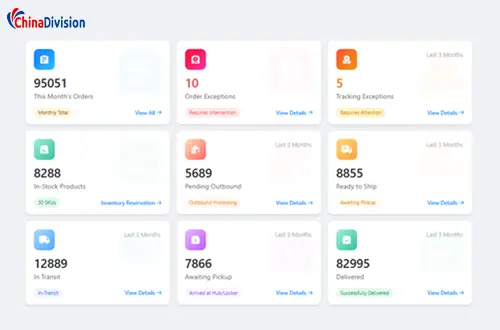
A typical shipment notification may tell a customer that an order has been packed, shipped, entered transit, experienced a delivery exception, gone out for delivery, or been delivered. These updates are commonly delivered through email, SMS, mobile apps, or other messaging channels.
Why they matter:
- ✅ Open rates exceed 90% — customers actually read these messages
- ✅ Reduce "where is my order?" support tickets by up to 60–70%
- ✅ Build trust and transparency — customers feel in control
- ✅ Proactively manage delays before frustration grows
- ✅ Reinforce your brand at every milestone, improving post‑purchase loyalty
ChinaDivision Insight: In cross‑border and international shipping, notifications are even more critical — longer transit times, customs steps, and multiple carriers mean customers have far less visibility. When customers cannot physically see where their packages are, timely and accurate Order shipment and status notifications reduce uncertainty. They can also reduce repetitive “Where is my order?” inquiries, help customers respond to delivery problems, and give merchants an additional branded touchpoint after checkout.
7 Key Shipping Notification Types & Best Practices
Not every shipment requires the same number of messages. Sending too many notifications can overwhelm customers, while sending too few can leave them uncertain about their order. The ideal notification sequence depends on your product, destination, carrier, delivery speed, and customer expectations.
You don't need to bombard customers — focus on these meaningful milestones:
| Notification Type | When to Send | What to Include | Business Benefit |
|---|---|---|---|
| Order Confirmed / Created | When payment clears & order enters system | Product summary, delivery address, estimated timeline, order number | Reassures buyer purchase succeeded; sets expectations |
| Shipped / In Transit | When parcel leaves warehouse | Tracking number, live tracking link, carrier name, estimated delivery window | Reduces anxiety; sets reference point for follow-ups |
| Out for Delivery | Morning of delivery day | Time window (e.g., "between 9 AM–1 PM"), carrier contact, delivery tips | Reduces missed deliveries; helps recipient plan |
| Delivery Exception / Delay | As soon as delay is confirmed | Clear explanation, revised ETA, any action needed, sincere apology + goodwill gesture | Turns frustration into understanding; prevents chargebacks |
| Ready for Pickup | When parcel arrives at collection point | Location address, opening hours, pickup instructions, parcel ID/code | Ensures timely collection; reduces storage fees & returns |
| Delivered | Upon successful delivery | Confirmation, photo/door note if available, return info, thank-you message | Closes loop; signals fulfillment; opens door to feedback |
| Return Status Update | When return is received, inspected, or refunded | Next steps, timeline, refund amount & method, contact info | Reduces follow-up questions; builds confidence for future purchases |
Best Channels for Sending Notifications
Different messages work best through different channels — use the right tool for the job:
| Channel | Best For | Open Rate | Key Advantage |
|---|---|---|---|
| Detailed updates, tracking links, branded templates, all milestones | ~80–90% | Room for full info, branding, links, and attachments | |
| SMS / Text | Urgent updates: out for delivery, delays, pickup reminders | ~95%+ | Instant visibility; concise & impossible to miss |
| App / Push | Tech-savvy repeat buyers; live tracking updates | ~40–70% depending on opt-in | Interactive; supports live map views & quick reschedule |
Recommendation: Use email for all milestones and SMS only for time‑critical alerts (out for delivery, delay, pickup ready). This balances thoroughness with respect for customer attention.
Shipping Notifications Should Be Connected to Your Fulfillment System
This is where shipping notifications become a logistics issue rather than simply a marketing issue.
Imagine a merchant selling 5,000 orders per month.
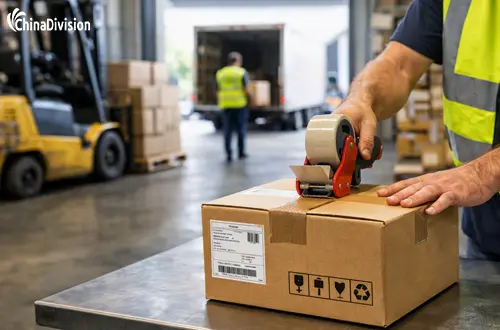
If the store, warehouse, and carrier systems are disconnected, the business may need to manually:
- Export orders.
- Send orders to the warehouse.
- Generate shipping labels.
- Copy tracking numbers.
- Update the e-commerce platform.
- Trigger customer emails.
- Monitor exceptions.
- Respond to customer inquiries.
At low volume, this might be manageable.
At scale, it becomes an operational bottleneck.
Chinadivision's API documentation includes order creation, order information, shipping labels, order tracking, inventory APIs, and webhooks, providing the technical infrastructure needed to synchronize fulfillment and shipping information.
Its e-commerce fulfillment API workflow also describes the connection between store orders, warehouse processing, shipment creation, and the return of tracking information to the original sales platform.
Shipping Notifications vs. Tracking: What's the Difference?
These terms are related but not identical.
| Feature | Shipping Notifications | Shipment Tracking |
|---|---|---|
| Purpose | Communicate important events | Provide shipment visibility |
| Main user | Customer and merchant | Customer and merchant |
| Format | Email, SMS, push, messaging | Tracking page, carrier system, API |
| Frequency | Selected milestones | Potentially continuous |
| Example | “Your package is out for delivery” | “Package scanned at Los Angeles hub” |
| Main benefit | Proactive communication | Self-service visibility |
A strong e-commerce fulfillment system uses both. Tracking provides the data. Notifications turn important tracking events into useful communication.
How Chinadivision Can Support Better Shipping Notifications
For growing e-commerce brands, the goal should not be to find a separate solution for every stage of the fulfillment process.
A better approach is to connect orders, inventory, warehouse operations, shipping, and tracking data into one workflow.
Chinadivision provides API and platform integration options designed to connect e-commerce systems with fulfillment operations. Its API supports order creation, order information, shipping labels, tracking, inventory, and webhooks.
Chinadivision also documents integrations for platforms such as Cin7, helping businesses synchronize platform data with fulfillment operations.
For businesses shipping internationally from China, this can be particularly useful when order volumes make manual tracking updates impractical.
How ChinaDivision Automates Everything for You
Managing order shipment and status notifications manually across multiple carriers and international borders is overwhelming — that's where we step in:
✅ Automated milestone updates — confirmation, dispatch, transit, delivery, and exceptions all trigger without manual work
✅ Carrier‑agnostic tracking — one consistent tracking page regardless of which carrier or service delivers
✅ Branded emails & SMS — your look, tone, and logo at every step
✅ Delay detection & alerts — our system flags delays and updates customers proactively
✅ Cross‑border expertise — includes customs clearance milestones and international transit updates domestic tools miss
✅ Unified dashboard — track all orders, see notification status, and respond to exceptions from one place
Frequently Asked Questions
Q: Are shipping notifications sent automatically?
A: With a professional fulfillment system — yes. ChinaDivision connects directly to your store and carriers, triggering updates at every major milestone without manual effort.
Q: Can customers choose how they receive updates?
A: Absolutely. You can offer email, SMS, or both — and let customers opt in or choose their preferred channel at checkout.
Q: What happens when there's a delay or exception?
A: Our system detects delays, updates the estimated delivery date, and sends a revised notification automatically. You can customize the message and include compensation offers if needed.
Q: Do notifications work for international shipments?
A: Yes — and they matter even more. Cross‑border orders have longer transit times, customs steps, and multiple carriers. Consistent updates prevent anxiety and reduce disputes.
Q: Can shipping notifications reduce customer service workload?
A: Yes. Proactive order-status communication can reduce repetitive tracking inquiries by giving customers shipment information before they need to contact support. The effectiveness depends heavily on notification accuracy and timing.
Recommended Resources
- Shopify: What Are Shipping Notifications?
- FedEx Tracking & Delivery Updates
- DHL Shipment Notifications & Tracking
- Chinadivision: E-commerce order fulfillment API integration
Shipping notifications are more than courtesy messages — they are powerful tools that build trust, cut support costs, reduce dispute rates, and encourage repeat purchases. The brands that communicate clearly and proactively are the ones customers return to, especially in cross‑border e‑commerce where uncertainty is highest.
You shouldn't have to manually track every shipment and type every update. ChinaDivision integrates order processing, fulfillment, and automated delivery notifications into one seamless system — so your customers stay informed, your team stays focused, and your business grows.
Ready to automate your shipping updates and delight your customers? Visit ChinaDivision E‑Commerce Fulfillment to see how we streamline notifications and fulfillment for international sellers.


About the Author: Limi

Limi is a content marketing expert at ChinaDivision, helping businesses and e-commerce sellers navigate the complexities of international shipping by providing actionable tips and comprehensive guides on logistics, shipping, and cargo transportation.