

The Impact of IATA and CASS on International Air Freight Rates and Settlement
Table of Contents
- Why Air Freight Quotes Often Seem Complicated
- What do IATA and CASS actually do in international air freight?
- What Is IATA and Why Does It Matter to Air Freight Rates?
- What Is CASS and Why Is It Critical for Global Air Cargo?
- IATA vs CASS: Understanding the Difference
- IATA vs. CASS: Not Competitors — Two Systems, One Purpose
- The Hidden Impact of IATA and CASS on Air Freight Pricing
- What This Means for E-Commerce Sellers Choosing a Fulfillment Partner
- FAQ: IATA, CASS, air freight rates, and international fulfillment
IATA supports air cargo standards and provides tariff and rate information; CASS streamlines billing and settlement between participating airlines and cargo intermediaries. Neither guarantees the lowest freight price nor fixes every commercial rate. For ecommerce businesses, the practical priorities are comparing complete quotes, verifying chargeable weight, understanding payment terms, and coordinating air freight with warehouse receiving.
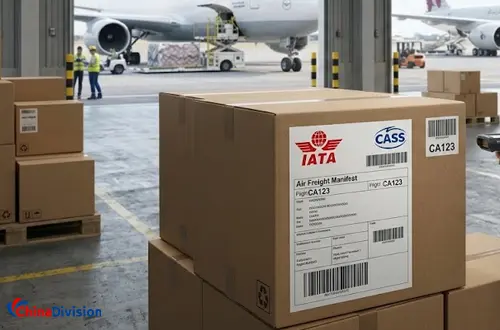
Why Air Freight Quotes Often Seem Complicated
Many e-commerce sellers, importers, and global brands receive multiple air freight quotes for the same shipment and wonder:
- Why are prices different between freight forwarders?
- Why do fuel and security surcharges change so often?
- How can airlines and forwarders settle millions of dollars in cargo payments globally without chaos?
- Why do reputable logistics providers rarely offer the cheapest rates?
The answer often comes down to two systems operating quietly behind the scenes:
- IATA (International Air Transport Association)
- CASS (Cargo Account Settlement System)
As a global fulfillment and warehousing provider handling international order fulfillment, inventory management, and cross-border shipping daily, we've seen businesses lose money by focusing solely on freight rates while overlooking the systems governing pricing, compliance, and settlement.
Understanding IATA and CASS helps shippers make smarter logistics decisions, avoid hidden risks, and select better long-term logistics partners.
What do IATA and CASS actually do in international air freight?
IATA is the International Air Transport Association, an airline trade association that develops industry standards and provides services for aviation. CASS—Cargo Accounts Settlement Systems—is an IATA-operated framework that consolidates billing and settlement between participating airlines, general sales and service agents, and freight forwarders. Their roles are related, but they are not interchangeable.
| Topic | IATA | CASS |
|---|---|---|
| What it is | Airline trade association | Cargo billing and settlement framework operated by IATA |
| Main relevance to cargo | Standards, operational guidance, accreditation programs, and tariff/rate information | Consolidated invoicing, reconciliation, and payment settlement |
| Pricing role | Provides access to industry tariffs, carrier tariffs, and other rate information | Processes eligible billing; does not determine the negotiated freight price |
| Typical users | Airlines, freight forwarders, cargo professionals, and other industry participants | Participating airlines, GSSAs, cargo agents, intermediaries, and CASS Associates |
| What it does not guarantee | The lowest price, customs release, or delivery performance | Error-free invoices, automatic credit for shippers, or protection against every financial risk |
What Is IATA and Why Does It Matter to Air Freight Rates?
IATA: The Rulemaker Behind Global Air Cargo
The International Air Transport Association (IATA) represents more than 370 airlines worldwide and accounts for approximately 85% of global air traffic. It develops operational standards, cargo documentation requirements, safety regulations, and commercial frameworks used across the aviation industry.
For air cargo, IATA acts as the industry's standard-setting body.
Key areas influenced by IATA include:
| Area | IATA's Role |
|---|---|
| Air Cargo Pricing | Establishes tariff and rating frameworks |
| Documentation | Standardizes Air Waybill (AWB) formats |
| Cargo Handling | Creates operational procedures |
| Dangerous Goods | Publishes global compliance regulations |
| Airline Cooperation | Aligns commercial and operational practices |
| Financial Settlement | Oversees systems including CASS |
Without IATA standards, every airline would use different documentation, pricing structures, and settlement practices.
How IATA Influences International Air Freight Rates
Most shippers assume freight rates are created entirely by individual airlines.
In reality, pricing is influenced by a framework established through IATA standards and tariff methodologies.
Historically, IATA's TACT (The Air Cargo Tariff) provided benchmark structures for:
- Chargeable weight calculations
- Commodity classifications
- Route structures
- Surcharge application
- International cargo rating practices
Today, airlines still build commercial pricing around internationally recognized standards derived from IATA regulations.
Why IATA's benchmark matters to your bottom line
IATA's member airlines file tariffs through its conferences precisely to prevent pure rate competition — they compete instead on service quality and flight frequency . For shippers, that has a double effect:
- It prevents pricing chaos. Without a published benchmark, every lane would be a one-off negotiation and arbitrary surcharges would proliferate.
- It creates the headroom forwarders live in. Because published GCRs function as ceilings, forwarders buying space in bulk can quote you below TACT levels on competitive lanes — legally, transparently, and sustainably.
Quotable answer: IATA rates are not the price you'll always pay — they're the reference that makes meaningful discounts possible, and the ceiling that stops arbitrary markups from becoming the norm.
What Is CASS and Why Is It Critical for Global Air Cargo?
Understanding the Cargo Account Settlement System
CASS (Cargo Account Settlement System) is an IATA-managed settlement platform designed to simplify financial transactions between airlines and freight forwarders.
Before CASS, freight forwarders had to reconcile and pay each airline individually.
The process was:
- Time-consuming
- Error-prone
- Difficult to audit
- Risky for airlines and agents
CASS replaced fragmented processes with centralized settlement management.
According to IATA, participation spans a large international network of airlines, freight forwarders, and cargo agents across numerous countries and regions worldwide.
IATA vs CASS: Understanding the Difference
Here's the simplest way to think about it:
| Function | IATA | CASS |
|---|---|---|
| Creates Industry Rules | Yes | No |
| Establishes Cargo Standards | Yes | No |
| Governs Air Freight Documentation | Yes | No |
| Handles Financial Settlement | No | Yes |
| Risk Management | Indirectly | Directly |
| Improves Payment Efficiency | No | Yes |
| Operates Globally | Yes | Yes |
A helpful analogy:
- IATA is the traffic authority
- CASS is the banking system
From a fulfillment-provider perspective, the distinction matters because a shipper buys an operational outcome: inventory available to sell. Industry standards and settlement infrastructure support that outcome, but they do not replace shipment planning, invoice checks, or warehouse execution.
IATA vs. CASS: Not Competitors — Two Systems, One Purpose
They don't compete. Here's the clean comparison:
| Dimension | IATA | CASS |
|---|---|---|
| Nature | Industry association / standards body | Settlement platform / financial utility |
| Primary output | Rules, tariffs, accreditation, safety standards | Consolidated statements, automated fund settlement |
| Who it serves | 370+ airlines; accredited cargo agents | 20,000+ participants in 90+ countries |
| Effect on rates | Sets the benchmark and allowed surcharges | Does not set rates; settles them efficiently |
| Effect on cash flow | Indirect — predictable pricing aids forecasting | Direct — shortens cycles, reduces reconciliation |
| Credit gatekeeping | Accreditation program for agents | CASS credit vetting; bad actors excluded |
| What "good" looks like | Your forwarder is an IATA-approved cargo agent | Your forwarder settles through CASS in your currency |
The Hidden Impact of IATA and CASS on Air Freight Pricing
Why Reliable Logistics Providers Sometimes Cost More
One common shipping mistake is selecting the lowest quote.
We've seen companies save 5% on freight costs but lose significantly more due to:
- Airline capacity failures
- Delayed documentation
- Charge disputes
- Customs delays
- Poor settlement practices
Forwarders operating within recognized airline ecosystems often provide:
- Better carrier access
- More stable pricing
- Less invoice discrepancy
- Improved cargo traceability
While not always the cheapest option upfront, they usually lower the total logistics cost.
Reduced Credit Risk Throughout the Supply Chain
A major benefit of CASS is financial accountability.
Airlines gain confidence that agents can meet payment requirements.
Qualified cargo agents gain access to stronger carrier networks.
For shippers, this often translates into:
✅ More reliable booking access
✅ Better peak-season capacity
✅ Fewer payment-related shipment holds
✅ Reduced counterparty risk
Faster Cash Flow Means Better Logistics Performance
Cash flow affects logistics more than many businesses realize.
When settlement cycles are slow:
- Airlines become cautious
- Capacity allocation tightens
- Booking flexibility decreases
Because CASS accelerates reconciliation and settlement processes, liquidity improves across the cargo ecosystem.
The result:
- Faster cargo movement
- Smoother booking operations
- Reduced administrative workload
What This Means for E-Commerce Sellers Choosing a Fulfillment Partner
You will never file a TACT tariff or log into CASSlink — and you shouldn't have to. But the systems behind your freight rates should influence who you trust with them.
At Chinadivision, we route international air freight through carriers and settlement structures built on these IATA frameworks — which is why our quotes are stable, auditable, and reconcilable to the kilogram. For B2B sellers sourcing from China and selling globally, that translates into three concrete benefits:
- Transparent rate logic — quotes built on recognized IATA area and weight-break structures, not opaque one-off numbers.
- Predictable surcharges — surcharge files tied to published industry references, updated on announced cycles.
- Financially credible partners upstream — settlement discipline upstream means fewer surprises downstream.
IATA gives international air freight its price language — areas, weight breaks, minimum charges, published benchmarks that prevent chaos without eliminating competition. CASS gives it its payment plumbing — one monthly statement, one automated settlement, a 99.996% on-time record, and a credit gate that keeps bad actors out. Together they explain both the stability and the occasional maddening complexity of the quotes landing in your inbox.
If you'd rather have a partner that handles all of it — rate negotiation, consolidation, surcharge management, and settlement-grade reliability — Chinadivision provides technology-enabled order fulfillment and international air freight for e-commerce brands shipping from China to the world. Get a quote and see what benchmark-based pricing looks like when someone else does the benchmarking for you.
FAQ: IATA, CASS, air freight rates, and international fulfillment
What is the difference between IATA and CASS?
IATA is an airline trade association that supports industry standards and provides aviation services. CASS is its cargo billing and settlement framework for participating airlines and cargo intermediaries.
Does IATA determine every international air freight rate?
No. Published tariffs and negotiated rates are different. Airlines and forwarders may agree confidential contract, market, promotional, or shipment-specific rates that differ from published tariffs.
Is TACT a mandatory price list?
TACT provides tariff, rate, schedule, and compliance information. It is not evidence that every commercial shipment must be sold at one fixed price.
Will CASS automatically make my air freight cheaper?
No. CASS simplifies eligible billing and settlement. It does not guarantee that your negotiated freight rate or customer-facing invoice will be lower.


About the Author: Limi

Limi is a content marketing expert at ChinaDivision, helping businesses and e-commerce sellers navigate the complexities of international shipping by providing actionable tips and comprehensive guides on logistics, shipping, and cargo transportation.