

Warehouse Automation: Sortation Systems Explained
Warehouse automation has revolutionized global logistics, and sortation systems are at the heart of this transformation. A sortation system automatically identifies, routes, and organizes items within a warehouse—ensuring that products move efficiently from storage to packing and shipping. By automatically sorting items based on order details, shipping methods, destinations, or carrier requirements, businesses can significantly increase operational efficiency, reduce labor costs, and improve order accuracy. For international logistics providers like Chinadivision, these systems are essential for achieving high-speed, error-free fulfillment across borders.
Table of Contents
What Is a Sortation System in Warehouse Automation?
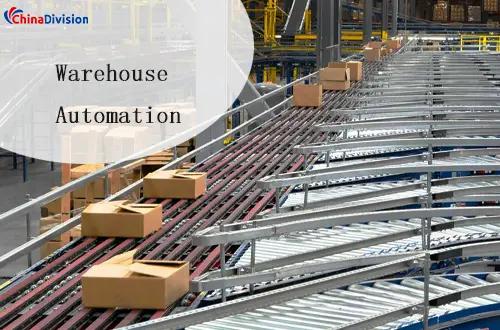
At its core, a sortation system in warehouse automation is the operational engine that transforms chaotic inbound and outbound flows into organized, destination-specific streams. These systems replace manual sorting—historically one of the most labor-intensive and error-prone warehouse activities—with precision-engineered automated sorting systems that operate continuously at speeds no human team can match.
| Component | Function | Technology Examples |
|---|---|---|
| Induction Points | Where items enter the sortation system; operators or robots place items onto the conveyor | Manual stations, robotic pick-and-place arms, automated infeed conveyors |
| Identification Stations | Scan and identify each item, feeding data to the control system | Barcode scanners, RFID readers, vision systems, weight/dimension sensors |
| Conveyor Belts | Transport items through the sortation process at controlled speeds | Belt conveyors, roller conveyors, chain conveyors, accumulation conveyors |
| Diverters | Physically redirect items off the main conveyor to their designated destination | Pop-up wheels, pusher arms, tilt trays, cross-belts, sliding shoes |
| Control Software | Determines correct routing based on scanned data and programmed logic | WCS (Warehouse Control System), WMS integration, PLC-based controllers |
Core Components
Every automated sorting system includes these key parts:
- Induction points: Where goods enter the system; can be manual or fully automated
- Identification stations: Barcode scanners, RFID readers, or AI vision cameras capture SKU, destination, weight, and dimensions
- Conveyors: Transport items steadily through the process
- Diverters / Sorters: The heart of the system — warehouse automated sorting machine or warehouse automated sorters that push, slide, tilt, or divert items
- Control software + WMS integration: Runs logic, routing rules, real-time tracking, and syncs with global shipping systems
- Destination chutes / bins / lanes: Grouped by country, carrier, service type, or order
A complete automated sortation system typically comprises five integrated components working in concert:The intelligence of modern warehouse automated sorting machines lies not in the mechanical components alone, but in the software layer that orchestrates them—making split-second routing decisions based on real-time order data, inventory positions, carrier cut-off times, and shipping optimization algorithms.
Types of Automated Sortation Systems: How They Work
All fall under automated sortation systems, but each design fits different volumes, item types, and facility layouts. Below is a clear breakdown + comparison:
1. Linear Sortation Systems
Straight conveyor path; diverters move items left/right.
- Pop-up Wheel Sorter: Rotating wheels rise to guide items; best for flat cartons, totes, boxes
- Sliding Shoe Sorter: Moving “shoes” slide along belt to gently divert; high speed, very accurate
- Pusher Sortation Systems: Mechanical arms push items off; simple, low cost, durable
- ✅ Best for: Mid-volume, consistent sizes, limited space
- 🔹 Throughput: 2,000–12,000 items/hour
- 🔹 Accuracy: 99.3–99.7%
2. Loop Sortation Systems
Continuous circular/oval track; highest capacity.
- Tilt-Tray Sorter: Items sit on trays; tray tilts at destination → slides out; gentle, great for fragile/apparel
- Cross-Belt Sorter: Small belt on each carrier; activates sideways discharge; fastest, most precise, handles small/irregular items
- ✅ Best for: High-volume, multi-destination, e-commerce, international hubs
- 🔹 Throughput: 10,000–30,000 items/hour
- 🔹 Accuracy: 99.7–99.9%
3. Robotic / AMR Sortation Systems
Mobile robots instead of fixed conveyors; flexible, reconfigurable.
✅ Best for: Variable volume, seasonal peaks, multi-zone facilities
🔹 Throughput: Scalable (add robots anytime)
🔹 Accuracy: 99.5%+
| Type | Throughput | Item Size/Type | Best Use Case | International Fit |
|---|---|---|---|---|
| Pusher Sorter | 2k–8k/h | Medium, rigid boxes | Bulk, heavy goods | Good for sea freight consolidation |
| Pop-up Wheel | 3k–10k/h | Flat, uniform cartons | Domestic + regional | Great for standard parcels |
| Sliding Shoe | 6k–20k/h | Wide range, fragile | High-volume, multi-carrier | ✅ Excellent – sorts by country/carrier |
| Tilt-Tray | 10k–27k/h | Small–large, fragile, apparel | E-commerce, fashion, returns | ✅ Perfect – handles all product types |
| Cross-Belt | 15k–30k/h | Small–medium, irregular | Express, postal, cross-border | ✅ Best – fastest, most accurate |
| Robotic AMR | 5k–20k/h (scalable) | All types | Variable volume, flexible layout | ✅ Ideal – expand globally easily |
Benefits of Automated Sortation Systems
- Higher throughput: 3–5x faster than manual
- Ultra-high accuracy: >99.5% → fewer errors, claims, and penalties
- Labor savings: 50–70% reduction in sorting staff
- Scalability: handle 5,000 → 50,000+ orders/day
- Real-time visibility: track every item globally
- Lower operational cost: 20–35% total cost reduction
- Better customer experience: faster, reliable delivery
How Chinadivision Uses Sortation Systems
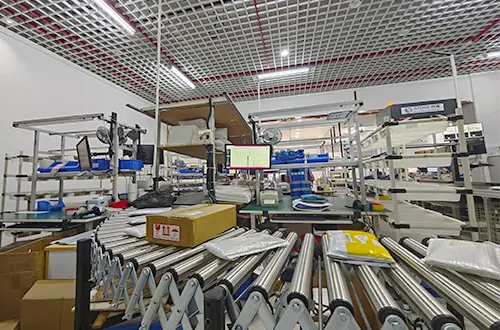
At Chinadivision, our global warehouses (China, US, EU, UK, AU, Singapore) are fully equipped with industry-leading warehouse automated sorting machine and warehouse automated sorters:
- Cross-belt + tilt-tray systems for high-volume e-commerce & B2B
- Integrated with WMS, customs software, and all major carriers
- Sort by: country, service type, Incoterms, carrier, SKU, batch
- Dedicated zones for: air freight, sea freight, express, domestic, and returns
- No upfront investment: you get full automation benefits as our client
Result: Your goods move from China → global destination 2–5 days faster, with 99.8% accuracy, and 30% lower shipping cost.
Frequently Asked Questions
What is the difference between a conveyor system and a sortation system?
A conveyor system simply moves products from one location to another. A sortation system not only transports products but also identifies, routes, and directs them to specific destinations automatically.
How much can Warehouse Automation improve productivity?
Depending on the operation, warehouse automation can increase throughput by 50% to 300% while reducing sorting errors significantly.
Are Automated Sorting Machines suitable for small businesses?
Yes. Smaller warehouses can begin with modular sorting solutions and scale as order volumes grow.
Can Automated Sortation Systems handle international orders?
Absolutely. Modern systems can sort products based on destination country, carrier requirements, customs documentation, and shipping service levels.
Source references and links


About the Author: Limi

Limi is a content marketing expert at ChinaDivision, helping businesses and e-commerce sellers navigate the complexities of international shipping by providing actionable tips and comprehensive guides on logistics, shipping, and cargo transportation.