

Practical Tips for Avoiding Products Being Labeled 'Made in China'
The most effective way to avoid the "Made in China" label perception is to use international warehousing and fulfillment services that store inventory in destination-country warehouses, utilize custom-branded packaging, offer local shipping options, and provide transparent tracking. By shifting from direct-from-China shipping to a localized fulfillment model, businesses can deliver products with domestic shipping labels, faster delivery times, and professional branding—completely transforming the customer experience.
Table of Contents
Despite China's position as the world's largest manufacturing hub, the "Made in China" label continues to carry stigma in certain markets. For B2B buyers and end consumers alike, products from China are often associated with:
- Extended delivery timelines (2–4 weeks via standard post)
- Generic, unbranded packaging with foreign-language labels
- Inconsistent quality control
- Complicated customs procedures and unexpected duties
- Difficult returns and limited customer support
In 2025, customer expectations have never been higher. Same-day and next-day delivery have become the standard in major markets. When customers see "Shipping from China" on their order confirmation, many immediately question whether the product will arrive on time—or at all.
The Invisible Costs: Impact on Conversion and Retention
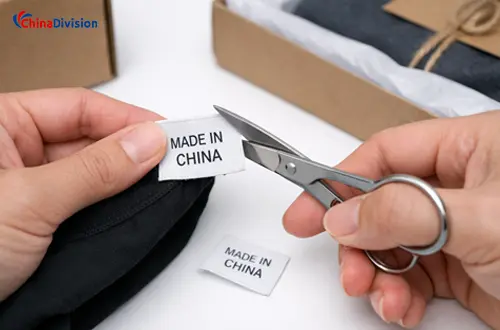
This logistical footprint creates a massive trust gap. When customers see long shipping timelines or receive generic packages covered in foreign postal labels, it leads to:
- Cart Abandonment: High bounce rates at checkout when delivery dates are revealed.
- Poor Brand Reputation: Negative online reviews driven by unboxing disappointments and transit delays.
- Low Customer Retention: Customers are highly unlikely to return if the post-purchase experience feels unpolished and distant.
Actionable Steps to Eliminate the "Made in China" Shipping Footprint
Moving away from the visible indicators of foreign fulfillment requires optimization across packaging, data transmission, and stock positioning.
1. Position Inventory Globally via Contract Logistics
Instead of fulfilling orders individually from the factory floor, ship your inventory in bulk to overseas 3PL facilities. Your supplier prepares a bulk freight shipment, clears customs once, and distributes the goods to localized fulfillment hubs (e.g., in the US, Europe, or Australia). When a consumer orders, the product is dispatched domestically, bearing a local shipping label.
2. Customize and White-Label the Unboxing Experience
Generic packaging with foreign language instructional text or Chinese tracking slips is an immediate red flag. Work with a professional logistics provider to execute customized kitting and pick-and-pack services:
- Remove all factory-default packaging that displays regional markers.
- Utilize plain, unbranded boxes or custom-printed brand packaging.
- Ensure manuals, inserts, and thank-you cards are written in localized, high-quality copy.
3. Maintain Complete Transparency via Domestic Tracking Numbers
Consumers track their packages closely. If a tracking link shows a parcel moving through international sorting centers, consumer trust drops. Local warehousing ensures that the moment an order is placed, a domestic carrier (like USPS, DHL, or DPD) generates a local tracking number, showing immediate movement within the destination country.
Step-by-Step Practical Guide
✅ Step 1: Source & Consolidate
- Source best products from China through verified suppliers.
- Let your logistics partner collect goods from multiple suppliers, inspect, and consolidate shipments.
✅ Step 2: Ship Bulk to Overseas Warehouse
- Choose sea freight (lowest cost, 25–40 days) or air freight (fastest, 5–10 days).
- Provider manages customs, documentation, and insurance — no hassle for you.
✅ Step 3: Store & Process Locally
- Inventory stored in secure, monitored facilities.
- All orders picked, packed, and labeled locally — no China reference anywhere.
✅ Step 4: Deliver & Support
- Last-mile via local carriers (FedEx, USPS, DHL, Royal Mail, etc.).
- Local tracking, fast delivery, and returns handled locally.
- Support team ready in your customers’ language.
How Chinadivision Solves This Problem
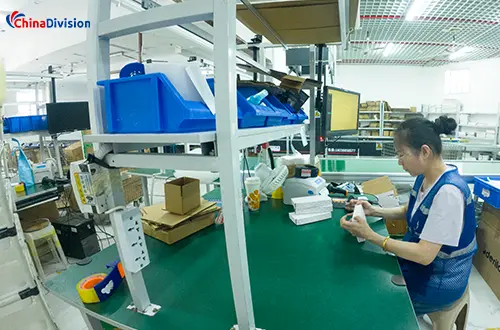
Chinadivision’s international warehousing and logistics services are designed specifically for businesses sourcing products made in China but selling globally.
Key capabilities:
- Global warehouse network (US, Europe, Asia-Pacific)
- Bulk freight + local fulfillment integration
- Custom packaging and branding services
- Real-time inventory and order management systems
- Quality control and supplier coordination
- DDP shipping solutions to eliminate customs friction
This allows businesses to maintain cost advantages from sourcing from China while delivering a premium local experience.
FAQs for B2B Users
How can I reduce shipping times when sourcing from China?
By storing inventory in overseas warehouses and using local fulfillment centers.
What’s the role of a logistics partner in avoiding “Made in China” labels?
They handle storage, packaging, and local distribution, ensuring products appear “local” to customers.
Can I still source from China but avoid the stigma?
Yes, by combining product sourcing from China with international warehousing and localized fulfillment.
References & Links
How to Avoid the “Shipped from China” Tag Hurting Your Dropshipping Business In 2025


About the Author: Limi

Limi is a content marketing expert at ChinaDivision, helping businesses and e-commerce sellers navigate the complexities of international shipping by providing actionable tips and comprehensive guides on logistics, shipping, and cargo transportation.