

Which Goods Are Best for LCL Shipping?
LCL Shipping (Less-than-Container Load shipping) is best suited for small to medium-volume cargo that does not require a full shipping container. When navigating global logistics, choosing the right freight method is critical to balancing speed, safety, and cost. The ideal LCL Goods are compact, palletized, non-hazardous, durable during transit, and cost-effective to consolidate with other shipments. Businesses commonly use LCL Services for consumer products, electronics, industrial parts, packaging materials, and replenishment inventory because it reduces shipping costs, improves inventory flexibility, and supports global supply chain efficiency.
Table of Contents
- What Is LCL Shipping?
- Why Businesses Choose LCL Shipping
- Which Goods Are Best for LCL Shipping?
- Characteristics of Goods Ideal for LCL Shipping
- When LCL Shipping Is Better Than FCL
- Goods That Are Not Suitable for LCL Shipping
- How Professional LCL Services Improve Shipping Efficiency
- Why eCommerce Sellers Prefer LCL Shipping
- How Chinadivision Supports International LCL Shipping
- Frequently Asked Questions (FAQ)
For importers, eCommerce sellers, wholesalers, and manufacturers, LCL Shipping offers a practical way to move goods internationally without waiting to fill an entire container. Professional providers like Chinadivision help businesses manage warehousing, order fulfillment, freight consolidation, customs coordination, and final-mile delivery through reliable LCL Service solutions.
What Is LCL Shipping?
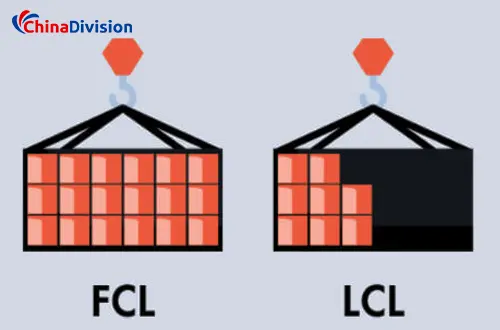
LCL Shipping stands for Less-than-Container Load shipping, a freight method where multiple shippers share space inside one ocean freight container. Instead of paying for a full container, each shipper only pays for the space their cargo occupies.
This shipping method is widely used by:
- eCommerce brands
- Amazon FBA sellers
- SMEs importing from China
- Wholesale distributors
- Manufacturers needing regular replenishment
- Startups testing new markets
- Subscription box companies
Because the cargo is consolidated with other shipments, LCL cargo provides flexibility and lower upfront logistics costs compared to Full Container Load (FCL) shipping.
Why Businesses Choose LCL Shipping
Lower Shipping Costs
Businesses only pay for the volume they use, making Less-than-Container Load shipping highly cost-efficient for smaller shipments.
Better Inventory Management
Companies can import smaller quantities more frequently instead of overstocking inventory.
Improved Cash Flow
Lower inventory investment means businesses preserve working capital for marketing, operations, and expansion.
Flexible Supply Chain Operations
LCL allows businesses to test products, manage seasonal demand, and replenish stock quickly.
Ideal for Growing eCommerce Brands
For Shopify, WooCommerce, Amazon FBA, and DTC sellers, LCL Shipment options support agile inventory movement across global warehouses.
Which Goods Are Best for LCL Shipping?
Some products are naturally better suited for LCL (Less-than-Container Load) goods due to their size, durability, packaging efficiency, and shipping economics.
1. Consumer Goods
Consumer products are among the most common LCL Goods because they are lightweight, standardized, and frequently replenished.
Apparel and Textiles
Products such as:
- Clothing
- Shoes
- Bags
- Fabrics
- Fashion accessories
are excellent for LCL Shipping because they compress well and maximize pallet efficiency.
Homeware and Decorative Products
Items like:
- Kitchenware
- Small home décor
- Storage products
- Household accessories
ship efficiently in cartons and rarely require full container space.
Beauty and Personal Care Products
Cosmetics, skincare products, soaps, and personal care items are commonly transported through LCL Services, provided they comply with destination country regulations.
Toys and Sporting Goods
Compact toys, fitness accessories, and sports equipment are frequently consolidated as LCL cargo during peak retail seasons.
Pet Supplies
Pet accessories, packaged pet care products, and non-perishable pet items work well in shared-container logistics.
2. Electronics and Electronic Components
Electronics are highly compatible with Less-than-Container Load shipping because they are compact and relatively high-value compared to their shipping volume.
Common Electronics Shipped via LCL
- Mobile phones
- Tablets
- Laptops
- Gaming accessories
- Computer peripherals
- POS devices
- Barcode scanners
- Routers and switches
- Chargers and adapters
- Cables and connectors
Professional freight providers like Chinadivision often offer protective packaging, palletization, and inspection services to reduce transit risk for sensitive electronics.
3. Small Machinery and Industrial Components
Industrial buyers frequently use LCL Service solutions for recurring inventory replenishment.
Suitable Industrial LCL Goods
Spare Parts
- Automotive components
- Equipment parts
- Machinery replacements
- Maintenance supplies
Tools and Motors
- Hand tools
- Power tools
- Small electric motors
- Workshop equipment
Dense Industrial Products
- Bearings
- Valves
- Fasteners
- Gears
- Couplings
- Mechanical assemblies
These products are ideal because they can be securely boxed or crated while maintaining manageable shipping dimensions.
4. Raw Materials and Manufacturing Inputs
Manufacturers often use LCL Shipping to support lean inventory systems and just-in-time production.
Common Manufacturing Materials Shipped LCL
Packaging Materials
- Cartons
- Labels
- Printed inserts
- Flexible packaging
Textile Production Inputs
- Buttons
- Zippers
- Sewing accessories
- Fabric trims
Plastic and Rubber Components
- Resin pellets
- Foam products
- Rubber sheets
- Protective materials
Specialty Chemicals
Some non-hazardous chemicals and dyes may qualify for LCL Shipment if they meet carrier and regulatory requirements.
Characteristics of Goods Ideal for LCL Shipping
The best LCL (Less-than-Container Load) goods typically share these characteristics:
| Characteristic | Why It Matters |
|---|---|
| Compact Size | Easier container consolidation |
| Stackable Packaging | Maximizes shipping efficiency |
| Moderate Weight | Reduces handling risk |
| Durable During Transit | Minimizes damage risk |
| Non-Hazardous | Simplifies compliance |
| High Inventory Turnover | Supports frequent replenishment |
| Carton or Pallet Friendly | Easier loading and unloading |
When LCL Shipping Is Better Than FCL
LCL Is Usually Better When:
- Cargo volume is under 15 CBM
- Inventory replenishment is frequent
- Businesses are testing new products
- Seasonal stock is limited
- Cash flow optimization is important
- Shipping timelines are flexible
FCL May Be Better When:
- Cargo exceeds 15–18 CBM
- Products are fragile or high-risk
- Faster transit is required
- Per-unit shipping cost needs optimization
- Goods require exclusive container space
Experienced providers like Chinadivision help businesses evaluate whether LCL Services or FCL shipping offers the best logistics efficiency.
Goods That Are Not Suitable for LCL Shipping
Because containers are shared among multiple shippers, some cargo types are restricted or unsuitable for LCL cargo consolidation.
Hazardous Materials
These include:
- Flammable substances
- Corrosive chemicals
- Explosives
- Radioactive materials
- Self-reactive chemicals
Such cargo often requires specialized dangerous goods handling and documentation.
Perishable Products
Fresh food, flowers, frozen goods, and temperature-sensitive cargo generally require refrigerated containers rather than standard Less-than-Container Load shipping.
Extremely High-Value Cargo
Products such as:
- Fine jewelry
- Antiques
- Luxury collectibles
- Precious metals
- Currency
may face higher theft or insurance risks in shared containers.
Live Animals and Plants
These require specialized transport conditions and regulatory approvals.
Restricted or Illegal Goods
Any products prohibited by export/import regulations cannot be transported via standard LCL Shipment methods.
How Professional LCL Services Improve Shipping Efficiency
A professional logistics provider does much more than simply book ocean freight.
Freight Consolidation
Combining multiple shipments efficiently reduces costs and transit inefficiencies.
Warehouse Management
Modern fulfillment warehouses help organize, inspect, and palletize cargo before export.
Customs Documentation
Accurate paperwork reduces customs delays and compliance risks.
Cargo Inspection
Pre-shipment inspections help identify packaging or labeling issues early.
Order Fulfillment Integration
Integrated fulfillment and freight systems improve inventory visibility and shipping coordination.
Providers like Chinadivision combine warehousing, pick-and-pack fulfillment, inventory management, and international freight forwarding into one scalable logistics solution for global businesses.
Why eCommerce Sellers Prefer LCL Shipping
Many eCommerce sellers import inventory in smaller batches to reduce storage costs and maintain flexibility.
LCL Benefits for Online Sellers
- Lower upfront inventory investment
- Faster inventory turnover
- Easier product testing
- Reduced warehouse storage costs
- Better seasonal inventory control
- More flexible Amazon FBA replenishment
For growing brands, combining order fulfillment with professional LCL Services creates a more scalable supply chain.
How Chinadivision Supports International LCL Shipping
As a professional international order fulfillment and freight forwarding provider, Chinadivision helps global businesses streamline cross-border logistics through:
- International LCL Shipping
- Order fulfillment services
- Inventory storage
- Pick and pack operations
- Amazon FBA preparation
- Freight consolidation
- Customs coordination
- Worldwide shipping support
By integrating fulfillment and freight management into one solution, businesses can reduce operational complexity while improving shipping efficiency and customer satisfaction.
The best goods for LCL Shipping are compact, non-hazardous, pallet-friendly products that do not require a full container. Common LCL Goods include consumer products, electronics, industrial components, and manufacturing materials that benefit from flexible, cost-efficient global shipping.
For businesses looking to optimize inventory flow, reduce logistics costs, and scale internationally, professional LCL Services provide an efficient and flexible solution. Working with experienced providers like Chinadivision can help businesses simplify international freight forwarding, warehousing, and order fulfillment while supporting long-term global growth.
Frequently Asked Questions (FAQ)
What is the minimum volume for LCL Shipping?
Most LCL Services accept shipments as small as 1 cubic meter, though costs per unit decrease as volume increases.
How long does an LCL shipment take compared to FCL?
LCL shipping typically takes longer due to consolidation and handling, often adding 3–7 days compared to FCL, depending on the route.
Is LCL cargo safe during transit?
Yes, when properly packed and handled by experienced providers. Using pallets, labeling, and insurance significantly reduces risk.
When should I switch from LCL to FCL?
If your shipment reaches around 12–15 cubic meters or more, FCL may become more cost-effective than Less-than-Container Load shipping.
Is LCL Shipping cheaper than FCL?
For smaller shipments, LCL Shipping is usually cheaper because businesses avoid paying for unused container space. However, larger shipments may become more cost-effective with FCL.
How long does an LCL Shipment take?
An LCL Shipment may take slightly longer than FCL because cargo must be consolidated and deconsolidated at origin and destination warehouses.
Can Amazon FBA inventory ship via LCL?
Yes. Many Amazon sellers use LCL Services to replenish inventory in smaller, more flexible batches instead of shipping full containers.
How can I reduce damage risk in LCL cargo?
Proper packaging, palletization, labeling, and cargo inspection are essential. Professional providers like Chinadivision can help ensure cargo is prepared correctly before export.
Can Chinadivision handle both order fulfillment and freight forwarding?
Yes. Chinadivision provides integrated international order fulfillment, warehousing, inventory management, freight consolidation, and global shipping solutions for eCommerce sellers, wholesalers, and B2B businesses.
More related topics:
What Is the Difference Between Ltl and Ftl Freight?
Light Cargo vs. Heavy Cargo: Optimization of LCL Air Freight
Why do some countries only accept FCL and not LCL?


About the Author: Limi

Limi is a content marketing expert at ChinaDivision, helping businesses and e-commerce sellers navigate the complexities of international shipping by providing actionable tips and comprehensive guides on logistics, shipping, and cargo transportation.