

Why do some countries only accept FCL and not LCL?
The main reasons countries restrict LCL are complex customs regulations, insufficient port LCL/LCL infrastructure, underdeveloped inland distribution networks, and concerns about trade security. Full Container Load (FCL) involves a single shipper and consignee, making inspection, clearance, and cargo tracking more convenient and secure compared to LCL. These countries often mandate FCL to simplify regulatory processes, reduce smuggling risks, and accommodate limited logistics capacity.
Table of Contents
- The Logistics Truth Behind FCL Policies
- Understanding Ocean Freight: Full Container Load (FCL) vs. Less than Container Load (LCL)
- Why do some countries only accept FCL shipments?
- Regions that typically implement FCL ocean freight policies include
- Strategic Solutions for Shippers: Addressing Full Container Load (FCL) Requirements
- Risk Management: Pre-shipment Verification is Crucial
- Frequently Asked Questions (FAQ)
- How does ChinaDivision help handle destinations requiring FCL only?
The Logistics Truth Behind FCL Policies
As a leading international order fulfillment service provider, ChinaDivision frequently encounters shippers confused by ocean freight destination restrictions. When freight forwarders inform businesses that certain countries only accept FCL and prohibit LCL, many believe this is a strategy by which countries reject small-volume shipments. However, these limitations stem from complex regulatory, infrastructure, and security frameworks, making LCL (Less than Container Load) freight difficult to implement or extremely risky in certain regions.
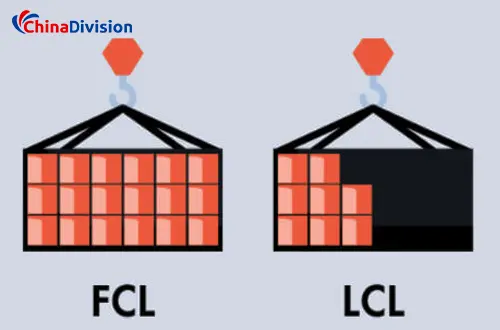
Understanding these limitations is crucial for B2B companies and e-commerce sellers operating within global supply chains. The ocean freight forwarding market is projected to reach $120.7 billion by 2035, with Full Container Load (FCL) maintaining a 54.3% market share due to its operational advantages. Therefore, understanding when and why FCL is necessary can help avoid costly customs rejections, forced returns, and supply chain disruptions.
Understanding Ocean Freight: Full Container Load (FCL) vs. Less than Container Load (LCL)
In international ocean freight, cargo is typically transported in two ways:
FCL: A shipper books and fills a single container.
For FCL:
The container usually belongs to a single shipper or consignee.
Document records are consistent and easier to verify.
If problems arise, customs authorities can quickly identify the responsible party.
This approach significantly improves investigation efficiency and reduces enforcement costs.
Less-than-Container Load (LCL) Cargo: Multiple shippers sharing space within a single container.
LCL shipping refers to loading goods from multiple shippers into the same container. The type of goods, owner, documentation, and declared value may differ for each shipment.
This decentralized structure increases the complexity of customs inspections and creates higher risks, such as document discrepancies, underreporting, smuggling, or intellectual property infringement.
To mitigate these risks, some countries restrict LCL imports, allowing only Full Container Load (FCL) shipments.
While LCL shipping is well-suited for small-volume shipments and helps reduce transportation costs, it also introduces additional complexity for port and customs authorities—especially in regions with limited infrastructure.
Why do some countries only accept FCL shipments?
In international shipping, many exporters tend to choose LCL shipping for smaller volumes. However, shippers are sometimes informed that certain destination countries or ports only accept FCL shipments. This policy is often misunderstood but is actually driven by factors such as operations, regulations, and security.
- Complexity of Customs Supervision Costs and Risk Control
The most significant reason involves customs supervision and inspection costs. A major obstacle to the acceptance of Less-than-Container Load (LCL) freight lies in the challenges of customs enforcement. LCL freight aggregates goods from multiple shippers, forming a complex matrix involving various product categories, numerous shippers, and fragmented documentation. This diversity significantly increases the complexity of customs inspections and raises the following risks:
Document discrepancies between declared and actual goods
Smuggling and underreporting of goods hidden within mixed shipments
Intellectual property infringement hidden within LCL freight
Extended clearance times due to multi-party verification requirements
To mitigate these risks and streamline regulatory processes, many customs authorities have implemented policies limiting shipments to Full Container Load (FCL). FCL freight employs a single shipper-single consignee structure, with clearly defined documentation and cargo responsibilities, creating a clear and unambiguous chain of supervision that accelerates clearance, simplifies accountability, and reduces enforcement costs. This regulatory preference explains why FCL freight continues to dominate in secure trade corridors with high levels of customs automation and emerging markets.
- Port Operational Capacity Limitations
Less than Container Load (LCL) shipping requires a significant amount of manpower. Upon arrival at their destination, goods need to be unpacked, sorted, stored, and finally distributed. Many remote ports, island nations, or developing regions lack the specialized container freight stations (CFS) and equipment needed to manage such cargo. These needs exceed the capacity of many regional ports. Upon arrival, LCL cargo requires:
Dedicated container freight stations (CFS) for unpacking
Specialized material handling equipment
Trained personnel for sorting and inventory management
Secure warehousing facilities for storing multiple volumes of cargo
Many ports—especially in small developing countries, remote areas, and island economies—lack specialized LCL (Less than Container Load) facilities. The lack of specialized LCL warehouses and experienced unpacking teams leads to inefficient operations, longer cargo dwell times, and an increased risk of damage, loss, or misdelivery. Terminals suffer from severe congestion and long-term cargo backlogs. To avoid compromising service quality, these regions often handle only full container load (FCL) cargo, as FCL cargo can be directly transferred from the ship to inland transport without intermediaries.
- Underdeveloped Local Logistics and Distribution Systems
Post-customs clearance distribution is another major constraint on the feasibility of LCL (Less than Container Load) shipments. While full container loads (FCL) can be transported intact to their final destination by truck or rail, LCL shipments require fragmented last-mile delivery involving multiple consignees. This is particularly true in regions with:
weak inland transport networks
inadequate road infrastructure
limited trucking capacity
weak customs clearance capabilities
In such cases, FCL (Fulfilled Container Load) shipping is more practical. Containers can be transported directly from the port to the consignee's warehouse, avoiding multiple transshipments and reducing transportation risks. FCL shipping bypasses these challenges through direct container transport, making it a pragmatic choice for markets with limited domestic logistics ecosystems.
- The Necessity of Trade Security and Fraud Prevention
In politically unstable regions or areas rife with trade fraud, LCL shipping presents higher security vulnerabilities. The decentralized ownership structure of LCL shipments creates multiple stages where contraband may be smuggled in or documents may be tampered with. Conversely, full container load (FCL) shipping offers:
Sealed integrity from origin to destination
Single-owner responsibility for cargo contents
Enhanced traceability through an uninterrupted chain of custody
Reduced chance of tampering during transit
These security advantages make FCL shipping the preferred mode of transport for customs authorities in high-risk regions, aligning with broader trade facilitation and border protection goals.
Regions that typically implement FCL ocean freight policies include:
Landlocked African countries with limited port capacity and underdeveloped inland infrastructure
Remote regions of the Middle East lacking consolidation facilities and facing security risks
Smaller countries in South America with limited port capacity and complex customs environments
Pacific island nations where less-than-container-load (LCL) shipping is economically unfeasible due to their remote geographical location
These markets often face limitations in port infrastructure, customs systems, or inland distribution networks, making FCL shipping a safer and more manageable transport option.
Strategic Solutions for Shippers: Addressing Full Container Load (FCL) Requirements
When destination restrictions require FCL shipments, businesses have several viable strategies:
Option 1: Direct FCL Shipment
For cargo volumes close to container capacity (typically 20-25 cubic meters for a 20-foot container and 55-60 cubic meters for a 40-foot container), direct FCL shipments are generally more cost-effective, even with some wasted space, considering the avoidance of regulatory risks.
Option 2: Buyer's LCL Program
Partnering with other shippers to share FCL costs through formal LCL agreements. ChinaDivision offers buyer's LCL services, enabling multiple clients to consolidate cargo into a single FCL shipment and handle customs clearance separately, where permitted by regulations.
Option 3: Hub-and-Road Transportation
Utilizing major transshipment ports that accept LCL (such as Singapore, Rotterdam, or Dubai) for initial consolidation, followed by inland transport of the FCL to the restricted destination. This approach leverages the efficient infrastructure of hub ports while meeting the requirements of the final destination.
Option Four: Other Modes of Transport
For time-sensitive or high-value goods, if the destination is restricted, air freight or multimodal transport options can be evaluated to completely bypass seaport restrictions.
Risk Management: Pre-shipment Verification is Crucial
Shipment without verifying destination port restrictions often leads to cargo delays, forced returns, or substantial demurrage charges. Comprehensive route verification is the foundation of international trade risk management. Professional freight forwarders conduct feasibility studies before shipment to confirm:
Current customs regulations and documentation requirements
Specific acceptance policies of each port for LCL and FCL shipments
Inland transport capacity and limitations
Regulatory changes affecting previously feasible routes
Frequently Asked Questions (FAQ)
Q: Why do freight forwarders sometimes refuse to book LCL shipments to certain countries?
A: Freight forwarders are not refusing business, but rather ensuring compliance with the regulations of the destination country. Shipping LCL cargo to a destination that only accepts FCL can result in customs refusal, return shipping costs, and potential penalties. A responsible freight forwarder prioritizes compliance over volume.
Q: Can I ship LCL cargo to a country that only accepts FCL if I use a different port or customs broker?
A: No. Country-level restrictions apply regardless of the port of entry or customs broker used. Attempting to circumvent regulations may result in cargo seizure, legal liabilities, and violations of trade regulations, affecting future shipping rights.
Q: Is FCL always more expensive than LCL for small shipments?
A: Not necessarily if total cost of goods and services (Cost, Insurance, and Freight) is considered. While FCL ocean freight is higher for small shipments, avoiding LCL fees, reducing customs clearance risks, and faster transit times usually offset this difference. ChinaDivision provides detailed cost comparisons to determine the best shipping method.
Q: What documents are required for FCL cargo to restricted destinations?
A: Requirements vary by country, but generally include a commercial invoice, packing list, bill of lading, certificate of origin, and specific import licenses. ChinaDivision's documentation team ensures complete and accurate documentation to avoid customs clearance delays.
Q: How do I determine if my destination requires full container load (FCL) shipping?
A: Consult your freight forwarder before finalizing the sales terms. Our China operations department has the latest regulatory information for destinations worldwide and provides authoritative guidance on shipping requirements during the quotation stage.
Q: Is LCL (Less than Container Load) shipping cheaper than FCL (Full Container Load) shipping?
A: For small shipments, LCL is generally more economical because you only pay for the space actually used. However, once the volume of goods approaches a full container, FCL is often more cost-effective and faster.
Q: If my shipment is too small to fill a full container, can ChinaDivision help me?
A: Absolutely. As a professional international order fulfillment service provider, we offer LCL services. We can consolidate your goods with other B2B or e-commerce shipments in our warehouse to form a full container, meeting destination requirements while saving you costs.
How does ChinaDivision help handle destinations requiring FCL only?
ChinaDivision offers comprehensive ocean freight solutions, including buyer LCL programs, FCL booking optimization, hub port transshipment coordination, and end-to-end compliance verification. Our expertise ensures your cargo arrives efficiently and compliantly at FCL-only destinations.
Our services include:
Ocean freight coordination for both FCL and LCL shipments.
Cargo consolidation to reduce shipping costs.
Export documentation and customs compliance support.
Global order fulfillment and warehousing management.
Last-mile delivery coordination.
As a leading international order fulfillment service provider, ChinaDivision transforms these logistical challenges into a competitive advantage for B2B businesses and e-commerce sellers. With our global network, integration capabilities, and compliance expertise, businesses can confidently expand into markets with stringent shipping requirements while optimizing costs and minimizing risk.
Ready to optimize your ocean freight strategy? Contact ChinaDivision today for a comprehensive, tailored logistics assessment based on your destination requirements and cargo type.


About the Author: Limi

Limi is a content marketing expert at ChinaDivision, helping businesses and e-commerce sellers navigate the complexities of international shipping by providing actionable tips and comprehensive guides on logistics, shipping, and cargo transportation.