

Can a shipment be made if customs declaration and commodity inspection are not synchronized?
If the customs declaration and commodity inspection report are not completed and matched in the customs system, the goods are generally not allowed to be loaded onto the ship. If the two systems are not synchronized, shipping companies and terminal operators will be legally prohibited from loading your containers. In most cases, once the customs deadline arrives and the two processes are still out of sync, customs will not be able to release the containers, and the goods will miss their scheduled shipment time.
Table of Contents
Why Customs Declaration and Commodity Inspection Must Be Synchronized
In international shipping, customs declaration and commodity inspection are two separate procedures, but they are closely linked in the customs clearance system. They are like two gears on the same machine. The following explains why synchronization is crucial and how to protect your supply chain.
Although customs declaration and commodity inspection have different purposes, they are both digitally connected in the port management system.
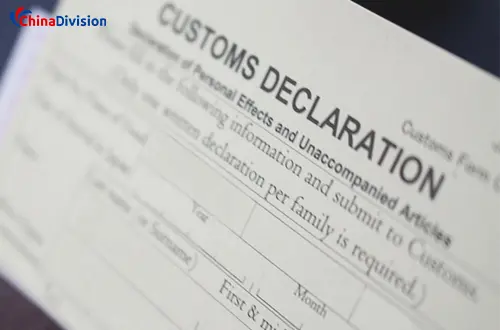
Commodity inspection focuses on verifying the safety, compliance, quarantine status, and quality of goods. Customs declarations focus on tax elements such as customs codes, valuations, and trade statistics.
For goods transported via ocean declarations, customs will only release them if all formalities are completed smoothly and the data is consistent. After customs releases a container, the terminal and shipping company will receive an electronic clearance status update. If any step is incomplete or the data is inconsistent, the container will not appear on the terminal's loading release list, and the vessel will depart empty.
If commodity inspection approval is missing, the container will not appear on the release list, and the shipping company will refuse to load it. During peak seasons—when vessel space is limited—terminals cannot delay loading individual containers, so goods must wait for the next available shipping schedule.
What are some common situations that prevent goods from being loaded?
Over the years, in handling international freight and e-commerce fulfillment, we have frequently seen three situations where goods cannot be loaded due to discrepancies between customs declarations and commodity inspections.
- Customs declaration submitted before inspection results are released. Many exporters submit ocean declarations as early as possible to meet shipping schedules. However, commodity inspection typically requires sampling, testing, and certification, which can take several days.
If the inspection certificate is not issued or uploaded to the customs system in a timely manner, the declaration cannot be completed. Once the customs deadline arrives, the container will be locked in the system and unable to be loaded.
- Inconsistent Inspection Data and Declaration Data
Even minor differences between the commodity inspection report and the customs declaration can trigger a customs system warning.
Common mismatches include:
Product name differences
Incorrect HS code
Quantity or weight differences
Model or specifications inconsistencies
When this happens, customs may classify the shipment as an abnormal declaration, requiring corrections and resubmission. In most cases, the vessel has already departed before the corrections are completed.
- Expired or Invalid Commodity Inspection Certificates
Inspection certificates have an expiration date. If the goods are not declared and shipped within the validity period, the certificate becomes invalid.
Once expired, the goods must be re-inspected, which requires re-testing and queuing. This almost always results in missing the original shipping schedule. Furthermore, re-inspection and re-queuing typically lead to weeks of delays and high storage costs.
Why does the system prevent out-of-sync shipments?
Modern port operations rely on integrated digital systems connecting customs authorities, terminals, and shipping companies.
Before the loading deadline, customs sends a list of released containers to the terminal and carrier. Only containers on the list can be loaded.
If commodity inspection and clearance documents are missing or do not match the customs declaration, the container will not appear on the release list. Terminals will not delay ship loading for a single container—especially during peak seasons when capacity is tight.
How to avoid cargo loading delays?
To prevent cargo delays due to a mismatch between customs declarations and commodity inspections, exporters should follow these three key practices:
Prioritize commodity inspections, scheduling inspections for regulated or sensitive products as early as possible to ensure certificates and electronic records are ready before submitting ocean declarations. Ensure electronic data is entered into the system to avoid "data not found" errors.
Ensure document consistency. Product names, HS codes, specifications, quantities, and declaration elements must be completely consistent across all inspection and declaration documents. Only consistent information will pass automated system checks. Please allow sufficient time before the customs deadline.
Complete all documents at least 48 hours before the customs deadline. This buffer time can be used to resolve system warnings or document errors.
Work with professional logistics and order fulfillment experts.
For many B2B exporters and cross-border e-commerce sellers, the biggest challenge is coordinating the timing of commodity inspection, customs declaration, and ocean freight clearance while managing inventory, orders, and shipping plans. Professional third-party logistics providers can help mitigate these risks.
Chinadivision, as a professional international order fulfillment and logistics service provider, offers the following support to global sellers:
Pre-verification of customs declarations and commodity inspection documents
Integrated order fulfillment, warehousing, and export processing services
Coordinating ocean freight customs clearance processes to ensure goods are released before the deadline.
Providing end-to-end logistics solutions for B2B exporters and e-commerce brands
Chinadivision helps businesses avoid missed shipping dates, container rollovers, and costly transportation delays by coordinating inspection, declaration, and shipment plans in advance, ensuring goods are smoothly transported from China to global markets.
Dealing with complex customs clearance and commodity inspection processes requires more than just paper documents; it demands a proactive logistics partner. If you are managing international freight shipments from China and looking to improve order fulfillment efficiency while reducing customs clearance risks, partnering with a professional supplier like Chinadivision can make your global logistics more reliable.


About the Author: Limi

Limi is a content marketing expert at ChinaDivision, helping businesses and e-commerce sellers navigate the complexities of international shipping by providing actionable tips and comprehensive guides on logistics, shipping, and cargo transportation.