

How Freight All Kinds Works and Transforms Our Freight Shipping
Freight All Kinds (FAK) is revolutionizing modern supply chain management by allowing multiple types of goods to be shipped together at a single freight rate, rather than pricing each product separately based on freight class or commodity type. By using FAK rates, shippers can ship mixed shipments more efficiently, streamline billing processes, and obtain predictable shipping costs.
Table of Contents
For modern B2B supply chains and e-commerce logistics, this approach significantly reduces management complexity. As a leading third-party international logistics service provider, we have witnessed firsthand how FAK rates have transformed the shipping operations of B2B companies and e-commerce sellers navigating the complexities of global trade.
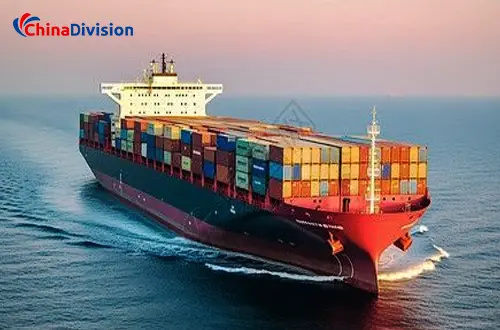
At the heart of Freight of All Kinds lies the consolidation of multiple product categories into a standardized rate, eliminating the need to calculate freight rates separately for each SKU in inventory. This approach fundamentally changes how businesses handle logistics—shifting from cumbersome and time-consuming rate calculations to a streamlined, predictable cost structure, thereby improving operational flexibility and the accuracy of financial forecasts.
What is Freight All Kinds (FAK)?
Freight All Kinds represents a paradigm shift in freight pricing methods. Unlike traditional transportation models that require detailed classification of each product based on density, handling requirements, and liability factors, FAK establishes a single, comprehensive rate applicable to a wide variety of heterogeneous goods.
From a logistics management perspective, this approach is similar to an "all-inclusive" freight classification. Mixed goods can be transported together without recalculating transportation costs when the product mix changes.
Instead of calculating freight rates separately based on factors such as:
Freight Class
Density
Commodity Type
Handling Characteristics
All eligible goods are transported at a single consolidated freight rate (FAK rate).
In short, FAK operates like an all-inclusive freight pricing structure. Multiple products—often varying in size, weight, and classification—can be shipped together while maintaining a consistent shipping rate. This significantly simplifies quoting, billing, and freight planning for logistics teams managing large product catalogs.
This unified pricing mechanism consolidates various freight categories into a predefined category, enabling shippers to transport mixed product portfolios with a single contract rate structure. FAK rates cover all transportation costs within a standardized framework, significantly reducing the inherent management complexity in less-than-truckload (LTL) and full truckload (FTL) operations.
For operations teams, implementing full-category freight means streamlined billing processes, minimized classification discrepancies, and improved cost predictability. Businesses don't need to recalculate logistics costs when product mixes change; instead, they benefit from consistent pricing, supporting strategic inventory management and cross-border fulfillment operations.
Key Advantages of Freight All Kinds (FAK) Transportation
Beyond simplifying operational processes, FAK brings comprehensive value to the entire logistics ecosystem:
Unified Pricing Structure
FAK rates' key competitive advantage lies in their transparent, unified pricing structure. Instead of assigning separate freight tiers to each SKU, the operations team uses a unified pricing agreement instead of a complex rate matrix. This standardization speeds up the quoting cycle, reduces invoice errors, and eliminates redundant communication with carriers—ultimately improving billing accuracy and cash flow predictability.
Operational Efficiency Improvements
Freight All Kinds fundamentally simplifies SKU-level categorization in mixed freight, allowing team resources to be reallocated to speed optimization and performance metric improvement. In practice, this translates to shorter terminal dwell times, reduced pre-shipment verification requirements, and improved supply chain synchronicity. For international order fulfillment, these efficiency improvements are reflected across customs clearance, warehousing, and last-mile delivery.
Inventory Flexibility
FAK allows different products to be shipped together in the same container or on the same vessel without changing freight rates. FAK offers unprecedented container utilization flexibility, enabling shippers to consolidate different product categories in a single shipment without incurring additional costs. This feature maximizes container capacity utilization, reduces unit transportation costs, and supports dynamic inventory allocation strategies, crucial for modern omnichannel distribution models.
Cost Predictability
When businesses ship multiple product categories, traditional product-category-based pricing methods can lead to unpredictable transportation costs. In contrast, the "Comprehensive Freight" (FAK) pricing model provides a consistent cost structure. Stable FAK rates enable accurate transportation cost forecasting, which is particularly important for businesses managing diversified product lines across multiple sales channels. Finance teams can have greater confidence in profit forecasts, while procurement departments can negotiate CIF cost terms with suppliers with greater certainty.
Economic Optimization of Mixed Inventory
While FAK may not optimize the transportation of homogeneous, high-volume shipments, it can save significant costs for multi-SKU shipments. Under traditional freight pricing models, certain premium products can drive up overall freight costs. With FAK freight, these costs are already included in the negotiated freight rate, avoiding cost increases due to cargo categorization. This can result in substantial long-term logistics cost savings for businesses shipping multiple SKUs at once.
Savings in Management Time
The FAK framework simplifies pricing and documentation processes, allowing shippers and logistics partners to reinvest resources in core business development and operational excellence initiatives.
Implementation: How Does the FAK Pricing Strategy Work?
The deployment of the Freight All Kinds (FAK) agreement follows a structured collaborative process between shippers and their logistics partners:
- Strategic Rate Negotiation
Shippers and carriers establish cooperation parameters and negotiate FAK rates based on total freight volume, shipping frequency, and operational stability, rather than the characteristics of individual products. This volume-based pricing approach typically yields favorable rates for stable, high-throughput partnerships.
The rate is usually based on the following factors:
Expected shipment volume
Shipping frequency
Cargo stability
Long-term logistics partnership
- Product Scope Definition
A comprehensive FAK agreement clearly defines the covered and excluded product categories. The agreement defines which product categories can be transported according to FAK classifications. This scope typically covers a wide range of general cargo. While Freight All Kinds eliminates classification-based pricing, the clear scope boundaries ensure operational viability and risk management compliance.
- Weight Tiering
Although product handling is standardized, FAK rates typically employ weight-based tiers (e.g., 500-1,000 lbs, 1,001-2,000 lbs) to align pricing with capacity utilization and handling requirements. These tiered structures facilitate accurate capacity planning and resource allocation.
- Standardized Execution
Once contract terms are finalized, all goods conforming to the established product and weight parameters, regardless of specific SKU combinations, will enjoy consistent FAK handling. This standardization eliminates the need for reclassification and reduces billing disputes.
Best Use Cases for Freight All Kinds (FAK)
FAK delivers its greatest value in specific operating environments, particularly in international e-commerce logistics, distribution networks, and manufacturing supply chains:
Multi-brand Retailers: Businesses with diverse product catalogs, sizes, weights, and handling requirements can significantly benefit from the simplification offered by FAK.
E-commerce Fulfillment Operations: Environments with a large number of SKUs and highly volatile inventory combinations can see substantial cost savings through FAK implementation. Online sellers often place orders containing multiple product types. The "full-category freight" pricing model simplifies the shipping process for mixed inventory orders, making it ideal for fast-paced e-commerce operations.
Cross-border distributors: Businesses managing international LCL (Less than Container Load) shipments can leverage FAK rates to optimize container utilization and customs clearance efficiency. Distributors frequently ship a variety of different products to retailers. FAK rates allow them to efficiently consolidate shipments, reducing the complexity of freight management.
Manufacturers producing multiple product categories can benefit from avoiding complex freight classification processes through various freight agreements. Businesses that frequently ship mixed shipments can significantly improve efficiency by using FAK freight pricing strategies.
Conversely, for shippers with large volumes of a single product category and high product homogeneity, traditional classification-based pricing may be more cost-effective. The optimal strategy choice depends on the specific operating model and strategic objectives.
Frequently Asked Questions
Is an HS code still required under the FAK pricing model?
Yes. While FAK rates unify freight pricing across different product categories, an accurate HS code is still required for customs clearance and tariff calculation for each product. Freight forwarders or logistics partners can assist with HS code classification.
Which goods are excluded from FAK arrangements?
Freight costs for all goods are included in the FAK rate, which serves as the base rate for general cargo, but excludes goods requiring special handling or equipment: dangerous goods, high-value goods requiring enhanced security, government/military transport, and emergency relief supplies are generally not within the scope of standard FAK parameters.
How does FAK improve container utilization?
FAK pricing is product-agnostic, thus enabling optimal space allocation without increasing costs due to mixed loading. Shippers can maximize container space utilization, reducing unit transport costs and environmental impact through efficient capacity deployment.
Is FAK generally more economical than traditional pricing?
For homogeneous cargo, FAK rates may not be as competitive as commodity-based pricing. However, for multi-SKU cargo, Freight of All Kinds (FOAK) can generally eliminate classification-based freight increases and billing adjustments, thereby reducing net costs.
Does FAK completely eliminate cargo classification?
While FAK has removed categories from billing calculations, operational planning still requires cargo characteristic data (weight, dimensions, packaging type, handling requirements) to optimize capacity and ensure cargo safety.
How Chinadivision Helps Businesses Optimize Freight Through FAK Shipping
Managing international shipping costs and logistical complexities can be challenging for growing B2B companies, distributors, and e-commerce brands.
Chinadivision helps businesses streamline global logistics through professional international order fulfillment, warehousing, and freight management services. Whether you manage a multi-channel e-commerce distribution or a complex B2B supply chain, our logistics architects will tailor a Freight All Kinds strategy to your operational needs and growth goals.
Want to streamline multi-SKU shipping processes and reduce international shipping costs? Partner with Chinadivision's international order fulfillment services to streamline your logistics, optimize freight strategies (such as FAK shipping), and deliver products to customers worldwide quickly and reliably.


About the Author: Limi

Limi is a content marketing expert at ChinaDivision, helping businesses and e-commerce sellers navigate the complexities of international shipping by providing actionable tips and comprehensive guides on logistics, shipping, and cargo transportation.