

Customs Audits in 2026: Common Triggers, Risks & How to Prepare
Table of Contents
- What Is a Customs Audit?
- What Are the Most Common Customs Audit Triggers?
- Why Can Incorrect HS Codes Trigger a Customs Audit?
- Why Is Customs Valuation a Major Audit Risk?
- Why Do Invoice and Customs Declaration Mismatches Matter?
- How Does Digital Invoicing Affect Customs Audit Readiness?
- How Can Country-of-Origin Errors Create Customs Audit Risk?
- How Long Should Customs and Trade Records Be Retained?
- How Can Businesses Prepare for a Customs Audit?
- What Is the Best Way to Trace a Customs Transaction Backward?
- How Can a Fulfillment Provider Support Customs Audit Readiness?
- Frequently Asked Questions About Customs Audits
- Industry Resources
A customs audit does not happen by random chance. It is almost always triggered when your declared HS codes, customs values, origin claims, licenses, invoices, payment records, or product descriptions do not match the actual physical goods — or cannot be reliably cross-referenced against each other. The fastest way to spike your audit risk is picking an HS code purely for a lower duty rate, understating dutiable value, using vague generic product descriptions, or submitting disconnected records that auditors cannot trace back to your real transaction.
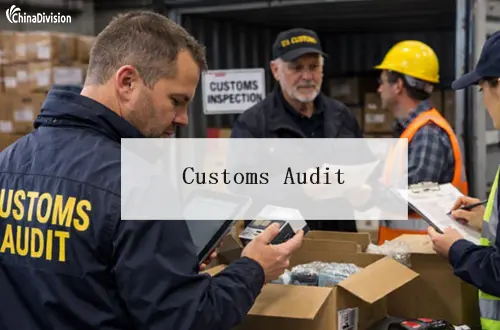
Customs audits review whether importers, exporters, and other trade participants have correctly classified goods, declared customs values and origins, complied with licensing requirements, and maintained supporting records. Businesses can reduce avoidable audit risks by reconciling customs declarations with commercial invoices, product specifications, payment records, shipping documents, and applicable compliance requirements before and after goods move across borders.
The most effective way to prepare for a customs audit is to build a traceable record of every transaction—not simply to store documents. Consistent product data, documented classification decisions, defensible valuation methods, and clearly assigned compliance responsibilities make it easier to explain discrepancies and respond to customs authorities.
This guide explains the most common customs audit triggers, how to identify documentation gaps, and how to strengthen audit readiness in 2026.
What Is a Customs Audit?
A customs audit is a review of trade transactions, declarations, business records, and compliance procedures to determine whether customs obligations have been met. Depending on the jurisdiction and the scope of the review, authorities may examine product classification, customs valuation, country of origin, permits, licensing, declared quantities, and recordkeeping practices.
Unlike a physical shipment inspection, which focuses on goods at a particular point in the supply chain, a customs audit may examine transactions from earlier periods and identify patterns across multiple shipments.
A customs audit may involve reviewing:
- Product classification: Whether the declared Harmonized System (HS) code and applicable national tariff code match the product's characteristics.
- Customs valuation: Whether the declared value follows the applicable valuation rules and accounts for relevant adjustments.
- Country of origin: Whether origin claims and requests for preferential tariff treatment are supported by the required evidence.
- Licenses and permits: Whether goods subject to controls have the necessary authorizations.
- Commercial documentation: Whether invoices, packing lists, purchase orders, and transport documents accurately describe the transaction.
- Financial records: Whether payment evidence and accounting records support the declared transaction value.
- Recordkeeping: Whether the business can retrieve complete, reliable records for the transactions under review.
The precise scope of an audit, the authority's powers, and the applicable response deadlines vary by jurisdiction. Businesses engaged in international trade should therefore establish procedures that reflect the requirements of each relevant market.
What Are the Most Common Customs Audit Triggers?
Customs audits can arise from routine compliance programs, risk-based selection, discrepancies identified during clearance, or information obtained through other regulatory processes. An inconsistency does not automatically prove a violation, but unexplained discrepancies can make a transaction more difficult to verify.
Common areas of concern include:
| Audit risk | Potential warning sign | Records to review |
|---|---|---|
| HS classification | A code does not match the product's materials, function, or technical specifications | Product descriptions, technical sheets, photographs, tariff notes, and classification decisions |
| Customs valuation | Declared values cannot be reconciled with transaction records | Commercial invoices, purchase orders, payment records, and valuation calculations |
| Country of origin | An origin claim lacks evidence of the relevant manufacturing process | Supplier declarations, bills of materials, production records, and origin certificates |
| Invoice inconsistencies | Product descriptions, quantities, or invoice references conflict | Commercial invoices, packing lists, purchase orders, and customs entries |
| Missing valuation adjustments | Relevant royalties, assists, commissions, or other adjustments have not been assessed | Contracts, royalty agreements, tooling records, and payment documentation |
| Licensing and permits | Controlled goods lack required authorizations or accurate supporting information | Product specifications, license records, end-user statements, and permits |
| Related-party transactions | The relationship between buyer and seller has not been adequately addressed in the valuation analysis | Intercompany agreements, pricing policies, and customs valuation records |
| Incomplete records | Supporting documents cannot be located or linked to individual entries | Archived declarations, emails, shipment files, accounting records, and system logs |
The most useful preventive step is to review these risks systematically rather than waiting for a customs authority to identify them.
Why Can Incorrect HS Codes Trigger a Customs Audit?
Incorrect or unsupported HS classification can create customs compliance risks when a declared code conflicts with a product's objective characteristics or the applicable tariff rules. Classification can affect duty rates, admissibility, trade remedies, and regulatory controls, depending on the product and importing country.
A code should be selected because it accurately describes the goods under the applicable classification rules—not because it produces the lowest duty rate.
Common classification problems include:
- Confusing parts with finished products: A complete product may not qualify for classification as a part simply because it is shipped unassembled or contains multiple components.
- Ignoring legal notes: Section notes, chapter notes, and the General Rules for the Interpretation of the Harmonized System can affect the correct classification.
- Relying on generic descriptions: Terms such as “accessories,” “components,” or “other goods” may not provide enough information to justify a classification.
- Reusing outdated product data: A code assigned to an older product may no longer be appropriate after changes to its materials, functionality, or design.
- Applying one national tariff code globally: The international HS framework is harmonized at the six-digit level, but countries may add national subdivisions and interpret or implement tariff provisions through their own legal schedules.
- Changing codes without supporting evidence: An unexplained change in classification can make it harder to demonstrate that the new code is correct.
How Should Businesses Review HS Codes in 2026?
Businesses should maintain a classification record for each relevant product or SKU. At a minimum, that record should contain the product's technical specifications, materials, principal function, supporting photographs or diagrams, classification rationale, applicable tariff references, and approval history.
Classification reviews should be triggered by meaningful changes, including:
- Product redesigns or changes in composition.
- New product variants or bundled configurations.
- Changes to the destination market.
- Changes in applicable tariff schedules or classification guidance.
- New regulatory controls or licensing requirements.
The World Customs Organization's HS 2028 amendments are scheduled to enter into force on January 1, 2028. Businesses should plan for the transition by reviewing affected product classifications and system data against the official materials and each destination market's implementation requirements. This is a forward-looking preparation task, not evidence that every business faces a new global HS classification regime in 2026.
Why Is Customs Valuation a Major Audit Risk?
Customs valuation determines the value used to assess applicable customs duties and, where relevant, other import charges. The correct method depends on the importing jurisdiction, the transaction structure, and the applicable valuation rules.
The commercial invoice price is important, but it may not always be sufficient on its own. Depending on the circumstances and the governing rules, valuation may require consideration of items such as qualifying assists, royalties, selling commissions, packing costs, or proceeds relating to the imported goods.
Businesses should review the following situations carefully:
- Unreported assists
A buyer may provide a supplier with tools, molds, materials, components, or design work at reduced cost or without charge. Certain contributions may need to be included in customs value, depending on the applicable rules and circumstances.
- Royalties and license fees
Payments associated with trademarks, technology, or intellectual property can require valuation analysis. Whether a royalty is dutiable depends on the relevant legal requirements and the relationship between the payment and the imported goods.
- Related-party transactions
When a buyer and seller are affiliated, the business should retain evidence supporting the declared value and assess whether the relationship affects the transaction price under the applicable rules. A transfer-pricing policy may provide useful evidence, but it does not automatically resolve every customs valuation question.
- Differences between invoice and payment amounts
Currency conversion, payment timing, discounts, credit notes, and third-party payments may explain differences between records. The business should document legitimate adjustments and investigate unexplained gaps rather than assuming that all differences indicate undervaluation.
- Inconsistent freight and insurance treatment
The treatment of freight, insurance, and other costs depends on the applicable valuation rules and the circumstances of the transaction. Businesses should document which costs are included or excluded and why.
How Can Businesses Strengthen Customs Valuation Controls?
Create a valuation worksheet or equivalent system record for transactions that require additional analysis. It should identify the declared price, relevant adjustments, supporting contracts, payment evidence, currency conversion method, and approval of any material judgment.
For complex transactions—especially related-party sales, royalties, tooling arrangements, or pricing adjustments—businesses should obtain advice from a qualified customs professional or the relevant authority where appropriate.
Why Do Invoice and Customs Declaration Mismatches Matter?
Differences between commercial documents and customs declarations can create compliance questions when the business cannot explain them. However, the objective is not to force every system to display identical values regardless of context. It is to ensure that each difference is accurate, justified, and supported by a traceable record.
Common mismatches include:
- Different product descriptions across invoices and customs entries.
- Different quantities between packing lists and declarations.
- Different invoice numbers or references.
- Different buyer, seller, importer, or exporter information.
- Different declared origins.
- Different currencies or values without a documented explanation.
- HS code changes without an updated classification rationale.
- Freight or insurance amounts handled inconsistently.
- Corrections made after filing without a clear change history.
Use a “One Source, Many Declarations” Approach
A practical way to reduce avoidable inconsistencies is to maintain controlled master data and use it as the reference for operational and trade documentation.
A product record might include the SKU, description, material, intended function, country-of-origin evidence, classification rationale, and relevant regulatory information. Transaction records can then reference the appropriate product data while retaining transaction-specific details such as quantity, price, buyer, seller, and shipment information.
The process should include three controls:
- Data ownership: Assign responsibility for maintaining product, supplier, pricing, and shipping information.
- Exception handling: Flag discrepancies that exceed defined tolerances or involve critical fields such as classification, value, origin, or licensing.
- Change history: Retain the original values, revised values, change date, reason, supporting evidence, and approval where appropriate.
This approach makes discrepancies easier to identify before filing and easier to explain during a later review.
How Does Digital Invoicing Affect Customs Audit Readiness?
Digital invoicing can improve customs audit readiness when invoice data is accurate, traceable, and reconcilable with customs declarations, payment records, and accounting systems. Electronic documents alone, however, do not guarantee compliance.
The level of integration among e-invoicing platforms, tax systems, customs authorities, and business applications varies by jurisdiction. Companies should confirm the requirements of the markets in which they operate rather than assume that every invoice is automatically cross-checked against every declaration.
A reliable digital audit trail should connect:
Order → product master data → purchase order → commercial invoice → payment → shipment record → customs declaration → accounting entry
The key benefit is traceability: reviewers can follow the transaction across systems without relying entirely on manual searches or individual employees' recollections.
What Should a Digital Customs Audit Trail Include?
A well-controlled process should capture:
- A unique reference linking the shipment to the relevant order and invoice.
- The product and SKU information used for the declaration.
- The classification and valuation rationale where required.
- The documents supporting origin and licensing claims.
- The source and approval of important data changes.
- The final filed declaration and any subsequent amendments.
- Relevant payment, warehouse, and transport records.
- Access controls and a retention process that meets applicable requirements.
Automation can reduce manual re-entry, but it can also replicate an incorrect code or value across many transactions. Businesses should therefore validate master data before automation and maintain exception reports, change approvals, and periodic reviews.
How Can Country-of-Origin Errors Create Customs Audit Risk?
Country of origin identifies the country determined under the applicable origin rules. It is not necessarily the country from which the goods were shipped, exported, or last handled.
Origin becomes particularly important when a business claims preferential tariff treatment under a free trade agreement, makes a required origin declaration, or imports goods subject to origin-related trade measures.
Potential problems include:
- Treating the shipping country as the country of origin without analysis.
- Relying on supplier statements without checking whether the required evidence is available.
- Applying preferential treatment without confirming that the goods meet the relevant agreement's origin rules.
- Failing to retain manufacturing records or bills of materials needed to support a claim.
- Continuing to use an origin determination after the product's sourcing or manufacturing process changes.
Businesses should keep origin evidence linked to the relevant product, supplier, manufacturing process, and shipment. The evidence required varies by jurisdiction and the specific origin rule involved.
A correct HS code does not, by itself, establish the product's origin. Classification and origin should be reviewed as separate compliance questions, even when both rely on overlapping product information.
How Long Should Customs and Trade Records Be Retained?
Customs and trade records should be retained for the period required by the laws and regulations applicable to the relevant transaction. There is no single retention period that can safely be applied to every country, record type, and business arrangement.
A retention policy should cover more than commercial invoices. Depending on the transaction, relevant records may include:
- Customs declarations and amendment records.
- Commercial invoices and purchase orders.
- Packing lists and transport documents.
- Product specifications and classification decisions.
- Valuation worksheets, contracts, and supporting payment records.
- Supplier declarations and origin documentation.
- Licenses, permits, and regulatory correspondence.
- Accounting entries and relevant reconciliation reports.
- Emails and approval records that explain material decisions.
Records should be organized so that a business can retrieve a complete transaction history—not simply locate individual documents.
A practical approach is to maintain a retention matrix showing the record category, applicable jurisdiction, responsible owner, retention period, storage location, and any legal hold or exception process. Where multiple requirements apply, the business should confirm which rules govern each record set.
Digital records should remain readable, complete, and accessible throughout the required period. Backups and access controls should also be considered so that an audit response does not depend on a single employee, device, or application.
How Can Businesses Prepare for a Customs Audit?
An effective customs audit-readiness program combines preventive controls with a repeatable process for reviewing historical transactions. Businesses should be able to explain not only what was declared, but also how the declaration was prepared and what evidence supports it.
Use the following checklist as a starting point.
Step 1: Identify the Applicable Requirements
List the jurisdictions, customs regimes, product categories, and trade programs relevant to the business. Confirm the applicable requirements for classification, valuation, origin, licensing, declarations, and record retention.
Step 2: Review High-Risk Products and Transactions
Prioritize products with complex technical specifications, changing materials, significant valuation adjustments, related-party pricing, preferential-origin claims, or licensing requirements.
Review repeated transactions for patterns instead of examining only isolated shipments.
Step 3: Reconcile Declarations With Supporting Records
Select a sample of completed shipments and trace each transaction through its product record, purchase order, invoice, payment, packing list, transport record, and customs declaration.
Investigate unexplained differences and document legitimate adjustments.
Step 4: Test Whether Records Can Be Retrieved
Ask the relevant teams to produce the complete supporting file for a selected historical entry within an internally defined time target.
This test can reveal fragmented storage, missing approvals, inconsistent reference numbers, and dependence on individual employees.
Step 5: Correct Errors Through the Appropriate Process
When a potential error is identified, assess its scope and significance. Determine whether it affects other shipments, duties, licensing, origin claims, or reporting obligations.
Seek qualified advice on the applicable correction or disclosure process. Do not assume that every jurisdiction offers the same procedure or that a correction automatically eliminates potential penalties.
Step 6: Assign Ownership and Monitor Exceptions
Define who approves classification decisions, valuation methods, origin claims, document changes, and declaration amendments. Establish escalation procedures for unresolved discrepancies.
Track corrective actions to completion and review whether the same problem recurs.
What Is the Best Way to Trace a Customs Transaction Backward?
A practical audit-readiness test is to start with a filed customs declaration and work backward through the records that support it.
Customs declaration → shipment record → commercial invoice → purchase order → product master data → supplier and manufacturing evidence → payment and valuation records → licenses or origin evidence, where applicable
At each stage, ask three questions:
- Can the record be located and linked to the transaction?
- Does the information agree with the other records, or is any difference explained?
- Is there evidence supporting the decision made at that stage?
For example, if a declaration shows a particular product description and HS code, the reviewer should be able to locate the corresponding SKU, technical specifications, and classification rationale. If the declared value differs from the amount paid, the business should be able to identify the adjustment or other reason and produce supporting records.
This backward-tracing method turns audit preparation into a practical test of data integrity. It also helps distinguish a missing document from a deeper problem, such as inconsistent master data or an unsupported compliance decision.
How Can a Fulfillment Provider Support Customs Audit Readiness?
A fulfillment provider can support operational traceability by maintaining consistent records of inventory receipts, SKU identifiers, order processing, packing, dispatch, and shipment tracking. These records can help businesses reconcile what was ordered, what was shipped, and which logistics documents relate to each transaction.
For cross-border sellers shipping from China, useful operational records may include:
- Inventory receiving and quantity records.
- SKU descriptions and product identifiers supplied by the merchant.
- Order and packing records.
- Shipment references and tracking information.
- Dispatch dates and carrier handoff records.
- Links to relevant commercial and logistics documents.
The value of these records depends on their accuracy, completeness, and ability to connect with the merchant's broader trade documentation.
A fulfillment provider does not automatically determine the correct customs classification, establish country of origin, validate every customs valuation adjustment, or guarantee compliance with all import regulations. Those responsibilities must be allocated clearly among the seller, importer of record, customs broker, and other parties according to the transaction and applicable law.
How ChinaDivision Can Help Improve Fulfillment Visibility
For businesses shipping internationally from China, ChinaDivision's fulfillment operations can form part of a more traceable order-to-shipment process. Connecting inventory receipt, SKU information, order processing, packing, and shipping records can help merchants improve operational visibility and reduce unnecessary manual handoffs.
Businesses should confirm which records, integrations, reporting functions, and documentation services are available for their specific account and shipping workflow. Customs audit readiness still requires the merchant and its relevant trade partners to maintain accurate product data, appropriate valuation and origin evidence, and the documents required by each jurisdiction.
The most effective approach is to establish clear data ownership and ensure that operational shipment records can be reconciled with the commercial and customs records maintained by the responsible parties.
Frequently Asked Questions About Customs Audits
Can an incorrect HS code trigger a customs audit?
An incorrect or unsupported HS code can create customs compliance risk, particularly when it conflicts with the product's characteristics, affects duty treatment, or is used repeatedly across transactions. Businesses should retain the product specifications and classification rationale supporting each relevant code.
Is choosing the lowest-duty HS code illegal?
Not necessarily. A classification that happens to produce a lower duty rate may be correct. The risk arises when a business selects a code for its duty outcome rather than applying the relevant classification rules to the actual product.
Is the commercial invoice price always the customs value?
No. Depending on the importing country's valuation rules and the transaction structure, customs value may require adjustments or other analysis beyond the invoice price. Potentially relevant items include qualifying assists, royalties, commissions, packing costs, and other transaction-related elements.
Can customs authorities audit older shipments?
Yes. Authorities may examine historical transactions within the periods and under the procedures permitted by applicable law. Businesses should confirm the retention and audit rules for each relevant jurisdiction and maintain records accordingly.
Do invoice discrepancies automatically mean customs fraud?
No. Differences can arise from legitimate adjustments, currency conversion, timing, or other transaction-specific circumstances. The important issue is whether the difference is accurate, properly documented, and consistent with applicable requirements. Unexplained discrepancies should be investigated promptly.
Does using electronic invoices prevent customs audits?
No. Electronic invoicing can improve traceability and reduce manual errors, but it does not guarantee that the information is correct or that a business will not be audited. Effective controls must also cover classification, valuation, origin, licensing, reconciliation, and record retention.
Does shipping goods through another country change their origin?
Not automatically. Origin is determined under the applicable rules, which may consider factors such as where goods are produced or whether sufficient processing occurs. Transshipment alone generally should not be treated as proof that origin has changed.
How often should businesses review customs compliance data?
There is no universal review frequency suitable for every business. A risk-based schedule can include periodic reviews of high-risk products and transactions, additional checks after product or supplier changes, and reviews when tariff schedules or regulatory requirements change. Businesses should also investigate discrepancies as they arise rather than waiting for the next scheduled review.
What should a business do if it discovers a customs declaration error?
The business should determine which transactions are affected, preserve relevant records, assess the potential impact, and consult a qualified customs professional or the relevant authority about the appropriate correction or disclosure procedure. Requirements and available remedies differ by jurisdiction, so businesses should avoid assuming that one procedure applies everywhere.
Customs audit readiness is not simply a matter of collecting invoices or preparing documents after an authority requests them. It depends on accurate product data, defensible classification and valuation decisions, supported origin claims, controlled document changes, and a traceable connection between each declaration and its underlying transaction.
In 2026, businesses should review their existing controls, investigate recurring discrepancies, and prepare for relevant regulatory and tariff changes—including the planned HS 2028 transition. A structured audit-readiness process can help businesses identify problems earlier, respond to information requests more efficiently, and improve the reliability of cross-border operations.
For sellers working with external fulfillment partners, the next step is to map the records maintained by the merchant, fulfillment provider, carrier, customs broker, and importer of record. Clear responsibilities and connected records make it easier to identify gaps before they become larger compliance problems.
Industry Resources
World Customs Organization — Harmonized System FAQ
U.S. Customs and Border Protection — Commercial Invoice Value


About the Author: Limi

Limi is a content marketing expert at ChinaDivision, helping businesses and e-commerce sellers navigate the complexities of international shipping by providing actionable tips and comprehensive guides on logistics, shipping, and cargo transportation.