

Amazon Pallets: Who Bears the Additional Fees for Exceeding Standard Sizes?
Every year, 62% of cross-border sellers shipping to Amazon US site get hit with unexpected oversized pallet surcharges that can run up to 45perbox,or 500+ per full pallet. Most of these penalties are completely avoidable, but 70% of sellers can’t figure out who is actually responsible for covering these extra costs when things go wrong. This guide breaks down Amazon’s official pallet specifications, maps out exactly who bears the fees in every common scenario, shares actionable tips to cut 30% of your FBA pallet costs, and shows how professional warehouse palletizing can eliminate these hidden charges entirely from your supply chain.
Table of Contents
Why Amazon Has Strict Pallet Specifications
Amazon fulfillment centers process millions of inbound cartons every day using highly automated conveyor systems, forklifts, pallet scanners, and robotic equipment.
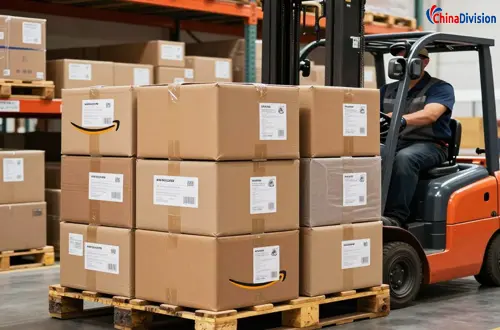
To maximize efficiency, Amazon requires inbound shipments to follow standardized pallet size requirements.
Oversized or improperly stacked pallets can:
- Prevent automated unloading
- Increase warehouse labor costs
- Create safety hazards
- Slow receiving operations
- Delay inventory availability
- Trigger manual sorting fees
These costs are often passed back to the shipper.
For businesses shipping hundreds or thousands of cartons, a few oversized pallets can significantly increase total logistics expenses.
Amazon’s FBA warehouses run almost entirely on automated conveyor systems and robotic unloading equipment. These machines are calibrated to work only with strictly defined standard pallets — any pallet that falls outside the allowed dimensions will jam the system, forcing Amazon to deploy manual teams to unload, sort and restack your goods. This is where those sky-high surcharges come from, and they have been rising 18% year over year since 2024.
For sellers using Amazon air freight, the risks are even higher. Air freight pallets have far stricter size limits than ocean pallets, and oversized units will not only trigger FBA penalties, but also get rejected by airlines at origin ports, leading to costly last-minute rework that delays your shipment by 7-10 days. We have seen a single seller lose $12,000 in peak season sales because their 3 over-height Amazon pallets were rejected at the US FBA warehouse, and their entire inventory was stuck in a third-party facility for two weeks.
What Happens When Amazon Pallets Exceed Standard Sizes?
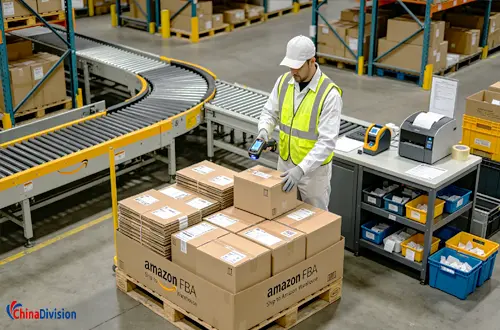
When an inbound shipment exceeds Amazon's pallet specifications, several issues may occur.
Manual Receiving Fees
Instead of automated unloading, warehouse staff must manually separate or rebuild pallets.
Additional handling fees may range from tens to several hundred dollars per pallet, depending on the severity of the issue and warehouse requirements.
Delivery Appointment Delays
Oversized pallets frequently require additional inspections, which may delay scheduled dock appointments.
This can postpone inventory receiving by several days.
Shipment Rejection
If pallet dimensions create safety concerns or cannot be unloaded properly, Amazon may reject the shipment entirely.
The seller must then arrange:
- Return transportation
- Overseas warehouse storage
- Re-palletizing
- Redelivery appointments
These additional logistics costs are often far higher than the original palletizing expense.
Amazon Pallet Specifications for the US Site
For the US site, Amazon generally requires suppliers and freight providers to follow standardized pallet dimensions for inbound FBA deliveries.
| Requirement | Recommended Standard |
|---|---|
| Standard Pallet Size | 120 cm × 100 cm (48" × 40") |
| Maximum Pallet Height (Including Cargo) | 180 cm (72") |
| Maximum Pallet Weight | 1,500 lbs (approximately 680 kg) |
| Cargo Overhang | Not recommended. Cargo should remain within pallet dimensions to ensure safe handling and transportation. |
| Pallet Condition | Clean, structurally sound, and preferably a four-way entry pallet for efficient forklift handling. |
| Stretch Wrapping | Securely wrapped with stretch film, ensuring the load is stable and free of loose or hanging film. |
Note: Amazon's requirements may vary depending on fulfillment center, shipment type, and transportation method. Always confirm the latest routing and receiving requirements before shipping.
Who Bears the Cost for Oversized Amazon Pallets?
Responsibility for additional fees depends on where the error occurred. In international fulfillment, liability is typically divided into three categories.
Scenario 1: Seller Bears Full Responsibility
The seller is fully responsible when errors originate from product preparation or packing decisions.
Common causes include:
- Ignoring standard pallets and exceeding pallet size limits
- Mixing irregular-shaped products without proper separation
- Overstacking cartons beyond height restrictions
- Refusing warehouse palletizing adjustments to save costs
- Poor SKU organization leading to unstable pallets
In these cases, Amazon air freight shipments arrive non-compliant, and manual sorting fees are charged directly to the seller.
Scenario 2: Freight Forwarder Bears Full Responsibility
The logistics provider is liable when operational failures occur during handling or shipping.
Typical issues include:
- Incorrect palletizing at origin warehouse
- Failure to measure and verify pallet dimensions
- Lack of communication about Amazon pallet specifications
- Poor pallet reinforcement causing cargo expansion during transit
- Skipping overseas re-palletizing when issues are detected
A professional fulfillment partner should identify and fix these problems before goods reach Amazon.
Scenario 3: Shared Responsibility
In many real-world cases, both parties contribute to the issue.
Example:
- Seller provides borderline oversized cartons
- Freight forwarder fails to flag or correct the issue
In such cases, additional fees are usually split based on fault percentage (often 50/50).
5 Pro Tips to Eliminate 99% of Oversized Pallet Surcharges
After managing 70,000+ Amazon pallets for our global clients, these actionable steps will cut your risk of penalties to almost zero:
- Use dedicated warehouse palletizing teams that specialize in FBA rules — not general warehouse staff. Our team at Chinadivision completes 3 separate dimension checks for every pallet, before it leaves our facility, and sends full photo and video proof to the seller for final confirmation.
- Never mix oversized individual SKUs onto standard pallets. Even one 70cm tall box on a standard stack will make the full pallet exceed the 1.8m height limit, triggering automatic fees.
- For Amazon air freight, use lightweight, low-profile pallets that save 10-15cm of height compared to heavy ocean pallets. This gives you extra buffer space to avoid hitting the maximum allowed height limit.
- Keep 5cm of empty space on all sides of the pallet during stacking, to account for minor shifting during transit. Even 1 inch of overhang will get your pallet flagged for extra fees.
- Pre-calculate your pallet load plan before you ship. Use a standard pallet load calculator to confirm exactly how many boxes you can fit on each unit, without exceeding Amazon’s pallet specifications.
Frequently Asked Questions
Can I use my own custom non-standard pallets for Amazon FBA shipments?
No. All US FBA centers strictly require GMA standard pallets that meet 4-way forklift access rules. Custom non-standard pallet size units will be rejected at the dock, and you will be charged a return fee to move them off-site.
Are air freight pallets different from warehouse pallets?
Yes. Air freight pallets must meet airline cargo standards, while warehouse pallets follow Amazon’s inbound rules.
Why should I use a professional warehousing provider?
They reduce risk, ensure compliance, and optimize shipping efficiency—especially for international and high-volume shipments.
Recommended Industry Resources


About the Author: Limi

Limi is a content marketing expert at ChinaDivision, helping businesses and e-commerce sellers navigate the complexities of international shipping by providing actionable tips and comprehensive guides on logistics, shipping, and cargo transportation.