

B2B Logistics and DTC Logistics: Dual-Channel Logistics for Easy Global Growth
Understanding the differences between B2B fulfillment and DTC fulfillment is critical for brands scaling internationally. This article explores the operational contrasts, pain points, and solutions in dual-channel fulfillment, offering insights into inventory management, warehouse workflows, and shipping strategies. Learn how hybrid fulfillment models can optimize efficiency, reduce costs, and improve customer experience.
Table of Contents
- The Pain Point of Dual-Channel Complexity
- B2B Fulfillment vs. DTC Fulfillment: What's the Difference?
- Why Many Brands Need Hybrid Fulfillment Instead of Choosing One
- When Should You Outsource B2B and DTC Fulfillment?
- Why Global Brands Choose ChinaDivision for Hybrid Fulfillment
- How ChinaDivision Solves the B2B + DTC Fulfillment Challenge
- Frequently Asked Questions (FAQ)
The Pain Point of Dual-Channel Complexity
The rise of e-commerce has blurred the lines between direct-to-consumer fulfillment and business-to-business fulfillment. Brands are no longer choosing one channel; they must master both.
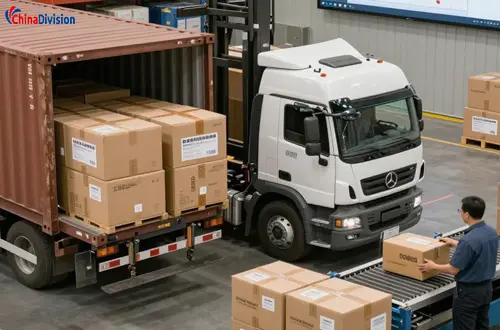
- DTC pain points: unpredictable order spikes, costly returns, and customer expectations for speed and transparency.
- B2B pain points: compliance-heavy requirements, bulk shipping, and the need for predictable, scalable operations.
Without a clear strategy, companies risk inefficiency, rising costs, and poor customer satisfaction.
B2B Fulfillment vs. DTC Fulfillment: What's the Difference?
|
Feature |
B2B Fulfillment |
DTC Fulfillment |
|---|---|---|
|
Customers |
Retailers & distributors |
Individual consumers |
|
Average Order Size |
Large bulk orders |
Single-item or multi-item parcels |
|
Picking Method |
Case & pallet picking |
Piece picking |
|
Packaging |
Standard cartons & pallets |
Branded packaging, inserts, gift wrapping |
|
Shipping Method |
LTL, FTL, sea freight, air freight |
Small parcel carriers, express shipping |
|
Delivery Schedule |
Appointment-based |
Customer-selected delivery |
|
Compliance |
ASN, pallet labels, retailer routing guides |
Customer communication & tracking |
|
Returns |
Low frequency |
High return volume |
|
Main KPI |
Cost efficiency & compliance |
Speed & customer experience |
Why Many Brands Need Hybrid Fulfillment Instead of Choosing One
Many businesses believe they must choose between wholesale and direct sales.
In reality, most growing brands eventually operate both.
For example:
- Sell wholesale to distributors
- Operate a Shopify store
- Supply Amazon FBA
- Ship TikTok Shop orders
- Fulfill subscription boxes
- Support B2B corporate gifting
This is known as hybrid fulfillment or dual-channel fulfillment.
Rather than separating inventory into multiple warehouses, hybrid fulfillment allows brands to use one inventory pool while serving multiple sales channels.
Benefits include:
- Lower storage costs
- Better inventory utilization
- Faster replenishment
- Simplified forecasting
- Reduced stockouts
- Lower operational overhead
Operating a unified inventory pool gives you maximum flexibility, preventing your capital from being locked up in one underperforming channel. However, without absolute, real-time inventory visibility, a sudden viral surge in DTC sales could accidentally drain the safety stock reserved for a critical B2B retailer order, leading to severe contract penalties. Transitioning to a high-tier, cloud-based WMS provides cross-channel visibility, protecting buffer stocks and preventing split shipments or unexpected backorders.
When Should You Outsource B2B and DTC Fulfillment?
Outsourcing becomes increasingly valuable when your business experiences:
- Rapid international expansion
- Seasonal demand spikes
- Multi-channel sales growth
- Rising warehouse labor costs
- Inventory management challenges
- Increasing shipping complexity
Rather than investing heavily in warehouse space, equipment, software, and staffing, many brands partner with a third-party logistics (3PL) provider to gain scalable infrastructure and expertise.
Why Global Brands Choose ChinaDivision for Hybrid Fulfillment
As an experienced international order fulfillment and warehousing provider based in China, ChinaDivision helps brands manage both business-to-business fulfillment and direct-to-consumer fulfillment through one integrated logistics platform.
Our services include:
- Global order fulfillment
- International warehousing
- Inventory management
- Pick & pack services
- Kitting and assembly
- Product inspection
- Amazon FBA preparation
- B2B wholesale distribution
- Cross-border DTC fulfillment
- Returns management
- Custom packaging and branding
- Worldwide shipping with multiple carrier options
Whether you're shipping B2B orders to retailers or shipping DTC orders directly to customers, our warehouse management system provides real-time inventory visibility and flexible workflows designed for modern omnichannel commerce.
With strategically located fulfillment operations in China, brands can reduce shipping costs, shorten delivery times, and simplify global expansion while maintaining excellent customer experiences.
How ChinaDivision Solves the B2B + DTC Fulfillment Challenge
Unified international warehousing with channel-specific workflows. Our facilities in China are configured with dedicated DTC zones (optimized for piece-picking, branded packaging, and same-day parcel dispatch) and B2B zones (equipped for pallet building, ASN generation, and LCL/FTL freight staging).
Real-time inventory visibility. Our WMS integrates with Shopify, Amazon, WooCommerce, and major ERP systems, giving you a single dashboard view of stock across both channels. Automated allocation rules prevent channel conflict and stockouts.
Flexible labor scaling. DTC peak season? We surge piece-picking teams. B2B purchase order due? We allocate certified pallet builders and forklift operators.
International freight expertise. From LCL consolidation for B2B wholesale shipments to express parcel networks for DTC orders, we manage the entire international logistics chain—customs documentation, duty optimization, and cross-border compliance included.
Frequently Asked Questions
What is the difference between B2B fulfillment and DTC fulfillment?
B2B fulfillment focuses on shipping bulk orders to businesses such as retailers and distributors, emphasizing compliance, palletized shipments, and operational efficiency. DTC fulfillment ships individual orders directly to consumers, prioritizing speed, accurate picking, branded packaging, and a seamless delivery experience.
Can one warehouse handle both B2B and DTC orders?
Yes. A professionally managed fulfillment center can support dual-channel fulfillment by using separate picking processes, storage zones, packaging rules, and shipping methods while maintaining a unified inventory system.
How can businesses reduce shipping costs for international orders?
Consolidating inventory, using strategically located warehouses, selecting the right shipping method (air, sea, express, or postal), optimizing packaging dimensions, and partnering with an experienced international 3PL can significantly reduce transportation costs.
Recommended Industry Resources
Flexport Logistics - Freight vs. Parcel
DHL Supply Chain Insights (international warehousing)
Shopify: Hybrid Fulfillment – A Solution for Fast Ecommerce Growth


About the Author: Limi

Limi is a content marketing expert at ChinaDivision, helping businesses and e-commerce sellers navigate the complexities of international shipping by providing actionable tips and comprehensive guides on logistics, shipping, and cargo transportation.