

Fulfillment Center vs. Warehouse: What's the Difference?
|
Table of contents: What’s the difference between a fulfillment center and a warehouse? Which is right for you, a fulfillment center or a warehouse? |
What is a fulfillment center?
A logistics center is a critical hub in the supply chain; it's a physical location specifically designed to receive inventory and packages and deliver customer orders on time and in good condition. It encompasses all activities in the order fulfillment process, including picking, processing, packing, shipping, and delivering goods to their final destination. Logistics centers are sometimes also called distribution centers (DCs), especially useful for online stores or e-commerce companies. Generally, e-commerce businesses have two options when looking for distribution centers: operate them themselves or partner with logistics fulfillment agents and use their logistics centers. Currently, most logistics centers provide not only basic logistics services, such as receiving and inventory management, short-term warehousing, order fulfillment, drop shipping, and last-mile delivery, but also value-added services, such as kit assembly, customized packaging, and returns management. Moreover, most logistics centers possess e-commerce expertise, which can help customers handle complex online order processing processes and provide scalability to meet seasonal demands.
Chinadivision reminds you that logistics is extremely important for business development. If you are a newly established e-commerce company, building and operating your own logistics center requires a large investment of capital and manpower, which will significantly impact the development of your company's main business. We suggest that you cooperate with logistics agents who have many years of experience in logistics. They can provide you with professional and high-quality logistics agency services, allowing you to focus entirely on the development of your company's core business.
What is a warehouse?
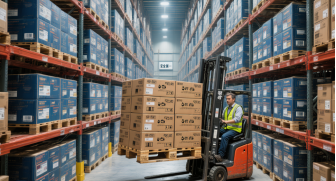
A warehouse typically refers to a building used for long-term storage of goods and products and is an integral part of supply chain management. It is designed to store a company's inventory in bulk and retrieve it only when needed; for example, if your company sells seasonal products, it may need to store products for other times of the year for unforeseen circumstances. Warehouses are equipped with high racks stacked high with goods, forklifts moving among them, and containers moving within the building. Walking into a warehouse, you'll see high racks piled high with various products and forklifts moving about, handling containers. From an operational perspective, the daily operations of a warehouse are relatively fixed. Inventory is added to the warehouse, moved to other locations when necessary, and issued when needed. The operational process of a warehouse is much simpler than that of a logistics center. While a logistics center can also serve as a warehouse, a warehouse itself does not simultaneously possess the functions of a logistics center.
Companies specializing in warehousing services typically build large warehouses in multiple locations. They also tend to favor wholesale or business-to-business (B2B) orders, as these involve large quantities of products and fully utilize the warehouse's storage capabilities. Larger companies and retailers mostly own their own warehouses to store excess inventory or rent warehouse space shared with other businesses. For small and medium-sized enterprises (SMEs), partnering with third-party logistics providers and leasing their warehouse space is a more cost-effective option.
What’s the difference between a fulfillment center and a warehouse?
|
|
Warehouse
|
Fulfillment Center
|
|---|---|---|
|
Purpose
|
Long-term storage
|
Short-term storage + order fulfillment
|
|
Customer
|
B2B
|
B2C / eCommerce
|
|
Flow
|
Pallet in/out, low frequency
|
Pallet in, parcel out, high frequency
|
|
Duration
|
Months to years
|
Weeks to months
|
|
Focus
|
Storage efficiency
|
Speedy order processing
|
|
Pickups
|
Infrequent
|
Frequent & flexible
|
The main difference between a logistics center and a warehouse lies in their focus: a logistics center is designed to process and ship individual customer orders, while a warehouse focuses on the bulk storage of goods. Furthermore, logistics centers typically offer a wider range of services; warehouses provide long-term storage and, in some cases, value-added services, while logistics centers cover all aspects of the order fulfillment process, including receiving and storing inventory, picking and packing orders, handling last-mile delivery, and even returns processing.
Warehouses are designed for long-term inventory storage and are typically used as large industrial storage centers for businesses that need to store large quantities of inventory. Merchants can utilize warehousing solutions to store inventory in bulk over extended periods. Logistics centers, on the other hand, are usually used as short-term storage solutions, aiming to help sellers quickly turn over their inventory. Unlike products sitting idle on warehouse shelves for months, logistics centers are characterized by frequent daily inflows and outflows of goods, ultimately delivering them to consumers. In fact, this is precisely the primary goal of logistics centers—to fulfill and ship customer orders promptly.
Which is right for you, a fulfillment center or a warehouse?
Although logistics centers and warehouses have distinct functions, both are essential components for successful e-commerce transactions. Businesses need not only warehouses to store goods but also logistics centers to connect with customers and deliver to them. By utilizing both warehouses and distribution centers, businesses can balance their long-term storage needs with rapid order fulfillment requirements, effectively manage inventory levels, meet customer demands, and optimize logistics operations.
After we have learned about the importance of these two buildings, there is still one question. As mentioned earlier, warehouses and logistics centers can be operated and managed by themselves, or they can cooperate with third-party logistics agents to enjoy professional logistics services.
When you're a startup e-commerce business, you might think you can manage renting warehouses and logistics centers. However, as your business grows, you'll find it increasingly difficult to handle logistics. Especially during peak sales seasons, managing logistics becomes a major challenge. Therefore, as your transaction volume increases, you should realize it's time to partner with a logistics agent. With large warehouses in multiple locations, ChinaDivision can meet the warehousing needs of customers in different regions. ChinaDivision has warehousing functions such as Warehouse Inventory Control Services, Quality Testing for Product Warehousing, Barcode Tracking, and Real-time Inventory Management. Our precise warehousing and fulfillment services allow you to focus on business development while ensuring the efficient operation of your logistics.
FAQs
1. What is the difference between Chinadivision's warehouse and a traditional warehouse?
The main function of a traditional warehouse is inventory storage, while Chinadivision’s warehouse is a fulfillment center, which not only provides receiving and storing inventory but also completes sorting and packaging here and automatically fulfills and ships commodity orders for e-commerce sellers.
2. Does the warehouse in Chinadivision provide cargo inspection services?
Yes, when the goods enter the warehouse, we will conduct a random sampling inspection of the products to ensure that the products are received according to the regulations and reduce the occurrence of problematic packages in the warehouse.
3. How do logistics centers cope with seasonal demand fluctuations?
Logistics centers can quickly expand or shrink your storage space as needed. They also use software with advanced forecasting capabilities for inventory replenishment to manage inventory levels and meet seasonal demand. These capabilities enable logistics centers to deliver your products on time while minimizing the risks of excess inventory and stockouts.
Reference:
Fulfillment house
https://en.wikipedia.org/wiki/Fulfillment_house


About the Author: Limi

Limi is a content marketing expert at ChinaDivision, helping businesses and e-commerce sellers navigate the complexities of international shipping by providing actionable tips and comprehensive guides on logistics, shipping, and cargo transportation.