

Safety Stock: Calculation, Risk Optimization & Cost-Saving Strategies
Many global businesses either run costly stockouts or overstock waste due to improperly set safety stock levels.
Table of Contents
- Why Modern Global Supply Chains Cannot Survive Without Optimized Safety Stock
- Core Benefits: Where Safety Stock Directly Adds Value
- Critical Risks of Unreasonable Safety Stock Settings
- Safety Stock vs. Cycle Stock: What Is the Difference?
- Clear Difference: Safety Stock vs. Reorder Point
- Advanced FAQ for Safety Stock Optimization
- How Chinadivision Helps Businesses Achieve Scientific Safety Stock Optimization
- Safety Stock Is the Core Tool for Long-Term Supply Chain Profitability
Why Modern Global Supply Chains Cannot Survive Without Optimized Safety Stock
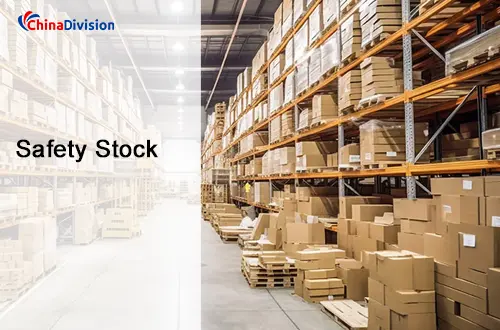
Global supply chains have never been more unstable. Fluctuating consumer demand, seasonal shopping surges, port congestion, customs delays, supplier production bottlenecks, and unexpected logistics disruptions have made rigid inventory planning obsolete.
Today’s cross-border businesses face a cruel inventory dilemma: hold too little stock and lose sales & customer trust; hold too much stock and tie up capital, balloon warehousing fees, and create obsolete inventory.
This is where safety stock (buffer stock) emerges as your supply chain’s most strategic asset—not redundant inventory, but a calculated risk buffer that balances fulfillment stability and operational cost control.
|
Challenge |
Impact Without Safety Stock |
Benefit With Safety Stock |
|---|---|---|
|
Demand volatility |
Stockouts and lost sales |
Stable supply and customer trust |
|
Supplier delays |
Missed delivery deadlines |
Buffer time for replenishment |
|
Logistics disruptions |
Emergency freight costs |
Controlled, predictable operations |
|
Seasonal peaks |
Overwhelmed fulfillment centers |
Balanced inventory and smooth flow |
Safety stock refers to the strategic reserve inventory beyond regular forecasted demand. It is a purposeful inventory buffer reserved exclusively to offset unpredictable supply chain uncertainties, rather than supporting daily normal order consumption.
Unlike cycle stock used for regular order fulfillment, safety stock acts as your supply chain’s insurance policy against two major uncontrollable variables: demand volatility and supply instability.
It specifically hedges against these global supply chain risks:
- Sudden demand surges: Viral product traffic, holiday seasons, flash promotions, and unexpected market trend growth
- Supplier delays: Factory shutdowns, raw material shortages, production bottlenecks, and supplier capacity instability
- International logistics disruptions: Port congestion, carrier schedule changes, customs clearance delays, maritime crisis impacts, and transportation strikes
- Forecast deviation risks: Errors in manual demand prediction and fluctuating overseas market consumption habits
In short, safety stock ensures your business can maintain 100% on-time order fulfillment even when your supply chain goes wrong.
Core Benefits: Where Safety Stock Directly Adds Value
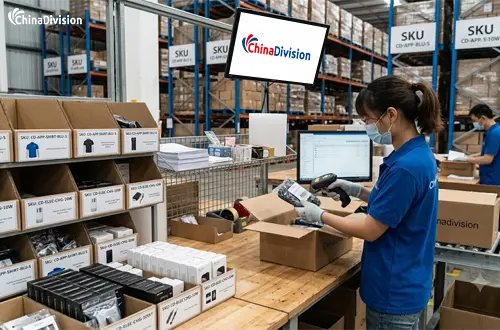
Protecting revenue and margin
Research shows retailers can lose several percent of annual sales from stockouts; cross-border sellers may face even higher loss because recovery takes longer. Safety stock directly reduces:
- Lost orders during promotions or high season.
- Backorders that get cancelled when delays stretch too long.
Stabilizing customer experience
Consistent availability and predictable delivery windows increase repeat purchase rates and reduce churn, especially in competitive overseas markets where customers can easily switch suppliers.
Reducing “panic costs”
When inventory runs too lean, companies turn to rush production, expedited transport, or premium freight lanes, all of which compress margins. Smart safety stock allows:
- More use of economical shipping modes (e.g., ocean instead of emergency air).
- Fewer overtime picking/packing operations to handle sudden replenishment pushes.
Safety stock is designed to protect against:
- Unexpected demand increases
- Longer-than-expected supplier lead times
- Production delays
- Port congestion
- Customs clearance delays
- Carrier disruptions
- Seasonal fluctuations
- Promotional campaigns
- Forecasting errors
The objective is not to hold as much inventory as possible. The objective is to hold enough inventory to achieve the required service level at an acceptable cost.
Critical Risks of Unreasonable Safety Stock Settings
Many enterprises fail in inventory management not because of no safety stock, but because of improper stock level settings.
Risks of Insufficient Safety Stock
- Frequent stockouts leading to direct order loss
- Decline in platform product rankings and reduced traffic
- Emergency air freight surcharges and increased logistics costs
- Customer dissatisfaction and reduced repurchase rate
Risks of Excessive Safety Stock
- A large amount of working capital occupied by inventory
- Sustained high overseas warehousing and storage fees
- Product aging, depreciation, and obsolete inventory losses
- Difficulty in flexible adjustment for updated product versions
Safety Stock vs. Cycle Stock: What Is the Difference?
|
Inventory Type |
Purpose |
Typical Cause of Inventory |
|---|---|---|
|
Cycle Stock |
Meet expected demand |
Regular purchasing and replenishment |
|
Safety Stock |
Protect against uncertainty |
Demand or supply variability |
|
Seasonal Stock |
Prepare for predictable peaks |
Holidays and seasonal demand |
|
Anticipation Stock |
Prepare for known future events |
Price increases or planned shortages |
|
Pipeline Inventory |
Goods currently in transit |
International transportation |
A common mistake is to treat all inventory as safety stock. This makes it difficult to determine whether a company is genuinely protected against uncertainty or simply holding excessive inventory.
Clear Difference: Safety Stock vs. Reorder Point
These two inventory indicators are easily confused in daily management, but their functions are completely different:
- Safety Stock: Fixed bottom reserve inventory, used to resist unexpected risks, not for daily order consumption
- Reorder Point: The trigger inventory level for new replenishment orders
Reorder Point = Safety Stock + Average Demand During Lead Time
Reasonable coordination of the two can realize automatic and intelligent inventory replenishment, completely solving manual management errors.
Advanced FAQ for Safety Stock Optimization
Is safety stock necessary for low-volume stable products?
Yes. Even for stable products, international logistics lead time uncertainty still exists. A small amount of safety stock can avoid occasional delays causing stockouts, with almost no additional cost but huge risk reduction value.
What is the simplest safety stock formula?
Safety Stock = (Maximum Daily Usage × Maximum Lead Time) − (Average Daily Usage × Average Lead Time)
Should every SKU have safety stock?
Not necessarily. Low-demand, low-value, or easily replenished products may require little or no safety stock, while high-value or strategically important products may require stronger inventory protection.
What happens if safety stock is too high?
It increases storage costs and risks obsolescence. Balance is key.
How Chinadivision Helps Businesses Achieve Scientific Safety Stock Optimization
Manual safety stock calculation and adjustment are inefficient and inaccurate, especially for multi-region cross-border inventory deployment. Chinadivision’s intelligent international order fulfillment system provides one-stop safety stock optimization solutions:
- Data-driven inventory forecasting: Automatically calculate scientific safety stock values based on historical sales, seasonal trends, and logistics lead times
- Global multi-warehouse linkage deployment: Distribute safety stock in regional overseas warehouses to realize localized risk buffering and fast delivery
- Real-time inventory early warning: Automatic replenishment reminders when inventory reaches the reorder point to avoid stockout risks
- Precise cost control: Avoid overstock capital occupation and excess warehousing fees while ensuring zero stockouts
- Full-link fulfillment optimization: Reduce transportation costs, shorten delivery cycles, and improve overall order fulfillment rates
Safety Stock Is the Core Tool for Long-Term Supply Chain Profitability
In the era of uncertain global trade, inventory management capability is core profitability capability. Safety stock is no longer a simple inventory buffer, but a strategic tool for balancing risk control, cost optimization, and customer experience.
Blindly reducing inventory will lose sales, and blindly hoarding inventory will lose profits. Only data-driven, dynamically adjusted safety stock strategies can help enterprises build resilient, low-cost, and efficient global supply chains.
Related Topics:
Difference Between Buffer Stock Vs Safety Stock
How Safety Stock Can Change Your Global Supply Chain?
Useful Industry Resources


About the Author: Limi

Limi is a content marketing expert at ChinaDivision, helping businesses and e-commerce sellers navigate the complexities of international shipping by providing actionable tips and comprehensive guides on logistics, shipping, and cargo transportation.