

Difference Between Buffer Stock Vs Safety Stock
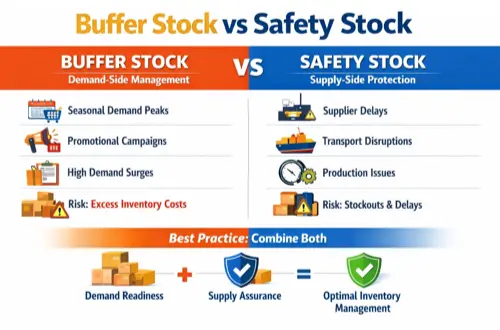
In international order fulfillment, buffer stock and safety stock are essential inventory strategies, but they serve different purposes. Buffer stock protects against fluctuations in customer demand, ensuring products are available during peak seasons or sudden surges, while safety stock safeguards your supply chain against uncertainties like supplier delays or transport disruptions. Together, they enable businesses to maintain operational efficiency and customer satisfaction across global markets.
Table of Contents
Understanding the nuances between buffer stock and safety stock is crucial for optimizing inventory management and ensuring seamless supply chain operations. While both concepts aim to mitigate risks, they serve distinct purposes and are applied under different circumstances.
What is Buffer Stock?
Buffer stock acts as a proactive, demand-focused inventory reserve. It is designed to absorb unexpected increases in customer orders, seasonal demand peaks, or promotional spikes. By maintaining buffer stock, businesses can continue fulfilling orders seamlessly, protecting both customer satisfaction and brand reputation.
How to Calculate Buffer Stock?
The standard formula for buffer stock is:
Buffer Stock=(Maximum Daily Usage×Maximum Lead Time)−(Average Daily Usage×Average Lead Time)
This calculation ensures enough inventory to handle demand surges without tying up unnecessary capital.
Advantages of Buffer Stock
Enhanced Customer Satisfaction: Avoid stockouts during peak demand periods.
Revenue Protection: Minimize lost sales from unexpected surges.
Operational Flexibility: Provides time to adjust procurement or production schedules.
Cost Stabilization: Reduces reliance on emergency procurement.
Strategic Planning Support: Ensures smooth operations during demand fluctuations.
What are the risks of excessive buffer stock?
Capital tied up in inventory, reducing liquidity.
Higher storage and warehousing costs.
Obsolescence, especially for seasonal or trend-driven products.
What is Safety Stock?
Safety stock is inventory held to protect against supply-side risks—supplier delays, production issues, transportation disruptions, or geopolitical events. Unlike buffer stock, safety stock is not designed to meet sudden demand spikes but ensures continuity when supply chain uncertainties arise.
How to Calculate Safety Stock
A common statistical approach:
Safety Stock=Z × σ × √LT
Where:
Z = desired service level factor
σ = standard deviation of demand
LT = lead time
Factors Affecting Safety Stock
Lead time variability
Service level targets
Supplier reliability
Product criticality
Inventory carrying costs
When to Use Buffer Stock vs Safety Stock?
Best Scenarios for Buffer Stock:
Seasonal Demand Peaks: Build inventory reserves for holidays and festivals.
Promotional Campaigns: Prepare for flash sales and time-sensitive promotions.
New Product Launches: Protect against uncertain customer uptake.
Long Lead Time Items: Balance replenishment delays for essential slow-moving inventory.
Best Scenarios for Safety Stock:
Unreliable Suppliers: Protect against delivery inconsistencies and geopolitical events.
Manufacturing Delays: Cover production issues like machinery failures.
Perishable Goods: Prevent spoilage or quality deterioration during transportation.
Global Sourcing: Manage extended delivery times and customs clearance delays.
Common Mistakes in Buffer Stock and Safety Stock Management
Overestimating Buffer Stock Requirements
Excessive stockpiling can tie up capital, increase storage costs, and lead to obsolescence. Fix this by implementing historical data analysis and AI-based demand modeling to establish appropriate buffer stock levels.
Underestimating Safety Stock Needs
Cutting back on safety stock to save money often worsens risks, leading to stockouts and higher emergency costs. Recalculate safety stock quarterly, considering supplier reliability and lead time variability, and use inventory management tools like Chinadivision's system for real-time adjustments.
Why Choose Chinadivision for International Order Fulfillment?
For B2B companies sourcing from China, the distinction is even more vital. Safety Stock is often kept higher to account for international freight variables like ocean transit times and customs clearance. Buffer Stock is adjusted based on your target market's local shopping holidays (e.g., Prime Day in the US or Singles' Day in China).
At Chinadivision, we integrate advanced inventory management practices—including buffer stock and safety stock strategies—into our international order fulfillment and freight forwarding services. By optimizing warehouse operations and supply chain logistics, we help B2B clients:
Maintain optimal inventory levels globally
Avoid stockouts during demand spikes or supply chain disruptions
Ensure fast, reliable international deliveries
Reduce warehousing and transportation costs
Chinadivision helps businesses manage both by providing real-time inventory data. By using our international order fulfillment services, you gain a partner who understands how to optimize these levels, reducing your carrying costs while ensuring you never miss a global shipping deadline.
Partnering with Chinadivision allows businesses to focus on growth while we manage inventory, fulfillment, and shipping complexities worldwide.
Frequently Asked Questions (FAQs)
How does safety stock protect against international shipping delays?
Safety stock ensures your warehouse can fulfill orders even if suppliers are delayed or customs processing takes longer than expected.
Can I track inventory and stock levels in real-time?
Absolutely. Our integrated warehouse management systems provide live updates on inventory, safety stock, and buffer stock levels.
Should I store my Safety Stock in China or in my destination country?
This depends on your "lead time." Keeping a portion of safety stock in Chinadivision’s China warehouse allows for rapid redirection to any global market, while keeping a small amount of buffer stock in local "last-mile" hubs can speed up delivery during peak sales.
By understanding the differences between buffer stock and safety stock and implementing best practices in their management, businesses can enhance customer satisfaction, protect revenue, and ensure operational flexibility. For expert assistance in international order fulfillment and transportation services, consider choosing Chinadivision to streamline your supply chain and drive business success.


About the Author: Limi

Limi is a content marketing expert at ChinaDivision, helping businesses and e-commerce sellers navigate the complexities of international shipping by providing actionable tips and comprehensive guides on logistics, shipping, and cargo transportation.