

The Complete Guide to Furniture Shipping and Global Logistics
To safely ship furniture and household items internationally, businesses must utilize specialized heavy-freight and multi-category logistics frameworks. This includes structural crating, custom dunnage, high-density palletization, and temperature-controlled international warehousing. Because home goods catalogs vary from small fragile items to oversized furniture, success requires an agile 3PL partner capable of executing both direct-to-consumer (DTC) parcel injection and complex omnichannel retail compliance.
Table of Contents
- Why Furniture & Home Goods Need Specialized Logistics
- What Is Home Goods & Home Decor Fulfillment?
- When to Ship Furniture: Choosing the Right Shipping Method
- Common HS Codes for Furniture & Home Goods
- Destination-Specific Rules
- When to Switch to a Specialized Home Goods 3PL
- Frequently Asked Questions (FAQ)
- Industry Resources for Further Reading
The global marketplace for furniture, textiles, and interior design has undergone a structural transformation. For B2B brands, cross-border e-commerce merchants, and crowdfunding campaigns, the mandate to Ship Furniture and scale Home Goods Shipping across continents represents an immense growth path—along with significant operational hurdles.
Why Furniture & Home Goods Need Specialized Logistics
Ship Furniture is far more complex than standard shipping. Items range from small decor and textiles to large sofas, cabinets, and custom pieces. They are bulky, often fragile, and high-value — and customers treat them as long-term investments that shape their living spaces.
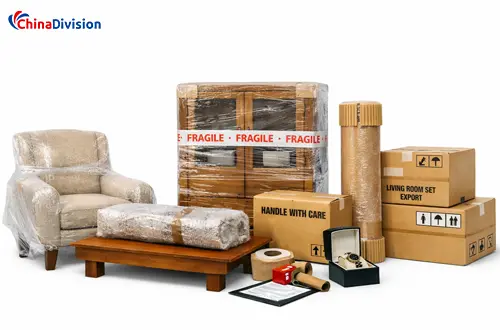
Today, over 80% of consumers buy home goods online, and expectations are higher than ever: perfect condition, accurate delivery, and premium presentation. For brands, Home Goods Fulfillment and Home Decor Fulfillment are no longer just logistics — they are core to customer experience and brand reputation.
Chinadivision is your expert partner for Ship Household Goods Internationally, combining secure storage, custom packaging, multi-mode transport, and full compliance to make global expansion simple and safe.
What Is Home Goods & Home Decor Fulfillment?
Home Goods Fulfillment covers the full cycle: receiving, storing, picking, packing, shipping, and returns for furniture, decor, textiles, lighting, kitchenware, and household items. Unlike general e-commerce, it is highly variable and specialized.
Key Characteristics
- Wide product range: from delicate glassware to 2m sofas, from soft textiles to heavy wood furniture
- Fragility & value: high risk of damage; premium brand image at stake
- Variable dimensions: small bins vs large palletized goods
- Seasonality: peaks during holidays, moving seasons, and sales events
- Omnichannel needs: D2C, wholesale, marketplaces, retail stores
Comparison: Standard vs Home Goods Fulfillment
| Feature | Standard Fulfillment | Home Goods / Furniture Fulfillment |
|---|---|---|
| Product Type | Uniform, small, durable | Mixed: fragile, bulky, heavy, oversized |
| Packaging | Standard cartons | Custom crates, foam, corner protection, wooden frames |
| Storage | Racks / bins only | Multi-zone: bin, rack, bulk, climate-controlled |
| Shipping Cost | Weight-based | Dimensional weight + volume-based |
| Risk Level | Low | High — damage = major brand impact |
| Compliance | Basic | Strict: wood treatment, fumigation, certificates |
When to Ship Furniture: Choosing the Right Shipping Method
Different shipping methods suit different furniture types, budgets, and timelines.
| Shipping Method | Best For | Cost | Speed | Pros | Cons |
|---|---|---|---|---|---|
| Ocean Freight (FCL) | Large furniture orders, full pallets | Low | 3–6 weeks | Cost-effective, high capacity | Slower, requires customs clearance |
| Ocean Freight (LCL) | Partial shipments, mixed cargo | Medium | 4–7 weeks | Flexible, no need for full container | Higher handling, more risk of damage |
| Air Freight | High-value, urgent, small furniture | High | 3–7 days | Fast, lower damage risk | Very expensive, size/weight limits |
| Consolidated Shipping | Multiple SKUs, mixed household goods | Low–Medium | 4–8 weeks | Cost savings, ideal for shipping household items | Longer transit, coordination needed |
| White-Glove Delivery | Premium furniture, end-consumer delivery | High | Varies | Professional installation, no customer effort required | Higher cost, limited carrier availability |
For businesses that ship household goods internationally, LCL or consolidated shipping often offers the best balance of cost and flexibility.
Common HS Codes for Furniture & Home Goods
| Category | Example HS Code Range |
|---|---|
| Wooden Furniture | 9403.xx |
| Metal Furniture | 9403.xx |
| Soft Furnishings (Bedding) | 9404 / 63.xx |
| Lighting | 9405.xx |
| Mirrors | 7009.xx |
Incorrect HS codes can lead to delays, fines, or rejected shipments.
Destination-Specific Rules
- USA: Requires CBP entry, possibly ISF (Import Security Filings)
- EU: Requires EORI number, VAT registration
- Australia: Requires biosecurity inspection for wood products
- Singapore: Strict rules on wood furniture (plant protection)
A professional logistics provider manages these details to prevent delays.
When to Switch to a Specialized Home Goods 3PL
| Warning Sign | Root Cause | 3PL Solution |
|---|---|---|
| Rising damage rates (>2%) | Inadequate packaging protocols | Custom protective packaging workflows |
| Order inaccuracy (>0.5%) | Poor picking processes | Barcode verification, quality checkpoints |
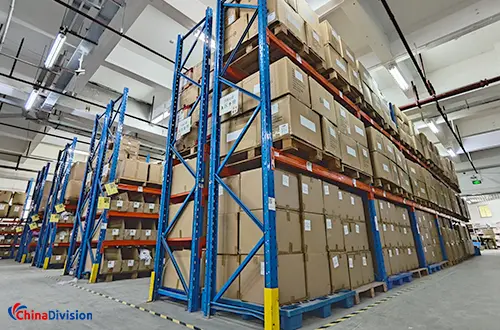
| Warehouse space constraints | Inflexible storage infrastructure | Scalable multi-zone storage |
| Retail expansion struggles | Lack of compliance expertise | Dedicated retail compliance team |
| Seasonal fulfillment failures | Inability to scale labor | Trained temporary workforce, documented SOPs |
| Increasing customer complaints | Subpar unboxing experience | Branded packaging, value-added services |
For premium brands, the threshold for switching is lower. A single damaged chandelier or incorrect upholstery color can generate negative reviews that outweigh hundreds of successful orders.
Frequently Asked Questions (B2B Buyers)
1. What is the most cost-effective way to ship furniture internationally?
For large orders, Ocean Freight (FCL) is most cost-effective. For mixed or partial shipments, LCL or consolidated shipping works well.
2. How do I prevent damage when shipping furniture?
Use double-wall cartons, corner protectors, foam inserts, moisture wrapping, and clear “fragile” labeling. Partner with a 3PL experienced in fragile-item handling.
3. What documents are required to ship household goods internationally?
Commercial invoice, packing list, bill of lading/air waybill, HS codes, certificate of origin, and any required import permits.
Industry Resources for Further Reading


About the Author: Limi

Limi is a content marketing expert at ChinaDivision, helping businesses and e-commerce sellers navigate the complexities of international shipping by providing actionable tips and comprehensive guides on logistics, shipping, and cargo transportation.