

Which regions are subject to the International Remote Area Surcharge?
The International Remote Area Surcharge is an additional cross-border fee applied directly to packages that originate from or are destined for geographical postcodes classified by primary couriers as difficult, remote, or inaccessible. While base shipping costs only calculate zone-to-zone line-haul transit, this accessorial remote area surcharge accounts for the secondary carrier labor, fuel, and third-party localized transshipments required to complete final-mile deliveries in underserved regions.
Table of Contents
- Understanding the International Remote Area Surcharge
- What Triggers an International Remote Area Surcharge?
- Global Surcharge Hotspots: Areas with Frequent Additional Charges
- 2026 Carrier Surcharge Standards & Pricing Matrix
- Operational Challenges of Remote Final-Mile Delivery
- Strategic Strategies to Mitigate and Avoid Remote Fees
- Frequently Asked Questions (FAQ)
- Recommended Industry Resources
As a professional international order fulfillment and warehousing provider, ChinaDivision helps global brands, eCommerce sellers, crowdfunding projects, wholesalers, and retailers proactively identify remote destinations, optimize shipping methods, and reduce unexpected transportation costs before orders are dispatched.
Understanding the International Remote Area Surcharge

A Remote Area Surcharge (RAS), sometimes referred to as a Delivery Area Surcharge (DAS), is an additional fee charged by logistics carriers when delivering to destinations that are difficult or expensive to serve. This is different from standard shipping fees because it is not based only on package weight or service speed, but also on delivery difficulty and local network coverage. It is added separately because carriers must invest additional resources to complete the final delivery.
Common reasons include:
- Long distances from distribution hubs
- Limited transportation infrastructure
- Low delivery density
- Mountainous terrain
- Island destinations
- Extreme weather conditions
- Reliance on third-party local delivery partners
For international sellers, these additional charges can substantially impact logistics costs and profit margins, especially when shipping low-value products.
What Triggers an International Remote Area Surcharge?
Many international e-commerce sellers are surprised by secondary adjustments on their billing invoices, which frequently stem from an unexpected remote area fee. Major tier-one international express networks (such as DHL, FedEx, and UPS) structure their logistics pricing around core hubs, major commercial metros, and established industrial corridors.
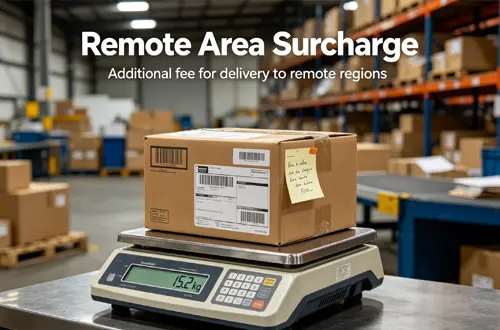
When a package is routed to an isolated mountain village, an oceanic island, or a sparsely populated border territory, it falls outside the carrier’s directly operated infrastructure. To complete delivery, the carrier must pass the package to local localized contractors or alter their standard vehicle routing, incurring significant extra fuel, vehicle wear, and driver time. These operational variables are recovered via a mandatory Delivery Area Surcharge (DAS) or an Extended Remote Area Fee.
When a package is sent to a remote location, carriers often face:
| Cost Factor | Impact on Transportation Costs |
|---|---|
| Extended driving distances | Increased fuel consumption |
| Low delivery volume | Higher cost per shipment |
| Third-party handoffs | Additional service fees |
| Island transportation | Sea or air transfer costs |
| Difficult terrain | Increased labor requirements |
| Weather-related disruptions | Longer transit times |
These factors create higher operational expenses, leading carriers to impose a remote area surcharge.
Global Surcharge Hotspots: Areas with Frequent Additional Charges
Surcharges stack per shipment and are assessed on top of standard base transportation costs, making it vital to map your consumer distribution channels. The most common global areas subject to heavy logistics costs include:
- All of Europe: Rural towns within northern Norway and Sweden, the Finnish archipelago, the Scottish Highlands and Outer Hebrides, remote country villages in Croatia, and high-altitude valleys throughout the Swiss Alps. Even highly developed countries can generate additional charges when deliveries require long-distance transportation beyond major urban centers.
- The Americas: The entirety of Alaska and Hawaii, vast sections of the Canadian Yukon, Northwest Territories, and Newfoundland, alongside isolated islands off the coast of Chile. For international fulfillment operations, shipments to these destinations often experience both higher shipping costs and longer transit times.
- Oceania: Remote mining outposts in Western Australia, the island of Tasmania, and deep rural farming postcodes across New Zealand’s South Island. Due to low population density, logistics costs are often significantly higher than metropolitan deliveries.
- Southeast Asia: East Malaysia (specifically dense or rural pockets of Sabah and Sarawak) and the thousands of disconnected outer islands across Indonesia. Cross-border eCommerce sellers frequently encounter unexpected remote area fees when serving customers in these destinations.
- Extreme Regions: Global destinations like Greenland, Iceland, or rural African villages often encounter a 100% processing markup or an automatic maximum tier extension fee. Some carriers classify entire postal regions as remote service areas.
2026 Carrier Surcharge Standards & Pricing Matrix
Surcharge models are updated annually to offset rising driver wages and global fuel price fluctuations. The baseline additional charges enforced across tier-one carriers and dedicated lines generally follow these ranges:
| Logistics Channel | Average Remote Surcharge Rate (Per Shipment) | Minimum Volumetric Adjustments | Billing Framework |
|---|---|---|---|
| DHL Express | 220 RMB - 320 RMB (~$30 - $45 USD) | Varies by weight if greater than minimum | Flat rate or per-kg minimum applied automatically based on postcode. |
| UPS Worldwide | 200 RMB - 290 RMB (~$28 - $40 USD) | Standard accessorial base additions | Zone-dependent; residential delivery additions stack on top. |
| FedEx International | 230 RMB - 330 RMB (~$32 - $46 USD) | Tier-based (Standard vs. Extended) | Divided into standard Delivery Area Surcharges and Extended Area Surcharges. |
| Chinadivision Dedicated Lines | 120 RMB - 200 RMB (~$16 - $27 USD) | Drastically minimized or flat waived | Blended hybrid postal lines bypass commercial express surcharges entirely. |
It is important to note that these fees are usually charged per shipment, not based on weight. A 1 kg parcel and a 10 kg parcel may incur the same remote area surcharge.
Operational Challenges of Remote Final-Mile Delivery
Executing a successful final-mile delivery to a remote region requires navigating distinct physical bottlenecks:
Multi-Modal Logistics Complexity
To access deep mountainous zones or disconnected oceanic archipelagos, cargo cannot simply stay on a single delivery van. Shipments must regularly switch between air freight networks, regional long-haul trucks, ferries, and sometimes small propeller aircraft. Every link in this transit chain introduces extra handling requirements and extends the total delivery window.
Low Delivery Density
In dense urban areas like Singapore, New York, or London, a courier can drop off dozens of packages along a single street block. In remote territories, a driver might travel over 50 miles to deliver a single low-weight package. This low package density dramatically drives up the carrier's baseline operational cost per parcel.
Strategic Strategies to Mitigate and Avoid Remote Fees
Cross-border e-commerce brands do not have to absorb these margin-eroding fees. You can actively optimize your logistics strategy using these four industry methods:
1. Pre-Shipment Postcode Scrubbing via API
The most proactive solution is verifying your customer's shipping address before the parcel leaves the packing table. Advanced fulfillment software automatically screens customer zip codes against daily updated carrier databases, flagging remote addresses in your cart software. This allows you to apply a dynamic shipping rule or adjust your checkout thresholds dynamically.
2. Prioritizing Global Postal Networks (EMS)
Universal postal lines and EMS (Express Mail Service) channels operate under state-backed global frameworks. Unlike private commercial express companies, postal networks are legally mandated to maintain uniform delivery coverage nationwide. Consequently, routing remote-bound packages through specialized hybrid postal lines can help you bypass commercial private surcharges completely.
3. Smart Inventory Allocation and Multi-Location Warehousing
Instead of fulfillling all global orders from a single origin point, high-volume B2B brands split their inventory across regional third-party logistics centers. Staging goods directly inside target overseas warehouses shortens total delivery distances, shifting high-cost cross-border zones down to local, cost-effective regional transit.
Frequently Asked Questions (FAQ) for B2B Importers
1. Why are remote surcharges adjusted after a package is delivered?
Carriers capture exact tracking data, address corrections, and final-mile handoffs dynamically during transit. If a customer provides an unverified address that requires an extended carrier route, the address classification database will trigger the accessorial fee retroactively on your monthly invoice.
2. Can remote area surcharges stack with other shipping fees?
Yes. Surcharges are cumulative. A single package routed to a remote residence can simultaneously trigger an Additional Handling Weight Surcharge, a Residential Delivery Surcharge, a Remote Area Surcharge, and a variable Fuel Surcharge calculated against the total cost.
3. How does Chinadivision protect international sellers from hidden shipping fees?
Chinadivision utilizes a tech-driven WMS and an integrated multi-carrier rate engine. Our system flags remote postcodes during the order synchronization phase. This gives you the option to switch to alternative dedicated postal channels, estimate your landed costs transparently, or hold the order for customer address validation.
Recommended Industry Resources
Businesses shipping internationally can consult the following authoritative resources for remote area verification, shipping regulations, transportation costs, and global logistics planning:
FedEx Service Guide (Surcharges)
UPS Rate and Service Guide


About the Author: Limi

Limi is a content marketing expert at ChinaDivision, helping businesses and e-commerce sellers navigate the complexities of international shipping by providing actionable tips and comprehensive guides on logistics, shipping, and cargo transportation.