

How to Find Reliable Suppliers in China: Expert Guide for DTC & B2B Brands (2026)
From our vantage point as a professional international order fulfillment and warehousing service provider, we see the same costly mistakes every day. Most brands fail not because of bad marketing or low demand, but because of unreliable China suppliers that break their entire fulfillment pipeline.
Table of Contents
- Real pain points when sourcing from China
- Step 1: Define your supplier profile before searching
- Step 2: Use sourcing platforms strategically (not blindly)
- Step 3: Understand OEM vs ODM in practical terms
- Step 4: Build a multi‑stage verification process
- Step 5: Connect sourcing to warehousing and order fulfillment
- Step 6: Start small, then scale with data
- Step 7: Use a procurement + fulfillment partner when you don’t have local presence
- Quick checklist: what defines a reliable supplier in China?
- Example supplier and sourcing platform comparison
- Frequently Asked Questions (FAQ)
- Source Smarter. Fulfill Faster. Scale Confidently
- ecommended Industry Resources
Common real-world pain points we resolve for clients include:
- Hidden quality inconsistencies: Suppliers pass pre-production samples but ship defective bulk inventory, triggering high return rates and warehouse rework costs.
- OEM/ODM misalignment: Many brands confuse trading companies with real manufacturers, leading to failed customizations, IP risks, and delayed product launches.
- False “verified” badges: Top sourcing platforms host paid supplier badges that do not guarantee factory capacity, compliance, or stable lead times.
- Fulfillment disruptions: Unvetted suppliers cause stock shortages, uneven packaging standards, and mismatched product labeling — breaking your FIFO/FEFO warehousing workflows and ruining customer delivery experiences.
- Scam and compliance risks: Unregistered suppliers lack valid business licenses, creating customs clearance failures and sanction screening issues for cross-border shipments.
This guide shares fulfillment-first supplier sourcing strategies. Unlike generic sourcing articles, we evaluatereliable suppliers in China based on how their performance impacts warehousing, inventory accuracy, order turnaround, and long-term scalability — critical metrics for DTC and B2B sellers.
Real pain points when sourcing from China
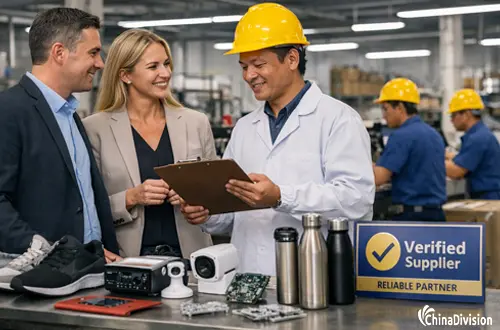
DTC and B2B buyers usually face the same core problems when they source products from China:
- Unreliable delivery times, constant delays, and missed launch windows
- Quality inconsistency between samples and mass production
- Communication gaps (specifications, packaging, compliance, Incoterms)
- Hidden costs in logistics, duties, and defective inventory
- Difficulty verifying verified suppliers vs trading companies or middlemen
From the standpoint of an international order fulfillment and warehousing provider, these are supply chain design issues—not just “finding a factory” problems. The right supplier and the right logistics partner must be selected together.
Step 1: Define your supplier profile before searching
Before you open any sourcing platforms, be crystal clear on what kind of China suppliers you actually need:
- Product type and complexity (simple commodity vs regulated electronics)
- Required certifications (CE, FDA, RoHS, REACH, etc.)
- Expected annual volume and growth plan
- Customization level (white‑label vs full custom design)
- Target landed cost and margin structure
This matters because:
- High‑customization brands are usually better served by OEM suppliers (you own the design)
- Speed‑to‑market and lower upfront cost often favor ODM suppliers (you use their existing design and customize lightly)
Step 2: Use sourcing platforms strategically (not blindly)
Where Can You Source Products from China?
There are multiple channels for finding China Suppliers, each with advantages and limitations.
| Sourcing Method | Advantages | Limitations | Best For |
|---|---|---|---|
| B2B Sourcing Platforms | Access to a large database of manufacturers and suppliers with convenient online comparison. | Supplier credentials, product quality, and manufacturing capabilities still require independent verification. | New buyers, startups, and businesses exploring multiple supplier options. |
| Trade Shows | Face-to-face meetings, product demonstrations, and opportunities to build direct relationships. | Higher travel and exhibition costs, with limited event schedules. | High-volume sourcing projects and long-term supplier partnerships. |
| Sourcing Agents | Local market expertise, supplier negotiation, factory audits, and quality control support. | Additional service fees and varying levels of agent experience. | Overseas buyers seeking end-to-end sourcing assistance. |
| Factory Visits | Maximum transparency by evaluating production capacity, equipment, and quality management on-site. | Time-consuming and costly, especially for overseas businesses. | Strategic sourcing, OEM projects, and long-term manufacturing partnerships. |
| Industry Referrals | Trusted recommendations from business partners and industry networks. | Smaller supplier pool and limited product variety. | Established businesses looking for reliable, long-term supplier relationships. |
Professional buyers often combine several sourcing methods rather than relying on a single platform. Always filter suppliers by export history, on-time delivery rate, and defect rate — not just price. Suppliers with poor on-time delivery rates will break your warehousing inventory cycles, cause stockouts, and force emergency air shipping that erodes profit margins.
Use Trusted Sourcing Platforms
| Platform | Best For | Supplier Type |
|---|---|---|
| Alibaba.com | Medium- to high-volume sourcing of standard products. | A mix of manufacturers, OEM/ODM factories, and trading companies. |
| 1688.com | Domestic Chinese sourcing with highly competitive pricing. | Manufacturers, factories, and wholesalers serving the Chinese market. |
| Global Sources | Electronics, consumer goods, industrial products, and hardware sourcing. | Established manufacturers with export experience. |
| Made-in-China.com | Industrial equipment, machinery, components, and B2B procurement. | Factories specializing in OEM and ODM manufacturing. |
| DHgate | Small-quantity purchases, product testing, and sample orders. | Small trading companies, wholesalers, and resellers. |
| Industry Trade Shows (Canton Fair, HK Electronics) | High-volume sourcing, supplier evaluation, and long-term relationship building. | Manufacturers, OEM suppliers, and ODM product developers. |
Step 3: Understand OEM vs ODM in practical terms
Here’s a simplified comparison table you can use when deciding between OEM suppliers and ODM suppliers.
Choosing between OEM and ODM suppliers
| Aspect | OEM Suppliers | ODM Suppliers |
|---|---|---|
| Design Ownership | You provide the complete product design, specifications, and intellectual property (IP), with ownership typically remaining with your brand. | The supplier owns the core product design, while you customize branding, packaging, and selected product features. |
| Upfront Cost | Higher investment due to product engineering, tooling, prototyping, and longer development cycles. | Lower initial investment by leveraging existing molds, tooling, and proven product designs. |
| Time to Market | Longer timeline due to product design, sample development, testing, and manufacturing validation. | Faster product launch, often within 1–3 months, by customizing ready-made products. |
| Product Differentiation | High level of product uniqueness, allowing stronger brand positioning and long-term competitive advantages. | Moderate differentiation, as similar products may also be sold to other brands using the same supplier. |
| Risk Level | Higher technical and development risk during early stages, but greater long-term control over quality and intellectual property. | Lower technical risk and faster commercialization, but a higher likelihood of product commoditization and increased market competition. |
For brands focused on fast testing and cash‑flow, ODM suppliers are often the right starting point. For B2B projects with strict technical specs and long‑term contracts, OEM suppliers are usually necessary.
Step 4: Build a multi‑stage verification process
Finding reliable suppliers in China means verifying them in several stages, not just after one nice Zoom call.
Stage 1 – Desk research and shortlisting
- Verify business license and registration details
- Confirm factory location and whether it’s a manufacturer or trading company
- Check export experience to your target market (EU, US, ASEAN)
- Request certificates and previous client references
Stage 2 – Sampling and technical alignment
- Order samples with final specs (materials, finish, packaging)
- Test them against your quality standards and regulatory requirements
- Validate that the supplier can follow packing instructions optimized for warehousing (carton size, barcode locations, FNSKU labels if using FBA)
This is where ChinaDivision adds value: we inspect samples, simulate warehouse handling, and flag potential fulfillment issues (fragile packaging, unstable palletization, confusing labeling).
Stage 3 – Contract and supply chain terms
- Sign clear contracts specifying specs, tolerances, lead times, and penalties
- Define Incoterms (FOB, EXW, CIF) aligned with your logistics strategy
- Include clauses on rework, replacement, and handling defective inventory
A professional fulfillment partner will push for terms that align with realistic transit times, consolidation windows, and warehouse receiving processes, so you don’t build a plan that “works only on paper.”
Step 5: Connect sourcing to warehousing and order fulfillment
Many DTC brands treat sourcing and fulfillment as separate topics. In reality, they must be designed together.
Key points where suppliers and fulfillment intersect:
- Carton size and weight: affects pallet efficiency, storage costs, and shipping charges
- Labeling and barcodes: critical for error‑free inbound receiving and inventory accuracy
- Packaging robustness: determines damage rates during international freight and last‑mile delivery
- Batch and lot tracking: needed for returns processing, QC, and compliance
At ChinaDivision, we validate supplier packaging and labeling against warehouse workflows before the first bulk order, reducing inbound chaos and mis‑scanned SKUs that cause stockouts and oversells.
Step 6: Start small, then scale with data
Even with verified suppliers, your first order is still a live test of:
- Real production lead times
- Actual defect rates vs promised AQL
- Communication speed during issues
- Performance under real‑world logistics (port delays, customs, receiving)
Best practices:
- Begin with a smaller, clearly defined trial batch
- Use third‑party inspections before shipment (pre‑shipment QC)
- Store and monitor inventory in a professional warehouse rather than relying solely on the supplier’s storage
- Track KPIs: OTIF, defect rate, return reasons, and inbound accuracy
ChinaDivision consolidates these metrics across procurement, warehousing, and fulfillment, giving you a feedback loop that informs whether a supplier deserves long‑term partnership.
Step 7: Use a procurement + fulfillment partner when you don’t have local presence
For many overseas DTC brands and B2B buyers, visiting factories frequently or running local audits is unrealistic. This is where combining goods procurement, storage, and shipping through a single partner makes sense.
A partner like ChinaDivision can:
- Identify and shortlist China suppliers via local networks and sourcing platforms
- Audit factories and verify they are true manufacturers, not just trading intermediaries
- Negotiate terms aligned with demand planning and fulfillment constraints
- Receive goods into strategically located warehouses in China
- Handle B2B bulk shipments and DTC order fulfillment to global markets
This turns supplier risk into a managed process instead of a “hope for the best” approach.
Quick checklist: what defines a reliable supplier in China?
Use this checklist when deciding if you have truly found reliable suppliers in China:
- Proven track record in your product category
- Transparent legal registration and factory address
- Willingness to provide samples and accept third‑party inspections
- Ability to meet your required certifications and compliance
- Consistent communication and clear responses to technical questions
- Flexible packaging and labeling to match your warehousing needs
- Integration with your logistics plan (lead times, batch sizes, shipping terms)
If several of these are missing, consider using a procurement and fulfillment specialist rather than going directly.
Example supplier and sourcing platform comparison
Here’s a simple conceptual comparison of common ways to source products from China and work with China suppliers.
| Sourcing Method | Advantages | Risks / Limitations | Best For |
|---|---|---|---|
| Direct via Large Sourcing Platforms (e.g. Global B2B Marketplaces) |
Access to a vast supplier database with thousands of manufacturers, making it easy to compare products, prices, and production capabilities during the initial sourcing stage. | Factory authenticity can be difficult to verify, product quality may vary, and language or cultural differences can lead to communication challenges. | Cost-conscious DTC brands and startups willing to spend time evaluating and qualifying suppliers independently. |
| Local Sourcing Agents | Provide local language support, factory audits, supplier negotiations, quality inspections, and production follow-up, helping overseas buyers reduce sourcing risks. | Service quality varies between agents, and some may add hidden markups or work with a limited supplier network. | Brands without a local China team that want factory-direct relationships while minimizing sourcing complexity. |
| Vertically Integrated 3PL / Fulfillment Partner (e.g. ChinaDivision) |
Offers an end-to-end solution covering product sourcing, supplier management, quality control, warehousing, inventory management, order fulfillment, international shipping, customs clearance, and after-sales returns through a single partner. | Requires confidence in the provider's sourcing processes, quality standards, operational transparency, and long-term service capabilities. | Fast-growing DTC brands, Amazon sellers, crowdfunding campaigns, and B2B companies seeking to scale globally while minimizing internal operational workload. |
Frequently Asked Questions
Can one company handle sourcing, warehousing, and shipping?
Yes. Many international fulfillment providers, including ChinaDivision, offer integrated procurement, quality control, warehousing, order fulfillment, and global shipping services, simplifying supply chain management.
Can you store my inventory in China and ship globally as orders come in?
Yes. We provide warehousing close to major manufacturing hubs, then ship B2B bulk orders or DTC parcels to global markets from that inventory, integrating procurement with fulfillment.
Should I use a sourcing agent or go direct?
Use a sourcing agent if you're new to China sourcing, ordering complex products, or lack time for direct management. Go direct once you have experience, volume, and established relationships. A 3PL with sourcing capabilities offers the best of both worlds: agent expertise with integrated logistics.
Source Smarter. Fulfill Faster. Scale Confidently.
Finding reliable suppliers in China isn't about luck—it's about process. Systematic vetting, rigorous quality control, and integrated logistics separate thriving sellers from those buried in returns and refunds.
ChinaDivision combines pre-vetted supplier networks, embedded quality control, and end-to-end international fulfillment into a single, accountable partnership. From your first sample order to multi-warehouse global distribution, we de-risk every step of the procurement-to-delivery pipeline.
Recommended Industry Resources
To learn more about international sourcing standards and supplier verification, consult these authoritative resources:
Made-in-China.com | Find more Quality China Products & Trustworthy China Suppliers


About the Author: Limi

Limi is a content marketing expert at ChinaDivision, helping businesses and e-commerce sellers navigate the complexities of international shipping by providing actionable tips and comprehensive guides on logistics, shipping, and cargo transportation.