

Why do e-commerce sellers need UPC barcodes? How to obtain them?
If you’ve ever had a perfectly good inventory shipment stuck at a US port for 7 days, or had 30% of your Amazon listings suddenly suppressed overnight, there’s a 72% chance the root cause was an invalid UPC.
Table of Contents
- The Hidden Risks of Invalid UPC Codes for Cross-Border Sellers
- What Exactly Is a UPC, And Why It’s Not Just a Random Number?
- Two Main UPC Barcode Types & Applicable Scenarios
- UPCs in International Logistics
- What Is a UPC Check Digit & Why It Is Indispensable
- How to Obtain Valid UPC Barcodes
- Why E-Commerce Sellers Must Have Valid UPC Codes
- Common pitfalls and how to avoid them
- Common UPC & Cross-Border Warehouse Logistics Questions
- Authoritative Industry Reference Links
Most sellers think UPC codes are just a marketplace listing requirement. But the Universal Product Code is the foundational thread that ties together your product listings, warehouse inventory systems, cross-border customs declarations, and last-mile delivery.
The Hidden Risks of Invalid UPC Codes for Cross-Border Sellers

Most new cross-border e-commerce sellers underestimate the importance of UPC codes (Universal Product Code). They treatUPC barcode as a simple listing tool for Amazon, Walmart, or eBay, ignoring its core value in global warehousing, order fulfillment, and supply chain traceability.
As a professional international order fulfillment and warehousing logistics service provider, we have encountered countless seller pain points caused by non-standard item barcode management: marketplace listing suppression, ASIN creation failure, warehouse scanning errors, inventory data confusion, and even batch order fulfillment delays.
A legitimateproduct UPC barcode is not only a basic entry ticket for mainstream North American e-commerce platforms but also the core identification basis for automated warehouse scanning, SKU inventory synchronization, and cross-border standardized logistics operations. This article combines front-line fulfillment practical experience to comprehensively interpret UPC rules, solve common compliance pain points, and share official legal channels to obtain standard UPC labels.
What Exactly Is a UPC, And Why It’s Not Just a Random Number?
The Universal Product Code (UPC) is the 12-digit standardized global trade identifier (GTIN-12) that acts as the unique "digital fingerprint" for every individual retail product you sell. The most common format is the UPC-A, which encodes the full 12-digit number in a scannable item barcode, while the compressed 6-digit UPC-E variant is reserved for tiny products with limited label space like lip balms or earbuds.
Different from self-defined SKU codes by sellers, official UPC codes are uniformly regulated by GS1 US. UPC codes are more than a marketplace requirement—they are the backbone of accurate product identification, inventory control, and global logistics. Each valid UPC barcode corresponds to an exclusive brand prefix and product information, realizing unified identification across marketplaces, warehouses, logistics links, and retail terminals.
Two Main UPC Barcode Types & Applicable Scenarios
There are two mainstream specifications of UPC barcode in e-commerce and warehouse logistics, with obvious differences in usage scenarios, which sellers must distinguish clearly to avoid mismatched application:
| UPC Type | Digit Specification | Core Features | Applicable E-Commerce & Logistics Scenarios |
|---|---|---|---|
| UPC-A | 12 complete digits (standard GTIN-12) | Full product information encoding, complete check digit verification, 100% compatible with all marketplaces and warehouse scanning equipment. | Amazon, Walmart, and eBay product listings, cross-border warehouse inbound scanning, automated inventory counting, and retail POS systems. |
| UPC-E | 6-digit compressed short code | Compressed format that saves label space while retaining check digit verification for accurate barcode scanning. | Small products with limited label space; suitable for compact retail packaging but less commonly used for mainstream e-commerce marketplace listings. |
3PL Professional Reminder: 99% of cross-border e-commerce sellers only need the standard UPC-A barcode. UPC-E cannot replace UPC-A for platform listing and formal warehouse fulfillment declaration.
UPCs in International Logistics
| Process | Role of UPC | Benefit |
|---|---|---|
| Receiving | Scanned upon arrival | Confirms shipment accuracy |
| Storage | Linked to SKU data | Enables real-time inventory visibility |
| Picking & Packing | Guides item selection | Reduces mispicks |
| Shipping | Embedded in documentation | Simplifies customs clearance |
| Returns | Identifies returned items | Speeds up restocking |
What Is a UPC Check Digit & Why It Is Indispensable
The last digit of the 12-digit UPC code is the check digit, calculated through a fixed GS1 mathematical algorithm. It is the core error-proof mechanism of the UPC label:
- Warehouse RF scanners and automated identification systems will automatically verify the check digit when scanning product UPC barcode;
- Mismatched or wrong check digits will directly cause scanning failure, inventory data errors, and platform listing rejection;
- It effectively avoids manual labeling errors, wrong product matching, and cross-SKU fulfillment confusion.
How to Obtain Valid UPC Barcodes
To safeguard your international supply chain from inventory issues or marketplace delistings, barcodes must be sourced exclusively from official channels.
Step 1: Partner Directly with GS1 US
Avoid cheap, third-party barcode brokers offering "recycled" or "discounted" codes. Major sales platforms can easily detect these unverified sequences, putting your merchant account at risk. Register directly through GS1 US (the official global authority for trade identification barcodes).
Step 2: Determine Your Brand Prefix Scale
Evaluate your long-term product roadmap to choose the right prefix tier. GS1 allows you to buy individual numbers for small product catalogs, or lease a full Company Prefix block if you plan to launch dozens of unique product variations or sizes.
Step 3: Map Global Trade Item Numbers (GTINs)
Assign a unique identifier sequence to each product variant. This creates the official GTIN-12 record that pairs your specific product attributes (like size, color, or material) with your digital listings worldwide.
Step 4: Execute High-Resolution Label Printing
Generate clean, high-resolution vector images of your barcodes. When placing the barcode on your product packaging or applying an external sticker label, ensure it rests on a flat surface with sufficient white space around the edges to guarantee fast, error-free scans on automated warehouse conveyor belts.
Why E-Commerce Sellers Must Have Valid UPC Codes
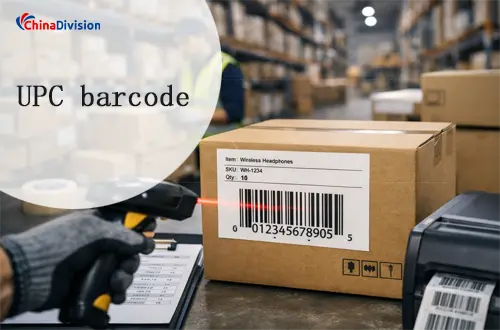
Many sellers only know that "platforms require UPC", but ignore that UPC (Universal Product Code) is the core link connecting store listings, warehouse inventory, and cross-border logistics. Invalid or non-standard UPC codes will trigger dual risks of platform penalties and logistics chaos.
1 Meet Mandatory Marketplace Compliance Requirements
Mainstream North American e-commerce platforms including Amazon, Walmart, and eBay have clear rules: each independent product variant (different size, color, material, specification) must correspond to an exclusive validUPC barcode.
Amazon takes the lead in strict verification: it matches the UPC’s GS1 official prefix information with brand qualifications to generate ASIN codes. Unofficial, recycled, or duplicate UPC codes will directly cause listing suppression, unsearchable products, or permanent delisting, bringing irreversible losses to store operation.
2 Standardize Warehouse Inventory & Fulfillment Management
In international warehousing and order fulfillment links, product UPC barcode is the unique identification basis for all automated operations:
- Inbound receiving: Scan UPC label to quickly verify product SKU, quantity and specifications to avoid receiving wrong goods;
- Inventory counting: Realize non-stop cycle counting through RF scanners to improve inventory accuracy;
- Order picking & packing: UPC scanning verification eliminates cross-SKU picking errors and reduces return rates;
- Multi-warehouse synchronization: Standard item barcode ensures unified product identification across global warehouses and avoids inventory data confusion.
3 Realize Accurate Retail Settlement & Supply Chain Traceability
For sellers covering online and offline retail channels, UPC barcode supports fast POS terminal scanning and accurate sales data statistics. At the same time, GS1-standard UPC realizes full lifecycle traceability from factory outbound, cross-border transportation, warehouse storage to terminal sales, which meets the compliance supervision requirements of North American cross-border trade.
4 Avoid Cross-Border Logistics & Customs Risks
Standardized UPC codes match product declaration information, helping warehouses and logistics providers complete accurate cargo classification and document sorting. It avoids customs clearance delays and inspection risks caused by inconsistent product identification information, and improves the efficiency of cross-border cargo circulation.
Common pitfalls and how to avoid them
1. Using one UPC for multiple variants
Each variant needs its own UPC. Reusing codes leads to:
- Catalog confusion
- Wrong item shipments
- Customer complaints and returns
2. Incorrect barcode formatting
If your UPC label is too small, low resolution, or poorly placed:
- Scanners may fail to read it
- Warehouse throughput slows down
- Error rates increase
Work with experienced designers or packaging suppliers who understand barcode standards.
3. Ignoring the check digit
The last digit of a UPC is a check digit calculated from the first 11 digits. It:
- Validates the code mathematically
- Prevents scanning errors
- Ensures compatibility with POS and warehouse systems
A UPC with an incorrect check digit will be rejected by scanners and marketplace systems.
Common UPC & Cross-Border Warehouse Logistics Questions
1. Can I use EAN codes instead of UPC codes for Amazon US stations?
No. North American platforms such as Amazon US and Walmart prioritize and exclusively recognize standard UPC (Universal Product Code) (GTIN-12). EAN codes are mainly applicable to European markets and cannot replace UPC barcode for US platform listings and local warehouse scanning.
2. Will duplicate UPC codes affect warehouse fulfillment?
Yes seriously. Duplicate UPC codes will cause warehouse scanning equipment to misidentify SKUs, resulting in mixed inventory, wrong picking, and batch order errors, which will greatly increase return and rework costs.
3. Do all product variants need independent UPC codes?
Yes. Different sizes, colors, styles, and materials of the same product belong to independent SKUs and must correspond to exclusive UPC codes. Mixing use will lead to platform listing errors and warehouse inventory confusion.
4. Can UPC labels be pasted arbitrarily on product packaging?
No. There are unified industry standards for the position and clarity of UPC label pasting. Non-standard pasting will cause scanning failure and affect warehouse inbound efficiency and order processing speed.
5. Can I use the same UPC for different marketplaces?
Yes. A single GS1-issued UPC can be used across Amazon, Walmart, eBay, and other channels, as long as it correctly identifies the product variant.
UPC compliance isn’t just a box to tick for your marketplace listings—it’s the foundation of a smooth, error-free global fulfillment operation. At Chinadivision, our warehouse systems are pre-configured to automatically validate, scan, and sync your UPC codes across every step of the fulfillment process, from factory receiving to cross-border shipping, so you never have to deal with UPC-related delays, errors, or suppressed listings again.
Related Content: Optimize Logistics and Inventory Management With Upc Barcodes
Authoritative Industry Reference Links
Universal Product Code - Wikipedia


About the Author: Limi

Limi is a content marketing expert at ChinaDivision, helping businesses and e-commerce sellers navigate the complexities of international shipping by providing actionable tips and comprehensive guides on logistics, shipping, and cargo transportation.