

How 3PL Service Providers Effectively Manage Inventory Units
SKU proliferation is silently draining profits from ecommerce businesses worldwide. As your product catalog expands across sizes, colors, and regional variants, the complexity of managing Stock Keeping Units (SKUs) can spiral out of control—driving up storage costs, tying up capital, and creating fulfillment bottlenecks.
Table of Contents
- The Hidden Cost of Unmanaged SKU Growth for Cross-Border Sellers
- What Are Stock Keeping Units (SKUs)?
- What Is SKU Proliferation, and Why Is It Accelerating?
- Why SKU Proliferation Happens for Cross-Border Ecommerce Brands
- 4 Warning Signs That SKU Proliferation Is Hurting Your Business
- Why managing SKUs is now a profitability issue
- How Tech-Enabled 3PLs Manage Inventory Units Effectively
- Frequently Asked Questions (FAQs)
- Recommended Industry Resources
- Ready to Take Control of Your SKUs?
The Hidden Cost of Unmanaged SKU Growth for Cross-Border Sellers
For scaling B2B and cross-border ecommerce brands, expanding Stock Keeping Units (SKUs) is a natural growth strategy. More product variants, sizes, colors, and customized lines help capture diverse customer segments and boost sales. However, unmonitored SKU proliferation quickly turns growth into operational chaos.
Most in-house inventory teams lack the tools and experience tomanage inventory units at scale. Bloated SKU portfolios lead to spiraling warehouse fees, tied-up capital, dead stock accumulation, picking errors, and delayed international order fulfillment.
What Are Stock Keeping Units (SKUs)?
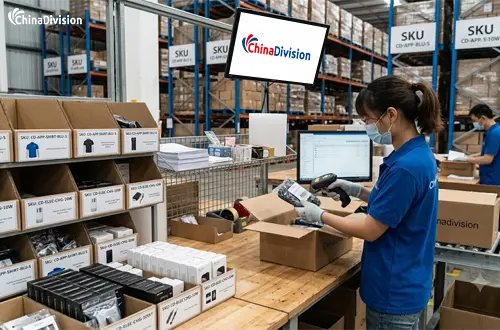
A Stock Keeping Unit (SKU) is a unique alphanumeric code assigned to a specific product variant in your inventory system. Unlike universal product codes (UPCs), SKUs are internal identifiers that help businesses track every distinguishable item.
For international order fulfillment, SKUs are the backbone of warehouse operations. They determine how products are stored, picked, packed, and shipped across borders. When you manage inventory units effectively, you gain real-time visibility into stock levels, reduce order errors, and maintain the agility needed to serve global markets.
But here's the catch: the more SKUs you carry, the more complex your operation becomes. And in today's ecommerce landscape, SKU counts are exploding.
What Is SKU Proliferation, and Why Is It Accelerating?
SKU proliferation refers to the uncontrolled expansion of your brand’s SKU portfolio over time. It occurs when businesses continuously add new product variants, seasonal lines, and customized items without phasing out underperforming or obsolete inventory.
This isn't inherently negative. More SKUs attract diverse customer segments, increase average order value, and help brands stay competitive. Consumers crave novelty; they want fresh product lines, trending colors, and personalized options. Restricting your SKU base too tightly may simplify inventory management but risks stifling growth.
However, unchecked SKU proliferation creates a cascade of operational problems:
|
Driver of SKU Proliferation |
Real-World Impact |
|---|---|
|
Chasing customer demand & trends |
Short-lived fashion cycles force constant new product introductions, leaving behind slow-moving variants. |
|
Regional market expansion |
Selling winter coats in both Florida and New York requires entirely different SKU assortments. |
|
Product customization & bundles |
Personalized packaging, gift sets, and subscription boxes multiply SKU counts exponentially. |
|
Lack of SKU performance tracking |
Without data, underperforming SKUs accumulate like digital clutter, consuming warehouse space and working capital. |
Why SKU Proliferation Happens for Cross-Border Ecommerce Brands
1. Chasing Market Trends & Seasonal Demand
Verticals like apparel, footwear, beauty, and consumer electronics face fast-changing global trends and seasonal demand shifts. To stay competitive, brands constantly launch new styles, limited-edition variants, and seasonal products. This rapid iteration leads to fast SKU growth, often outpacing internal inventory management capabilities.
2. Regional Market Localization Needs
Expanding into new international regions requires localized product assortments to fit regional preferences, climate needs, and consumer habits. For example, apparel brands need different size specs for European and Southeast Asian markets, while home goods require region-specific voltage or material adjustments. Each localized variant creates new SKUs, expanding inventory portfolios rapidly.
3. Lack of Data-Driven Inventory Metrics
Most in-house teams rely on subjective experience rather than hard data to manage SKUs. Without consistent tracking of SKU turnover, sell-through rate, days on hand, and profit margin per SKU, businesses cannot identify underperforming stock. They continue adding new SKUs while retaining obsolete ones, triggering unmanaged proliferation.
Many brands don't realize they're in a SKU proliferation crisis until their 3PL invoices start climbing and their pick accuracy drops. By then, the damage to cash flow and customer satisfaction is already done.
4 Warning Signs That SKU Proliferation Is Hurting Your Business
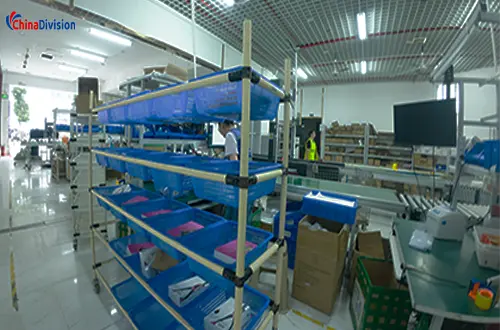
1. Storage Costs Are Spiraling Out of Control
Every new SKU needs physical space. Rampant SKU growth forces brands to lease additional warehouse capacity—or worse, pay premium rates for overflow storage.
But the real killer is paying to store inventory that isn't selling. When your warehouse layout prioritizes slow-moving SKUs over high-velocity items, you're not just wasting money on rent. You're increasing pick times, reducing throughput, and creating bottlenecks that delay international shipments.
Red Flag: If your 3PL is charging you for "long-term storage" fees on SKUs that haven't moved in 90+ days, it's time for a portfolio review.
2. You're Tying Up Increasing Capital in Non-Performing Inventory
Each replenishment order locks cash into your supply chain. That's smart investment—if those SKUs convert to sales. When capital gets trapped in slow-moving items, you're not just losing money on carrying costs. You're missing opportunities to invest in marketing, product development, or market expansion.
3. You're Accumulating Excess or Unsellable Inventory
Demand forecasting is never perfect, but SKU proliferation magnifies every forecasting error. A single misjudged trend can leave you with dozens of size/color variants of a product nobody wants.
Common disposal strategies—flash sales, bundling, liquidation—recoup pennies on the dollar. For international sellers, the situation is worse: cross-border returns and liquidation are expensive and logistically complex.
The ChinaDivision Advantage: With warehousing and strategic inventory placement across international hubs, we help clients minimize exposure to unsellable inventory before it becomes a write-off.
4. Inventory Management Is Growing More Cumbersome
Even with software, uncontrolled SKU growth creates operational drag:
- Pick path inefficiency: Warehouse staff spend more time navigating between scattered SKU locations
- Higher error rates: More SKUs = more opportunities for mispicks, especially with similar-looking variants
- Labor cost inflation: Manual inventory counts take longer; replenishment coordination requires more oversight
- Multi-location complexity: If you fulfill from multiple warehouses, SKU proliferation stress multiplies exponentially
If your team is spending more time managing SKUs than optimizing fulfillment strategy, SKU growth has become an operational liability.
Why managing SKUs is now a profitability issue
Most brands add Stock Keeping Units (SKUs) to capture more demand: new colors, sizes, bundles, regional assortments, or seasonal variants. That is normal. The problem is that each new SKU carries hidden costs: more storage, more picking complexity, more forecasting risk, and more capital tied up in slow-moving inventory.
For international sellers, the stakes are higher. Cross-border shipments, longer replenishment cycles, and country-specific packaging rules can turn a small SKU problem into a large operational and financial one. Managing SKUs well is no longer just a warehouse task—it is a core profitability lever.
How Tech-Enabled 3PLs Manage Inventory Units Effectively
Partnering with the right 3PL transforms SKU management from a cost center into a competitive advantage. Here's how professional international order fulfillment providers keep your SKUs in check:
Advanced Inventory Management Software
A modern 3PL doesn't just store your goods—it provides a centralized inventory management system that offers:
|
Capability |
Business Benefit |
|---|---|
|
Real-time SKU tracking |
Instant visibility across all warehouse locations and sales channels. |
|
Automated performance analytics |
Identify slow-moving products, dead stock, and high-velocity items without manual reporting. |
|
Demand forecasting integration |
Align inventory replenishment with actual sales velocity instead of relying on guesswork. |
|
Multi-channel synchronization |
Prevent overselling and stockouts across Amazon, Shopify, eBay, and direct-to-consumer (DTC) stores. |
At ChinaDivision, our WMS (Warehouse Management System) is built specifically for international ecommerce. We track every Stock Keeping Unit from inbound receipt to final delivery, giving you the data clarity needed to make rational, profitable inventory decisions.
Strategic SKU Rationalization
SKU rationalization is the process of analyzing your portfolio and eliminating underperformers. But gut instinct is dangerous here. A data-driven 3PL partner helps you:
- Analyze SKU profitability by channel, region, and time period
- Identify cannibalization where new SKUs are stealing sales from proven winners
- Recommend phase-out strategies that minimize disruption to customer experience
- Optimize remaining SKUs for better warehouse slotting and pick efficiency
Key Insight: The goal isn't necessarily fewer SKUs—it's a higher-performing SKU portfolio. A tech-enabled 3PL helps you achieve both growth and operational efficiency.
Continuous Improvement & Scalability
The logistics industry evolves rapidly. AI-driven demand forecasting, automated warehouse robotics, and dynamic slotting algorithms are reshaping how we manage inventory units.
A forward-thinking 3PL partner invests in these technologies so you don't have to. As your SKU count grows, your fulfillment infrastructure scales seamlessly—without requiring you to sign long-term warehouse leases or hire seasonal labor.
Frequently Asked Questions (FAQs)
How do I know if I have too many SKUs?
If your storage costs are rising faster than revenue, your pick accuracy is declining, or you're consistently discovering dead stock during inventory counts, SKU proliferation has likely exceeded your operational capacity.
What's the difference between a SKU and a UPC?
A SKU is an internal code used for inventory management. A UPC is a universal barcode used at retail point-of-sale. One product can have one UPC but multiple SKUs (e.g., different warehouse locations or bundle configurations).
Will SKU rationalization reduce my product sales?
Professional 3PL SKU rationalization is not blind deletion. We retain high-profit, high-demand core variants and only phase out slow-moving, loss-causing SKUs. It optimizes inventory structure and actually improves overall sales efficiency and profit margins.
How can I prevent SKU proliferation in advance?
Establish a data-based SKU access mechanism: evaluate market demand, storage cost, and profit margin before launching new variants. Cooperate with a professional 3PL to monitor SKU performance in real time and clean up obsolete inventory regularly.
What is SKU rationalization, and when should I do it?
SKU rationalization is the strategic process of eliminating underperforming products from your catalog. You should review your portfolio quarterly—or immediately if you notice rising storage costs, declining pick accuracy, or increasing dead stock.
How does ChinaDivision handle high-SKU-count clients?
We use a combination of advanced WMS technology, dynamic warehouse slotting, and dedicated account management to ensure that even clients with thousands of SKUs maintain high pick accuracy and fast turnaround times. Our system is built for scalability.
Recommended Industry Resources
What Are Inventory Levels? How to Calculate and Track Them
Ready to Take Control of Your SKUs?
SKU proliferation doesn't have to be a growth killer. With the right systems, data, and fulfillment partner, you can expand your product catalog while keeping operations lean, costs predictable, and customers satisfied.
ChinaDivision specializes in international order fulfillment and warehousing for ecommerce brands scaling into global markets. From advanced SKU tracking to strategic inventory placement and customs-compliant cross-border shipping, we provide the infrastructure and expertise you need to manage inventory units effectively—no matter how complex your catalog becomes.
Contact ChinaDivision today to learn how our tech-enabled fulfillment solutions can optimize your SKU management and accelerate your international growth.


About the Author: Limi

Limi is a content marketing expert at ChinaDivision, helping businesses and e-commerce sellers navigate the complexities of international shipping by providing actionable tips and comprehensive guides on logistics, shipping, and cargo transportation.