

What Does the Mexico Star Incident, a Mexican Dedicated Logistics Company In Shenzhen, Tell Us?
|
Table of contents: |
What happened to Mexico Star?
Nearly 200 containers represented by Mexico Star, a Mexican dedicated line logistics company located in Shenzhen, were stranded in Mexican ports for several months and could not complete customs clearance. The amount of cargo losses involved was at least tens of millions of yuan, affecting many sellers and peers. Mexico Star is well-known in the Mexican line, and its asking price is often lower than the market price, so it attracted many sellers before the explosion. Among them, most of the affected sellers signed contracts around the middle of the year. However, since August this year, cargo owners have reported delays in customs clearance of goods. Mexico Star still used the excuse of "Mexico's tax reform and strict customs inspection" to appease cargo owners and promised to speed up customs clearance. Some cargo owners chose to make patient announcements out of their trust in dedicated line freight forwarders. At that time, Mexico announced that starting from August 15, import packages from non-free trade partner countries would be subject to a high import tax of 33.5%. A large number of containers represented by Mexico Star have been backlogged at the port. Later, the official department levied additional fees, mostly in the range of 100,000 pesos, 200,000 pesos, and 500,000 pesos, which directly led to a surge in customs clearance costs. American Star began to charge additional customs clearance fees from cargo owners, but individual bulk cargo owners were unwilling to pay the higher fees. In November, the situation took a turn for the worse. Not only were new goods unable to be shipped normally, but the containers previously stranded at the port had also completely disappeared. Hundreds of containers had been "abandoned" at Mexican ports for several months, unable to be cleared for customs clearance or returned to the country. In early December, dozens of victimized cargo owners spontaneously went to the American Star warehouse to hold banners to defend their rights. Conflicts broke out at the scene, and police rushed to the scene to mediate. Although the cargo owners have submitted a collective report to the Baoan Branch of the Shenzhen Municipal Public Security Bureau, according to feedback from relevant people, Mexico Star only has a small number of employees on duty, and has never given a clear response to its core customs clearance plan and compensation plan. Its actual controller has also been out of contact.
Why did the Mexico Star incident happen?
Why did such an incident happen? There are two reasons:
Risk model and low control capabilities of logistics fulfillment companies:
Mexico has been called the “death line” by cross-border sellers due to its changeable customs policies and cumbersome customs clearance procedures. As a Mexican dedicated logistics fulfillment company, Mexico Star is well aware of customer needs, so it has specially created a "double-clearance and tax-guaranteed" model. This model either relies on lowering the declared value and changing the product name to pay less tax, or it may find customs clearance in a different country and then transship it, wandering on the edge of compliance. Once it is detected by the customs, it will have to pay a high fine. The threshold for registering a logistics agency is extremely low. A registered capital of 100,000 yuan can be used to obtain qualifications. This has caused a large number of logistics agency service providers who lack professional capabilities and risk control systems to flood into the market. Once problems arise, service providers will face the risk of a broken capital chain.
Mexico’s import and export policies tighten:
As early as January 2025, the Mexican Tax Administration (SAT) announced the "2025 Master Plan", which clearly stated that it would increase tax revenue through strict review of value-added tax, special production service tax, etc., and strengthen verification of rules of origin, etc. This sends a strong signal of tightening regulation. Subsequently, on August 15, Mexico's policy of imposing a high import tax of 33.5% on imported packages from non-free trade partner countries was officially implemented, which directly broke through the cost bottom line of the "double clearing tax package" model that relies on low declared value to maintain profits. More fatal blows followed. In October, Mexico promoted a major reform of the Customs Law, and its core provisions pointed directly at the chaos in the industry: the customs operating license was adjusted from permanent validity to 20-year validity and certification needs to be renewed every two years, which means that the continuous compliance review of licensees will be unprecedentedly strict; at the same time, the bill cancels the liability exemption clause, authorizes customs to investigate and punish any participant in the supply chain, and significantly increases fines, up to 250%-300% of the value of the goods. These measures aim to combat corruption and smuggling at the source, and their deterrent effect makes any gray customs clearance extremely dangerous.
How to choose the right logistics fulfillment company?
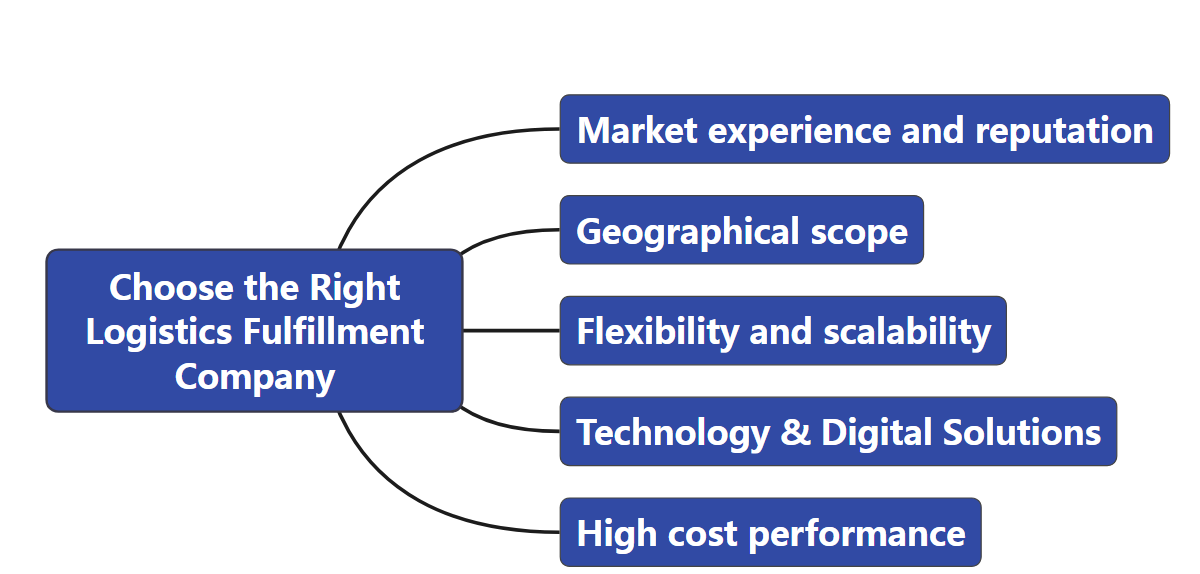
The worst thing about this incident is that cross-border sellers are caught in the dilemma of choosing a freight forwarder and safeguarding their rights. Under the pressure of low-price competition, small and medium-sized sellers often give priority to freight forwarders with lower quotations. It’s easy to overlook the other person’s qualifications and strengths. Therefore, when choosing a logistics and distribution service provider, you should not just look at the price, but should combine your own needs and examine the other party from multiple dimensions. Specifically:
-
Market experience and reputation
Experience is a key factor when choosing a logistics company. A company with many years of market experience, like ChinaDivision, has a deep understanding of the industry's typical challenges and how to deal with them. When a supplier lacks experience with your type of product, gaps in execution can quickly become apparent. Whether it’s food-grade handling, regulatory timelines or packaging tolerances, taking anything for granted can lead to workflow disruptions. Familiarity with your industry can help you avoid costly initial mistakes and remediate problems when they arise. Additionally, a reputable company has proven its ability to consistently provide quality service.
-
Geographical scope
The geographical coverage provided by logistics companies is another key factor. If your business requires domestic or international freight, then the company must have the infrastructure to operate in these areas, such as building some warehouses, etc. This will also facilitate last-mile delivery.
-
Flexibility and scalability
In addition, operational capabilities are also critical. This includes the size of its fleet, warehouse availability, and the ability to handle different volumes and types of cargo. It is important to ensure that the company has the flexibility and scalability to meet your current and future needs as your business grows.
-
Technology & Digital Solutions
Good logistics companies invest in advanced technologies to optimize operations, including transportation management systems (TMS), real-time inventory management (WMS), process automation, data analytics, and logistics tracking. A good logistics provider should be able to give you complete visibility into the shipment status of your goods and be able to track and manage every aspect of the logistics process.
-
High cost performance
Cost is important, but it should not be the only selection criterion. It is crucial to evaluate the value for money offered by a logistics company. This means considering not just price, but also the added value that the service brings. Evaluate whether the company offers customized solutions to meet your specific needs. In the long run, a provider that offers a customizable, scalable and adaptable service is the best choice, even if it's not the cheapest option.
|
|
Related Reading: China's Best Logistics Fulfillment Service Provider(2026)


About the Author: Limi

Limi is a content marketing expert at ChinaDivision, helping businesses and e-commerce sellers navigate the complexities of international shipping by providing actionable tips and comprehensive guides on logistics, shipping, and cargo transportation.