

When is Amazon Multichannel Fulfillment (MCF) Applicable?
Amazon Multichannel Fulfillment (MCF) is ideal for e-commerce sellers looking to leverage Amazon's FBA infrastructure to fulfill orders from multiple sales channels—especially when they need fast delivery, scalable logistics, and streamlined returns management without wanting to build their own warehousing network. For international sellers, non-U.S. residents, and businesses requiring flexible branding or special handling, third-party logistics (3PL) providers often offer greater value and operational control.
Table of Contents
- Understanding Amazon Multichannel Fulfillment (MCF)
- MCF vs. Third-Party Logistics (3PL): Which is Better?
- MCF may not be ideal in the following situations
- Suitable Scenarios for Amazon Multichannel Fulfillment (MCF)
- Key Advantages of FBA Multichannel Fulfillment
- Amazon MCF Cost Structure
- Strategic Choice: Why Amazon Sellers Choose 3PL?
- How Chinadivision Supports Your MCF Strategy?
- Frequently Asked Questions (FAQ)
- Should I choose MCF or a 3PL provider like Chinadivision?
Understanding Amazon Multichannel Fulfillment (MCF)
Amazon Multichannel Fulfillment (MCF), also known as FBA Multichannel Fulfillment, allows sellers to use Amazon's fulfillment network to process orders from non-Amazon platforms such as Shopify, eBay, Walmart, or independent websites. This makes it a powerful multichannel fulfillment solution for businesses seeking operational efficiency and fast last-mile delivery.
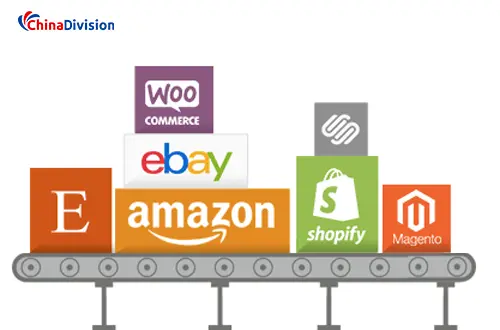
Unlike standard FBA, which only handles Amazon.com orders, Multichannel Fulfillment extends Amazon's operational capabilities to your entire sales ecosystem. However, MCF is not universally applicable to all business models.
Amazon Fulfillment by Amazon (FBA) allows sellers to store inventory in Amazon fulfillment centers and use Amazon's logistics network to fulfill orders from non-Amazon channels, including your own website, Walmart, eBay, or other marketplaces.
MCF vs. Third-Party Logistics (3PL): Which is Better?
It depends on your business model:
| Scenario | Better Choice |
|---|---|
| Fast scaling, standardized products | MCF |
| Custom packaging / branding | 3PL |
| Cross-border entry (no local warehouse) | MCF |
| Complex fulfillment needs | 3PL |
| Cost control at large scale | Hybrid (MCF + 3PL) |
As a professional international logistics provider, we often recommend a hybrid fulfillment strategy combining MCF + specialized 3PL services for maximum efficiency and flexibility.
MCF may not be ideal in the following situations
Customized or Personalized Products
MCF is fundamentally incompatible with customized or personalized products. Amazon's standardized processes cannot meet on-demand workflows, engraving services, or custom packaging requirements. If customization is central to your value proposition, MCF does not provide a viable path.
Pure Dropshipping Model
Integrating MCF adds unnecessary complexity and costs if your suppliers ship directly to customers.
Brand Restrictions
While Amazon made neutral, unbranded packaging the default option for MCF in 2023, this remains very rudimentary compared to the capabilities of third-party logistics (3PL). You cannot add branded wrapping paper, custom inserts, thank-you cards, or promotional materials inside the packaging. For premium brands that prioritize the unboxing experience to enhance customer loyalty and repeat purchases, MCF's generic brown boxes present a significant marketing disadvantage.
Data Privacy and Competition Risks
MCF requires you to integrate your entire sales operations with Amazon's systems, meaning Amazon can view sales data across all your channels, not just orders shipped via MCF. This poses an unacceptable risk for businesses that value data sovereignty or are concerned about Amazon collecting competitive intelligence.
Product Restrictions and Cost Complexities
Amazon enforces strict eligibility criteria based on size, weight, and hazardous materials classification. Oversized items, certain electronics, and products requiring special storage conditions will be excluded or subject to additional fees. Furthermore, while MCF's pay-as-you-go model doesn't require long-term contracts, its costs are often higher than third-party logistics (3PL) pay-as-you-go models for businesses with stable order volumes.
Since a significant portion of e-commerce sellers rely on dropshipping or customized services, these limitations prevent many businesses from fully utilizing Amazon's Multichannel Fulfillment (MCF) service.
Suitable Scenarios for Amazon Multichannel Fulfillment (MCF)
High-volume, standardized product operations
If your product catalog includes fast-turnover, non-customized SKUs that don't require special handling, Amazon Multichannel Fulfillment (MCF) offers unparalleled scalability. Amazon has over 175 fulfillment centers in the US, enabling 3-day standard delivery (a 40% improvement over 2024) and offering expedited options. This infrastructure is especially important during peak seasons when order volumes are unpredictable.
Hybrid fulfillment models
For businesses employing a hybrid inventory strategy (where some products are shipped via dropshipping while others require logistics within the US), MCF can optimize the latter. You can ship inventory in bulk from overseas suppliers to Amazon warehouses, taking advantage of lower international shipping costs, and then fulfill orders within the US through Amazon's logistics network. This method reduces unit shipping costs compared to direct-to-consumer international shipping, but you need to consider Amazon warehouse receiving times of 2-4 days (excluding final delivery).
High SKU Diversity
Sellers managing multiple SKUs can benefit from centralized inventory and automated order fulfillment.
Operational Simplification Prioritized
For businesses seeking a "one-stop" logistics solution, MCF's unified inventory pool offers numerous benefits. Integrated with your sales channels, Amazon automatically adjusts inventory levels across platforms, reducing manual synchronization errors and the risk of stockouts.
Optimized Bulk International Shipping
Shipping large volumes of goods from suppliers (especially Chinese suppliers) to Amazon FBA warehouses can significantly reduce unit logistics costs.
Non-US Sellers Targeting the US Market
MCF allows overseas sellers to handle domestic US shipping and returns without establishing local warehouses. Selling goods from non-US residents to US customers is a primary use case for MCF. Without MCF, international sellers face numerous challenges: for example, how to establish a US warehouse address, how to handle returns within the US, and how to navigate complex customs clearance processes. MCF eliminates these obstacles—Amazon handles returns, repackaging, and reshipping within the US, allowing foreign sellers to maintain a presence in the US market without investing in physical infrastructure.
Key Advantages of FBA Multichannel Fulfillment:
Fast and Reliable Delivery: Amazon's logistics network ensures consistent delivery performance across all regions.
Scalability During Peak Seasons: MCF can handle large order volumes without additional infrastructure.
Centralized Operations: Manage inventory and order fulfillment across multiple platforms through a single system.
Returns Management: Amazon handles returns, reducing the operational burden on international sellers.
Amazon MCF Cost Structure
Amazon Multichannel Fulfillment operates within the Fulfillment by Amazon (FBA) framework and primarily comprises two cost components:
Storage Fees: Charged monthly based on the volume (cubic meters) of inventory stored in Amazon warehouses, consistent with standard FBA rates.
Shipping (Shipping) Costs: Determined by product size, weight, delivery speed (standard, expedited), and order volume.
While MCF is competitive in terms of unit price for standard goods, hidden costs accumulate, such as storage fees for slow-moving inventory, limited bargaining power, and peak season surcharges. For heavy or bulky items, third-party logistics (3PL) services typically offer better economics through negotiated carrier rates and optimized warehousing solutions.
Strategic Choice: Why Amazon Sellers Choose 3PL?
As a professional international logistics provider, we have observed a clear trend: established e-commerce companies, after passing their initial growth phase, are increasingly adopting hybrid models or fully transitioning to 3PL partners. Professional 3PL providers like Chinadivision improve the efficiency of Amazon's multi-channel fulfillment by bridging gaps in the global supply chain:
Consolidation of Goods Originating in China
Buy goods from multiple suppliers together to reduce shipping costs.
Custom Packaging and Bundling
Sell products bundled with branded materials for a memorable unboxing experience.
Quality Inspection and Labeling
Ensure compliance with Amazon FBA requirements before shipping.
Multi-Carrier Comparison
Choose the best shipping rates from USPS, UPS, FedEx, and regional carriers, without being limited by Amazon FBA.
Flexible Logistics Solutions
Supports MCF and non-Amazon orders with customized packaging.
Professional Handling
Fragile, temperature-controlled, and oversized items are handled with care.
Multi-Channel Integration
Manage order fulfillment simultaneously on Amazon, Shopify, and other platforms.
Returns Management
Flexible inspection, refurbishment, and re-inbound processes tailored to your quality standards.
This hybrid model allows sellers to combine the advantages of Amazon MCF with the flexibility of a dedicated 3PL.
Data Security and Business Intelligence
Third-party logistics providers only access the data necessary for order fulfillment, protecting your sales analytics and customer information. This security mechanism can protect your competitive strategy and support you in establishing independent analytics partnerships.
How Chinadivision Supports Your MCF Strategy?
To maximize the benefits of Amazon Multi-Channel Fulfillment (MCF), Chinadivision provides:
Global freight forwarding (air/sea/rail) to Amazon warehouses
Inventory consolidation and quality inspection
FBA prep services (labeling, packaging, compliance)
Multi-channel order fulfillment beyond Amazon
Returns management and reverse logistics
This ensures your supply chain is cost-efficient, compliant, and scalable.
Frequently Asked Questions (FAQ)
What is the difference between FBA Multi-Channel Fulfillment and Standard FBA?
FBA fulfills only Amazon orders, while FBA Multi-Channel Fulfillment (MCF) fulfills orders from all sales channels, including your own website.
Can I use MCF to handle non-Amazon orders?
Yes. MCF is specifically designed to handle orders from external channels such as Shopify, eBay, and WooCommerce.
Is MCF suitable for international sellers?
Absolutely. MCF is especially valuable for non-US sellers who need localized logistics and returns processing but do not want to have warehouses in the US.
How to reduce MCF costs?
Optimize inventory by shipping to Amazon in bulk, reducing storage time, and partner with logistics providers like Chinadivision to consolidate goods and efficiently manage inbound shipments.
Can I use both Amazon Multichannel Fulfillment (MCF) and third-party logistics (3PL) simultaneously?
Yes. Many successful brands employ a hybrid strategy—using Amazon Fulfillment (MCF) for fast-turnover, standardized products, while outsourcing customized, heavy, or brand-critical orders to a 3PL provider. This optimizes costs and service levels across the entire product catalog.
Should I choose MCF or a 3PL provider like Chinadivision?
Choose MCF for speed, scalability, and simplicity.
Choose Chinadivision (3PL) for flexibility, branding, and cost optimization.
Best practice: combine both for a hybrid logistics solution.
Amazon Multichannel Fulfillment (MCF) works well for specific market segments: sellers of standardized products who prioritize speed and convenience, especially international businesses lacking U.S. infrastructure. However, as e-commerce matures, the limitations of MCF—such as rigid brand building, data exposure, rising costs, and product restrictions—are increasingly at odds with the growing needs of professional sellers.
Third-party logistics (3PL) providers, on the other hand, can be tailored to your specific growth trajectory—whether it's addressing seasonal fluctuations, market expansion, or integrating new sales channels.
For businesses seeking true operational partnerships, brand differentiation, and international logistics expertise, a professional 3PL provider offers the flexibility, customization, and cost control needed for sustainable scaling. The most mature operating model leverages both: MCF for rapidly processing homogeneous products, and 3PL for brand building, customization, and meeting complex logistical needs.
Ready to optimize your international fulfillment strategy? Contact Chinadivision to explore how to leverage our global logistics network, customs expertise, and customizable full-service offerings.


About the Author: Limi

Limi is a content marketing expert at ChinaDivision, helping businesses and e-commerce sellers navigate the complexities of international shipping by providing actionable tips and comprehensive guides on logistics, shipping, and cargo transportation.