

How to Save Costs by Off-Peak Shipping During Peak Season?
To save costs during peak season shipping, businesses should avoid peak shipping periods, ship goods earlier or after the peak, ship goods in batches, adopt flexible shipping methods, and partner with reliable logistics providers. This requires strategic prioritization of goods, splitting bulk shipments, inventory optimization, and coordination of diversified logistics channels.
Table of Contents
By analyzing the peak season shipping cycle and shipping 1-2 months in advance of the peak, businesses can avoid peak congestion, reduce freight costs by 20-40%, and prevent capital tied up in inventory.
Understanding the Peak Season Shipping Situation
As a professional international order fulfillment service provider, Chinadivision helps B2B companies and e-commerce sellers navigate the complex challenges of peak season shipping every year.
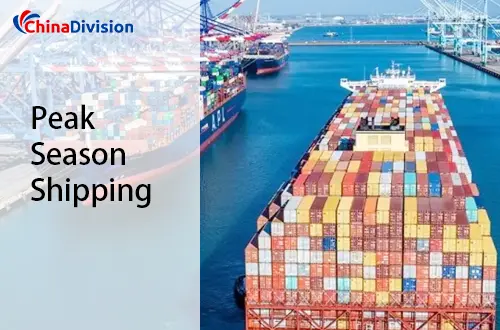
Peak shipping seasons typically occur twice a year:
Holiday retail season (August to October): Driven by demand from back-to-school season, Black Friday, and Christmas.
Chinese New Year peak season (January to February): Caused by factory shutdowns and a surge in pre-holiday shipments.
In addition, July to September and the year-end holidays are peak seasons for ocean shipping, typically characterized by:
Port congestion
Container rollovers
Capacity shortages
Freight price increases. These disruptions increase logistics costs and inventory pressure for B2B sellers and e-commerce businesses.
July to September and the Christmas period at the end of the year are the busiest peak seasons for ocean shipping. During these periods, port congestion, container rollovers, price volatility, and capacity shortages become common operational challenges. Sellers face a dilemma: either risk delayed shipments or invest heavily in advance stockpiling, resulting in significant inventory pressure.
The key to balancing delivery time and capital efficiency lies in accurately forecasting peak season shipping cycles, strategic bulk shipments, optimized inventory preparation, and coordinated logistics resource management—allowing businesses to avoid peak congestion while preventing inventory buildup and cash flow problems.
What drives peak shipping season?
The primary driver of peak season shipping is a fundamental economic law: a surge in demand.
From back-to-school sales to Black Friday, Cyber Monday, and last-minute holiday shopping sprees, the last quarter represents the peak of consumer activity. For many retailers, holiday sales can account for up to 30% of annual revenue, making peak season shipping timing crucial for supply chain success.
To make matters worse, China's Golden Week (October 1-7) can cause widespread production shutdowns during peak shipping season. Thanksgiving weekend inventory depends on orders placed before production shutdowns, making pre-Golden Week logistics planning critical.
Because demand exceeds supply, carriers charge peak season surcharges. Even with increased base freight rates during peak season, these additional costs are unavoidable—carriers understand that shippers have very limited options when capacity is tight.
What are some strategic cost-saving methods for peak season shipping?
- Smart Cargo Prioritization
Not all goods require the same shipping priority. During peak season shipping, identifying high-priority products is crucial for maintaining a smooth supply chain.
When ships are operating at full capacity, peak season shipping delays are inevitable. Container overbooking (similar to overbooking in the aviation industry) becomes a common phenomenon. To mitigate this, Chinadivision recommends securing cargo space 1-2 months in advance through established freight partnerships.
By signing cargo space agreements with freight forwarders 60 days in advance, businesses can ensure that capacity and prices are not affected by near-departure cargo shortages.
Implementation Strategy:
Before shipment, inform your third-party logistics partner of the specific requirements for priority cargo.
Utilize historical sales data combined with industry trend analysis to forecast demand.
Delay unnecessary product customization to reduce the complexity of initial shipments.
Streamline shipments to core products to avoid accumulating untested SKUs.
- Diversify Bulk Shipments
A fundamental principle of peak season shipping is: seize every opportunity to ship, but never ship everything at once.
Abandon large-volume, one-time shipments and instead adopt a "small batch, high frequency" approach. Divide containerized cargo into 2-3 batches, with each batch spaced 7-10 days apart. This method reduces upfront inventory investment, alleviates financial pressure, and prevents stockouts due to delays or customs inspections of individual containers.
Operational Methods:
Multiple Bills of Lading: When shipping multiple containers simultaneously, list the cargo for each container on a separate bill of lading. Carriers schedule loading and unloading based on the order of documents, not the number of containers. Submitting documents sequentially may result in simultaneous processing; submitting documents in batches allows for staggered customs clearance.
Air-Sea Hybrid Strategy: For a shipment of 100 standard containers, consider airfreighting 30 containers, delivering within 7 days, and then shipping the remaining 70 containers via LCL (Less than Container Load) sea freight. While this requires additional documentation and handling fees, the air freight portion serves as a safety net in case of sea freight delays.
Direct Shipment vs. Transshipment Assessment: Some carriers utilize transshipment hubs (such as Singapore and South Korea) for customs clearance or LCL shipments. While this may be more cost-effective, the risks of double transshipment increase exponentially during peak shipping seasons. Chinadivision recommends prioritizing direct shipping services unless transshipment offers significant advantages and manageable risks.
- Strategic Shipping Time Selection
The pursuit of the fastest shipping time also creates opportunities for slower shipping methods. While competitors are vying to offer 15-day transit times, 20-day transit times typically offer greater reliability with minimal actual time differences.
Key Insight: Extended ocean freight time can secure free warehousing at sea. If you pre-ship 25% of your inventory by air as a safety stock, the extra 5 days of ocean freight time are negligible—you already have ample shelf space while competitors face stockouts.
Schedule information is crucial: LCL (Less than Container Load) shipping typically operates 1-2 times per week (e.g., every Thursday). Factory-promised "Friday or Wednesday" arrival times may be consolidated into the same Thursday shipment, negating the so-called time advantage. Understanding carrier schedules can prevent paying unnecessary expedited fees due to false time savings.
- Comprehensive Risk Management
Peak season shipping increases cargo risk. As shipping traffic and cargo volume increase, the probability of accidents also rises.
Cargo theft surges during peak season, especially in LCL (Less than Container Load) shipments involving multiple loading and unloading stages (LCL, deconsolidation, yard transshipment). Containers, containing large quantities of high-value goods, are more susceptible to theft.
Insurance Recommendation: Comprehensive cargo insurance of approximately $0.60 per $100 insured provides essential protection. Basic carrier insurance is insufficient to cover significant losses—comprehensive third-party insurance is indispensable during peak periods.
- Partner with Established Third-Party Logistics Providers
All peak season shipping decisions—timing, prioritization, insurance, channel selection—require reliable logistics partnerships.
Industry data shows that 25% of ocean freight orders are cancelled at the last minute due to freight forwarders chasing better prices. This practice damages relationships with carriers and limits future space allocation. Chinadivision maintains stable contracts with carriers and commits to cancellation rates, ensuring reliable capacity.
Multi-channel Flexibility: Diverse logistics partnerships offer:
Multiple carrier contract options
Different transit time options
Different service level agreements
Overseas warehouse consolidation for peak season buffer inventory
Cash Flow Optimization: Chinadivision assists with phased supplier deliveries, deferred payment arrangements, and segmented freight settlements to minimize upfront capital requirements in peak season shipping plans.
Chinadivision Advantages: Integrated Off-Season Strategy
Off-season shipping is not about blindly shipping ahead of schedule, but about precisely controlling the pace and building a closed loop between inventory preparation, transportation, and sales fulfillment. This approach avoids port congestion, ensures capital efficiency, and optimizes cost and timeliness.
Our Recommended Channel Combination:
Fast shipping for core, high-turnover products (timely replenishment)
Standard inventory shipping by regular vessels (cost reduction)
Air freight + direct shipping for emergency replenishment (bypassing sea freight congestion)
Overseas warehousing as buffer inventory (eliminating delays caused by initial congestion)
Frequently Asked Questions (FAQ)
Q: When should I start planning peak season shipping?
A: Strategic planning should begin 90 days before the expected start of the peak season. Contracts for shipping space should be signed 60 days in advance (May for the third quarter peak season and October for the year-end peak season) to secure capacity and pricing.
Q: How much can off-season shipping save compared to peak season freight rates?
A: Strategic off-season shipping planning can typically reduce freight costs by 20-40% compared to spot market freight rates during the mid-peak season, while increasing on-time delivery rates from 60% to over 90%.
Q: What inventory level should I maintain during the peak season?
A: Calculate safety stock based on the sales cycle, maintaining 30-45 days' worth of inventory for best-selling items while delaying replenishment of slow-moving goods. Ship goods in 2-3 batches to balance inventory availability and capital tied up.
Q: Is air freight cost-effective during the peak season?
A: Yes – as a strategic safety stock. Airfreighting 20-30% of critical inventory can avoid stockout losses, which typically exceed the airfreight premium, while the remaining goods can be shipped by sea, which is slower but less expensive.
Q: Should I choose airfreight during peak season?
A: For urgent or high-demand products, airfreight can be used selectively to maintain safety stock; for bulk shipments, sea freight is recommended.
Q: Can small e-commerce sellers benefit from these strategies?
A: Absolutely. Chinadivision's LCL (Less than Container Load) service and shared warehousing enable small sellers to implement enterprise-level peak season shipping strategies without meeting minimum shipment requirements.
Q: What documents are needed for bulk shipments?
A: Each shipment requires a separate commercial invoice, packing list, and bill of lading. Chinadivision handles all document coordination, ensuring compliance while minimizing your administrative burden.
Q: How can I avoid peak season surcharges?
A: Book freight early to avoid peak periods and partner with logistics providers who can lock in contract prices in advance.
The most effective way to reduce peak season shipping costs is to plan shipments in advance, avoid peak congestion periods, break up shipments into smaller batches, utilize flexible transportation methods, and lock in capacity early through reliable logistics partners. By shifting some shipments to before or after peak periods, businesses can avoid exorbitant freight costs, minimize delays, and maintain healthy cash flow.
Ready to optimize your peak season shipping strategy? Contact Chinadivision today for a customized logistics assessment and learn how professional third-party logistics (3PL) partnerships can help you eliminate peak season stress while protecting your profits.


About the Author: Limi

Limi is a content marketing expert at ChinaDivision, helping businesses and e-commerce sellers navigate the complexities of international shipping by providing actionable tips and comprehensive guides on logistics, shipping, and cargo transportation.