

When to Use (or Avoid) Joint Shipments: A Professional Guide
Use joint shipment when you have multiple orders heading to the same destination within a specific timeframe (usually 24–48 hours) to reduce costs and packaging. Avoid it when items are in geographically distant warehouses, when one item is on backorder, or when a customer has paid for expedited shipping on a specific part of their order.
Table of Contents
- What is a Joint Shipment?
- How the Joint Shipment Process Works?
- Types of Joint Shipment
- When to Use Joint Shipment
- When to Avoid Joint Shipment
- Major Benefits of Joint Shipping
- Common Joint Shipment Mistakes to Avoid
- Best Practices for Implementation
- How Joint Shipment Works in International Fulfillment?
- Optimize Your Global Supply Chain with Chinadivision
- Frequently Asked Questions (FAQ) for B2B Users
As a professional international order fulfillment service provider, we understand that shipping isn’t just about moving boxes; it’s about optimizing your supply chain for maximum profitability. Whether you are a DTC brand or a B2B wholesaler, mastering joint shipping is key to scaling your global operations.
What is a Joint Shipment?
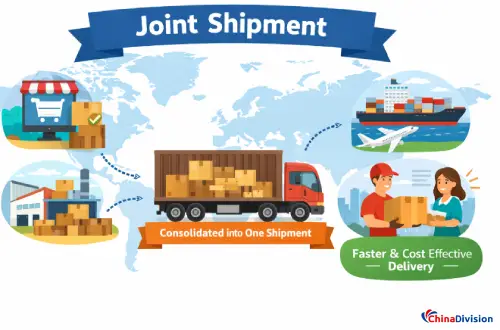
A joint shipment is a logistics strategy where multiple orders—often from the same customer or destined for the same region—are consolidated into a single delivery. While popularized by fast-fashion giants like Shein to manage high-volume small parcels, the concept is rooted in centuries of maritime cargo consolidation.
In modern e-commerce, this means merging two or more purchases into one tracking number and one box. In the realm of international freight, it refers to Buyer’s Consolidation, where goods from various suppliers are combined into a single Full Container Load (FCL) to bypass expensive intermediate handling.
this strategy is commonly used in:
International order fulfillment
Cross-border eCommerce shipping
Freight forwarding
B2B distribution
Marketplace fulfillment
Multi-supplier consolidation
The purpose of joint shipping is simple:
Reduce shipping expenses
Optimize warehouse handling
Minimize packaging waste
Improve transportation efficiency
Simplify shipment tracking
How the Joint Shipment Process Works?
To maintain professional standards, the process must be automated. Manual consolidation is prone to errors that can derail your customer service.
Order Matching: An advanced Order Management System (OMS) flags orders with identical shipping addresses placed within a 24-to-48-hour window.
Strategic Holding: The initial order is placed on a brief "fulfillment hold" to wait for potential follow-up orders from the same buyer.
Consolidated Picking: The Warehouse Management System (WMS) generates a single picking list. Warehouse staff use batch picking to gather all items across multiple orders simultaneously.
Unified Packing & Labeling: Items are packed into the most dimensionally efficient box. A single shipping label is generated, ensuring joint shipment tracking is streamlined for the end consumer.
Types of Joint Shipment
1. Single-Customer Order Consolidation
This is the most common eCommerce use case.
A customer places multiple orders within a short timeframe, and the orders are merged into one shipment.
Best For:
DTC brands
Shopify stores
Subscription businesses
Marketplace sellers
Advantages:
Lower shipping costs
Fewer packages
Better customer experience
2. Multi-Supplier Consolidation
This is commonly used in international freight forwarding and B2B logistics.
Products from different factories or suppliers are consolidated into one export shipment before international transportation.
Best For:
Importers
Wholesale buyers
Amazon FBA sellers
Global distributors
Advantages:
Lower freight costs
Better container utilization
Simplified customs clearance
Reduced supplier coordination
Chinadivision specializes in this type of international order fulfillment by helping businesses combine products from multiple Chinese suppliers into one streamlined shipment.
| Use Joint Shipment When... | Avoid Joint Shipment When... |
| Orders are from the same warehouse: Ideal for centralized fulfillment hubs. | Inventory is fragmented: If items are in different countries or distant provinces, the "split" is better. |
| Sustainability is a brand pillar: Consolidating reduces carbon footprints and packaging waste. | Express Shipping is selected: If a customer pays for 24-hour delivery, holding the order for consolidation will breach your SLA. |
| High-volume sales periods: Perfect for Black Friday or holiday surges where per-package savings add up. | Backordered items: Don’t hold up an entire shipment for one missing "out-of-stock" item. |
When to Use Joint Shipment
Customers Place Multiple Orders
If buyers frequently place repeat orders within 24–48 hours, combining them can significantly reduce shipping expenses.
Orders Ship to the Same Destination
Consolidation works best when all items share the same delivery address or regional destination.
Shipping Costs Are High
International shipping, especially cross-border air shipping, benefits greatly from consolidation because dimensional weight and minimum shipment fees can be optimized.
Sustainability Is a Priority
Joint shipment reduces:
Packaging waste
Fuel consumption
Carbon emissions
Delivery frequency
Brands focused on ESG goals or eco-conscious consumers often use joint shipping to strengthen sustainability initiatives.
Inventory Is Centrally Located
Joint shipping performs best when inventory is stored within the same warehouse or fulfillment center.
You Want Better Operational Efficiency
Combining shipments reduces:
Warehouse touches
Label generation
Carrier handoffs
Administrative processing
This is especially valuable during peak seasons like:
Black Friday
Cyber Monday
Holiday sales
Promotional campaigns
When to Avoid Joint Shipment
Orders Are Urgent
Express shipping and time-sensitive orders should usually ship immediately rather than waiting for consolidation.
Inventory Is Split Across Warehouses
If products are stored in multiple fulfillment centers, consolidating them may create delays and extra transportation costs.
One Item Is Backordered
Holding an entire shipment for one unavailable SKU can frustrate customers and increase fulfillment delays.
Customers Request Partial Shipping
Some customers prefer receiving available items immediately instead of waiting for all products to be consolidated.
Customs Complexity Is High
In international logistics, combining certain products may create:
Additional customs inspections
Higher duties
Documentation complexity
Regulatory compliance risks
An experienced freight forwarder can help determine when consolidation is beneficial versus risky.
Major Benefits of Joint Shipping
Reduced Shipping Costs
Joint shipment lowers:
Per-order transportation costs
Packaging expenses
Carrier surcharges
Last-mile delivery costs
For international businesses, savings can be substantial.
Simplified Joint Shipment Tracking
Using one tracking number improves visibility and customer communication.
Customers prefer monitoring a single delivery flow instead of multiple fragmented shipments.
Improved Sustainability
Fewer shipments mean:
Lower emissions
Reduced packaging waste
Fewer transportation trips
This supports greener supply chain operations.
Better Customer Experience
Customers enjoy:
One delivery
Fewer missed packages
Less confusion
Reduced delivery delays
Higher Warehouse Efficiency
Warehouse teams process fewer parcels overall, improving:
Labor productivity
Picking accuracy
Packaging efficiency
Carrier coordination
Common Joint Shipment Mistakes to Avoid
Poor Inventory Synchronization
Inventory discrepancies can lead to overselling or shipment delays.
Real-time inventory visibility is essential.
Holding Orders Too Long
Waiting excessively for additional orders may hurt customer satisfaction.
Set clear consolidation windows.
Multiple Tracking Confusion
Improper tracking management can confuse customers if consolidated orders still generate separate notifications.
Combining Incompatible Products
Some products may require separate shipping because of:
Hazardous material regulations
Temperature sensitivity
Customs restrictions
Carrier limitations
Best Practices for Implementation
- Utilize WMS Tools
Configure warehouse management systems to identify multiple orders for the same address, allowing for efficient picking and grouping.
- Establish Staging Areas
Set up specific warehouse areas to hold initial orders temporarily while waiting for subsequent orders to be processed for consolidation.
- Sync Inventory Systems
Use real-time inventory management to ensure stock is correctly deducted across all separate orders for the same client, preventing stock discrepancies.
How Joint Shipment Works in International Fulfillment?
In a professional fulfillment environment, joint shipment is a coordinated process across systems and logistics teams:
Order matching and consolidation rules
Orders are automatically grouped based on destination, shipping method, SKU availability, and consolidation windows (typically 24–72 hours).
Supplier or warehouse coordination
Inventory from different suppliers or storage zones is routed to a central consolidation hub (common in China-based fulfillment).
Batch picking and optimized packing
Warehouse teams pick all items together, reduce packaging volume, and prepare export-compliant packing lists.
Single shipment creation
One shipping label, one customs declaration, and one joint shipment tracking number are generated.
International shipping and last-mile delivery
The consolidated shipment moves via air, sea, or rail freight, then enters local courier networks for final delivery.
This approach is especially powerful when managed by an experienced international fulfillment provider that can align upstream suppliers and downstream carriers.
Optimize Your Global Supply Chain with Chinadivision
Managing the complexities of joint shipping requires a partner with robust technology and a global warehouse network. Chinadivision provides end-to-end international order fulfillment services designed to help B2B and e-commerce businesses scale.
From joint shipment tracking integration to advanced buyer’s consolidation in our China-based hubs, we ensure your goods move faster and cheaper. Let us handle the logistics so you can focus on growing your brand.
As a professional international order fulfillment provider, Chinadivision offers:
Advanced OMS/WMS integration for seamless consolidation.
Real-time joint shipment tracking for transparency.
Expertise in customs clearance and international freight forwarding.
Eco-friendly packaging practices aligned with global sustainability goals.
By leveraging Chinadivision’s fulfillment services, B2B clients can cut costs, improve efficiency, and deliver a superior customer experience worldwide.
Frequently Asked Questions (FAQ) for B2B Users
1. How does joint shipment tracking work for my customers?
Instead of the customer receiving multiple emails with different codes, our system syncs all order IDs to a single master tracking number. This ensures the customer sees a unified delivery timeline in their tracking portal.
2. Can I consolidate goods from different suppliers in China before shipping to the US or Europe?
Yes. This is a core service at Chinadivision. We receive goods from your various manufacturers at our central warehouse, inspect them, and perform a joint shipment into one container or large air freight consignment to minimize your landed costs.
3. What happens if a joint shipment is lost or damaged?
While joint shipments reduce handling (and thus reduce risk), the "all eggs in one basket" reality means a loss is more impactful. We highly recommend cargo insurance for high-value B2B consolidated shipments to mitigate this risk.
4. Does joint shipping affect my inventory accuracy?
Not if you use a professional 3PL. Our WMS ensures that even though orders are packed together, inventory is deducted in real-time against each specific SKU and original Order ID, maintaining 99.9% stock accuracy.
5. What is the difference between joint shipping and split shipping?
Joint shipping combines multiple orders into one shipment, while split shipping sends items separately from different warehouses or at different times.
6. Can joint shipment reduce international shipping costs?
Yes. Joint shipment significantly reduces international shipping expenses by optimizing package dimensions, carrier fees, freight consolidation, and customs processing.


About the Author: Limi

Limi is a content marketing expert at ChinaDivision, helping businesses and e-commerce sellers navigate the complexities of international shipping by providing actionable tips and comprehensive guides on logistics, shipping, and cargo transportation.