

Warehouse Picking Strategies to Speed Up Order Fulfillment
Warehouse picking is the core of order fulfillment. It refers to the process of retrieving products from storage to fulfill customer orders. The efficiency of this step directly determines how fast and accurately orders are shipped.
Table of Contents
Optimizing your warehouse picking strategy—whether it's full case picking, unpacking, or single item picking—can reduce fulfillment time by up to 40%, while improving accuracy and reducing labor costs. The key is to choose the appropriate picking method based on your order volume and, where appropriate, utilize technologies such as WMS, barcode scanning, and automation.
As a professional international order fulfillment service provider, Chinadivision understands that efficient picking is the lifeblood of a successful global supply chain. Whether you are an e-commerce seller selling single items or a B2B wholesaler shipping large quantities of goods, mastering the art of picking is crucial for business growth.
Understanding Warehouse Picking Methods
Warehouse picking is the cornerstone of improving order fulfillment efficiency. Different picking methods meet different operational needs, and choosing the right method directly impacts your speed, accuracy, and ultimate profitability.
Full Case Picking (Carton Picking)
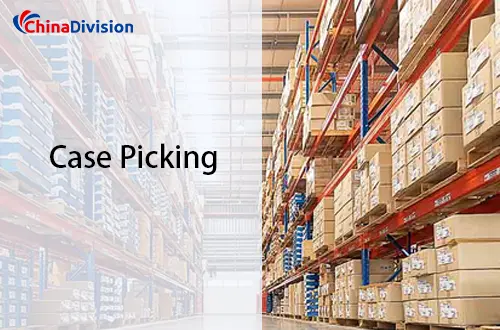
Full case picking (also known as carton picking or warehouse carton picking) refers to picking entire cartons, boxes, or containers from a storage location, rather than individual items. In terms of quantity and complexity, this method falls between pallet picking and single-item picking.
Full case picking involves warehouse operators picking complete cartons from shelves, pallet locations, or carton flow racks (a gravity-flow back-loading rack design that allows cartons to slide forward during the picking process). This method is ideal for fulfilling orders that require a large quantity of a single product but are insufficient to fill an entire pallet.
Best suited for:
Wholesale and B2B bulk orders Retail store inventory replenishment High-volume, low-SKU operations Grocery, beverage, and consumer goods distribution
Advantages:
Minimizes processing time for bulk orders Reduces complexity and error rates Reduces labor costs through efficient bulk handling Simplifies operations for predictable demand patterns
Unboxing (Pick-out Picking)
Unboxing (also known as open-box picking or broken-box picking) involves opening complete boxes and picking individual units or smaller quantities of products to complete an order. This method bridges the gap between full-case picking and single-item picking.
Important when:
Customers order less than a full case Orders with mixed SKUs need to be picked from full-case inventory E-commerce orders require picking individual items from bulk storage Unboxing requires more manpower than full-case picking, but it offers greater flexibility for businesses handling both B2B and B2C orders with the same inventory pool.
Single-item picking (order picking)
Single-item picking (also known as order picking or piece-by-piece picking) refers to picking one item at a time to fulfill an order. This is the most labor-intensive method, but it offers the greatest flexibility.
Best suited for:
E-commerce and direct-to-consumer (DTC) orders
Operations with a wide variety of SKUs and small quantities
Fashion, electronics, and specialty retail
Custom or on-demand products
Advantages:
High accuracy for small, diverse orders
Maximize flexibility to respond to unpredictable demand
Easy to implement, requiring minimal infrastructure
According to industry research, full-case picking is most efficient when bulk orders dominate; however, without automation support, single-item picking becomes less efficient with large orders. Many modern warehouses use a hybrid approach, storing fast-turnover items in full cases near the shipping area while reserving a single-item picking area for slower-turnover SKUs.
Strategic Storage Solutions for High-Speed Order Fulfillment
High-Density Storage Enables Carton Picking
Implementing high-density storage solutions maximizes space utilization while supporting efficient carton picking operations:
Deep or Double-Deep Shelving: Storing multiple pallets of the same SKU in the same location reduces replenishment frequency and walking time.
Carton Flow Shelving: Gravity-fed systems present cartons directly at picking locations, reducing reach distance for pickers and improving ergonomics.
Vertical Space Utilization: Maximizing storage density improves SKU accessibility within limited space, further reducing picker walking distance.
ABC Analysis and Location Optimization
ABC analysis categorizes inventory based on demand velocity:
A-class items (20% of SKUs, 80% of picking volume): Placed near the shipping area.
B-class items (medium turnover): Placed in the middle of the warehouse.
C-class items (slow turnover): Placed in the furthest areas or on upper shelves.
Strategic location layout based on turnover rate reports can reduce picking time by 30-50% while lowering overall fulfillment costs. Pallet Flow Storage (FIFO System)
Pallet flow storage uses a FIFO system where pallets are loaded from the back of slightly inclined racks and slide forward at a controlled speed for easy picking. This is particularly important for perishable goods and time-sensitive inventory.
Automated Storage and Retrieval Systems (AS/RS)
Automated Storage and Retrieval Systems (AS/RS) use robotic picking units or automated cranes moving along horizontal and vertical grids to automatically store, organize, and retrieve goods.
These systems:
Increase picking efficiency by 60-80%
Reduce human intervention and related errors
Maximize vertical storage density
Enable unattended operation in high-throughput environments
Cross-Traffic for Fast Delivery
Cross-traffic transfers directly from inbound vehicles to outbound trucks, reducing or eliminating long-term storage needs. This strategy enables rapid processing of time-critical orders and reduces order fulfillment cycles from days to hours.
Human Picking vs. Automated Picking
Evaluating human and automated picking, each approach has its advantages, depending on your warehouse size, order type, and growth trajectory:
Human Picking:
Flexibility: Quickly adapts to inventory changes without reprogramming.
Lower Initial Investment: Minimal upfront capital expenditure required.
Human Judgment: Handles fragile or irregularly shaped items carefully.
Best for: Smaller operations, highly diverse order types, or early-stage startups.
Automated Picking:
Continuous Operation: Eliminates rest and fatigue, boosting productivity around the clock.
Consistency and Accuracy: Reduces human error by over 80% and maintains accurate inventory tracking.
Scalability: Handles surges in order volume without requiring additional labor.
Reduced Labor Costs: Reduces long-term labor needs.
Best for: High-order-volume environments, predictable order patterns, and established growth trajectories.
Industry Insights: Companies implementing AI-driven automation have improved order entry efficiency by 62.5%, reduced order entry error rates by 80%, and achieved a 274% ROI within three years.
How to Optimize the Picking Process?
1. Implement a robust Warehouse Management System (WMS)
A robust WMS is the cornerstone of efficient picking operations. Your system should provide:
Real-time inventory visibility at the box and piece levels
Optimized picking route generation to minimize walk time
Support for multiple picking methods (wave, zone, batch)
Integration of barcode scanning and mobile devices
Speed reporting for continuous optimization of storage location configuration
2. Design an ergonomic, data-driven layout
Optimize your warehouse layout by:
Analyzing order history to identify frequently picked items
Placing high-turnover items near packing and shipping stations
Creating a logical flow from receiving → storage → picking → packing → shipping
Using one-way aisles to prevent congestion
Implementing appropriate lighting and height-adjustable workstations
3. Deploy barcode scanning and mobile technology
Using mobile devices for barcode scanning provides:
Real-time access to the WMS for pickers
Instant inventory updates
Reduced errors through scan verification
Optimized route guidance
Reduced paper-based processes
4. Adopt Strategic Picking Methods
Choose the right picking method for your operations:
Zone Picking: Assign pickers to specific warehouse areas, reducing walking time and enabling specialization.
Wave Picking: Group similar orders for simultaneous processing, ideal for high-volume periods.
Batch Picking: Pick items from multiple orders at once, then sort them during packing.
Cluster Picking: Combine batch picking and zone picking to handle complex multi-SKU orders.
5. Invest in Comprehensive Training
Well-trained staff are key to improving picking efficiency. Training content should cover:
Proper handling techniques and ergonomics
Equipment operation (conveyor belts, automated storage and retrieval systems, forklifts, RFID scanners)
Picking methods and Warehouse Management System (WMS) navigation
Handling processes for various box types and packaging
Safety procedures for repetitive handling operations
6. Monitor Key Performance Indicators (KPIs)
Track indicators driving continuous improvement:
Picking accuracy: Target 99.5% or higher
Order volume per hour: Measures picker productivity
Order cycle time: Total time from order receipt to shipment
Walk time per pick: Minimize walk time through layout optimization
Cost per order: Track efficiency improvements
Frequently Asked Questions (FAQs)
What is the difference between full case picking and single item picking?
Full case picking refers to picking entire cases (typically 6-24 units), while single item picking involves picking one individual item at a time. Full case picking is more suitable for bulk B2B orders, while single item picking is more suitable for e-commerce and mixed orders.
When should you use carton picking?
Use carton picking when you receive orders smaller than a full carton, or when you need to pick mixed SKUs from carton inventory. This is common in B2B/B2C hybrid operations, where the same inventory serves both wholesale and retail channels.
How to reduce picker walking time?
Implement ABC analysis to place fast-moving items near the shipping area; use zone picking to limit walking to specific areas; and utilize wave picking or batch picking to consolidate trips. Studies show that optimizing warehouse layout can reduce walking time by 30-50%.
Is automation worthwhile for small warehouses?
For operations with daily shipments below 100 items, manual picking using a robust WMS and barcode scanning is generally more cost-effective. If you consistently handle more than 200 orders per day, frequently experience order peaks, or have an accuracy rate below 98%, automation may be worth considering.
How to efficiently process B2B and DTC orders?
Implement a hybrid picking strategy: Wholesale orders are picked by full case, while DTC orders are picked by piece. A flexible WMS system can route orders to the appropriate picking method while maintaining consistent inventory visibility.
What role does technology play in picking optimization?
Technology is revolutionizing picking processes through barcode scanning (reducing errors), WMS (route optimization), voice picking (hands-free operation), AS/RS (automated retrieval system), and AI-driven analytics (demand forecasting). Companies using these tools report efficiency improvements of 60-80%.
How to cope with seasonal demand peaks?
Plan peak season capacity by: analyzing historical turnover data, pre-deploying high-demand inventory, cross-training employees on multi-region picking, implementing wave picking to handle volume surges, and partnering with flexible third-party logistics providers to obtain additional capacity.
How does Chinadivision ensure picking accuracy?
Chinadivision uses a combination of advanced WMS technology, barcode scanning, and multi-stage quality control checks to ensure that the right "piece" or "case" is picked every single time.
Why choose Chinadivision as your order fulfillment service provider?
As a professional international order fulfillment service provider, Chinadivision focuses on helping B2B companies and e-commerce sellers optimize their warehouse picking operations and accelerate order fulfillment.
Our advantages include: Multi-modal picking experience: Whether you need full-case picking for wholesale distribution, partial-case picking for mixed orders, or single-piece picking for direct-to-consumer (DTC) order fulfillment, our facilities can meet your specific needs with maximum efficiency.
Global strategic warehousing: Our optimized warehouse layout and advanced location strategies minimize picker walking time and reduce order fulfillment cycles by up to 40%.
Technology integration: We deploy state-of-the-art warehouse management systems (WMS), barcode scanning, and automation technologies to ensure picking accuracy of over 99.5% and real-time inventory visibility.
Scalable Solutions: From startup e-commerce sellers to established B2B distributors, our flexible infrastructure scales as your business grows—maintaining speed and accuracy even during surges in volume.
Cost-Effective: Our optimized picking processes and strategic warehouse locations reduce labor and shipping costs, increasing your profit margins while maintaining service excellence.
Seamless B2B Compliance: We understand complex B2B requirements, including EDI integration, custom labeling, route guidance, and retailer-specific compliance standards.
For growing brands, managing the complexities of warehouse picking and international logistics can be overwhelming. Chinadivision provides seamless, professional solutions for B2B and e-commerce sellers.
With our advanced warehouse picking system and strategic location in the heart of China's manufacturing sector, we can help you:
Reduce shipping costs by optimizing packaging.
Accelerate delivery times through efficient single-item picking and repackaging.
Expand your business globally without the additional costs of managing your own warehouses.


About the Author: Limi

Limi is a content marketing expert at ChinaDivision, helping businesses and e-commerce sellers navigate the complexities of international shipping by providing actionable tips and comprehensive guides on logistics, shipping, and cargo transportation.